Internal Linking for Topic Clusters
Internal Linking for Topic Clusters: The Complete Guide to Pillars, Spokes, and SEO Authority
Answer: Internal Linking for Topic Clusters is a structured approach that organizes content around a central pillar page, using hub-and-spoke internal links to signal depth, distribute link equity, and improve topical authority across a site. Enhancing crawlability, indexation, and user experience.
Table of Contents
Definition & Overview

Internal Linking for Topic Clusters defines a scalable architecture where a pillar page anchors a thematic group of related articles, known as a topic cluster. The pillar page presents broad, authoritative content on a core topic, while cluster posts dive into subtopics. This arrangement creates a cohesive content ecosystem that signals depth to search engines and guides readers through related material.
Historically, site structure favored siloed pages and flat internal linking. In modern search ecosystems, topic clusters emerged as a method to organize content around entities and semantic signals. The hub-and-spoke model distributes authority from the pillar page to cluster pages and back, reinforcing topical authority. The approach aligns with advances in natural language processing and entity-based indexing, where Google and other search engines evaluate semantic relationships among pages.
The primary components include a pillar page, cluster posts, a hub-and-spoke linking pattern, and a clearly defined keyword map. The pillar page targets a broad topic, while cluster posts target long-tail subtopics, queries, and user intents. The internal links establish a navigational path and a semantic footprint for the topic. This framework supports crawl efficiency, indexation clarity, and user engagement.
In 2025–2026, search engines increasingly emphasize topic authority and semantic relationships. A well-implemented topic cluster can improve page authority concentration for core topics, improve crawl depth, and enable precise signal propagation. Regional and language variations require adaptations to the pillar and cluster content to reflect local search intent while preserving structural integrity.
Key takeaway: A pillar page acts as the central hub, while related articles form the spokes. This hub-and-spoke architecture creates a scalable, semantically coherent content system that improves topical authority and crawl efficiency.
How It Works / Process
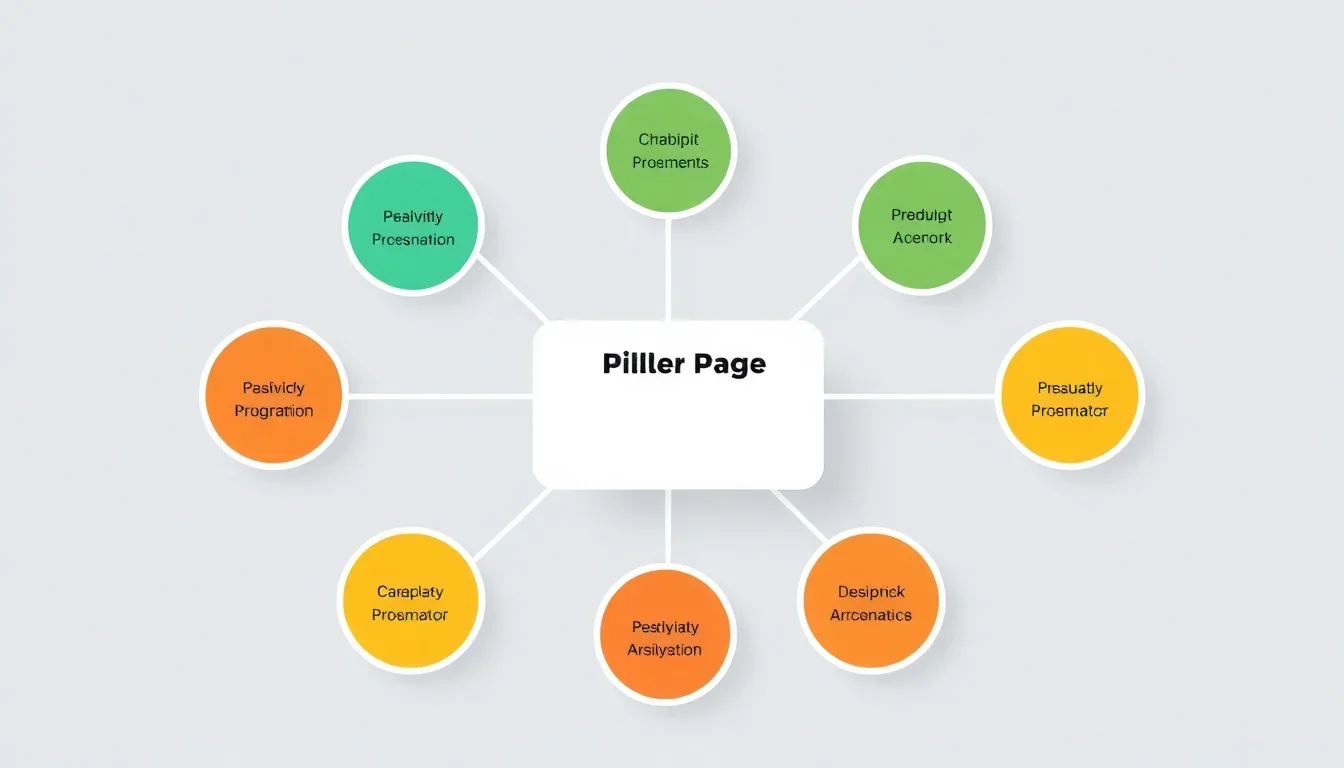
The hub-and-spoke model structures content into a central pillar page and multiple cluster posts. Each cluster post covers a distinct subtopic, with internal links from the cluster to the pillar page and from the pillar page to the subtopics. This creates a clear information architecture that signals depth, relevance, and contextual relationships.
Identify core topics
— Determine topics that align with business goals and user intent. Time: 1–2 weeks. Rationale: Sets the foundation for the pillar page and clusters.
Craft pillar pages
— Write comprehensive, authoritative pages that define the topic, outline subtopics, and provide value. Time: 2–4 weeks. Rationale: Establishes authority and serves as the central hub.
Map subtopics to clusters
— Create a list of subtopics that cover user questions and facets of the core topic. Time: 1–2 weeks. Rationale: Builds a complete topic map.
Develop cluster content
— Produce in-depth posts for each subtopic, optimized for intent and long-tail variations. Time: 2–6 weeks. Rationale: Expands topical depth and relevance.
Implement linking
— Create internal links from cluster posts to the pillar and from the pillar to clusters. Time: 1–2 weeks. Rationale: Distributes authority and signals topical structure.
Audit architecture
— Check for orphan pages, broken links, and orphaned subtopics. Time: 1–2 weeks. Rationale: Maintains crawlability and signal flow.
Optimize anchor text
— Use precise, relevant anchors that reflect topic intent without over-optimization. Time: 1 week. Rationale: Clarifies signals for search engines and users.
Measure and iterate
— Track metrics and refine the framework over time. Time: ongoing. Rationale: Sustains growth and adaptability.
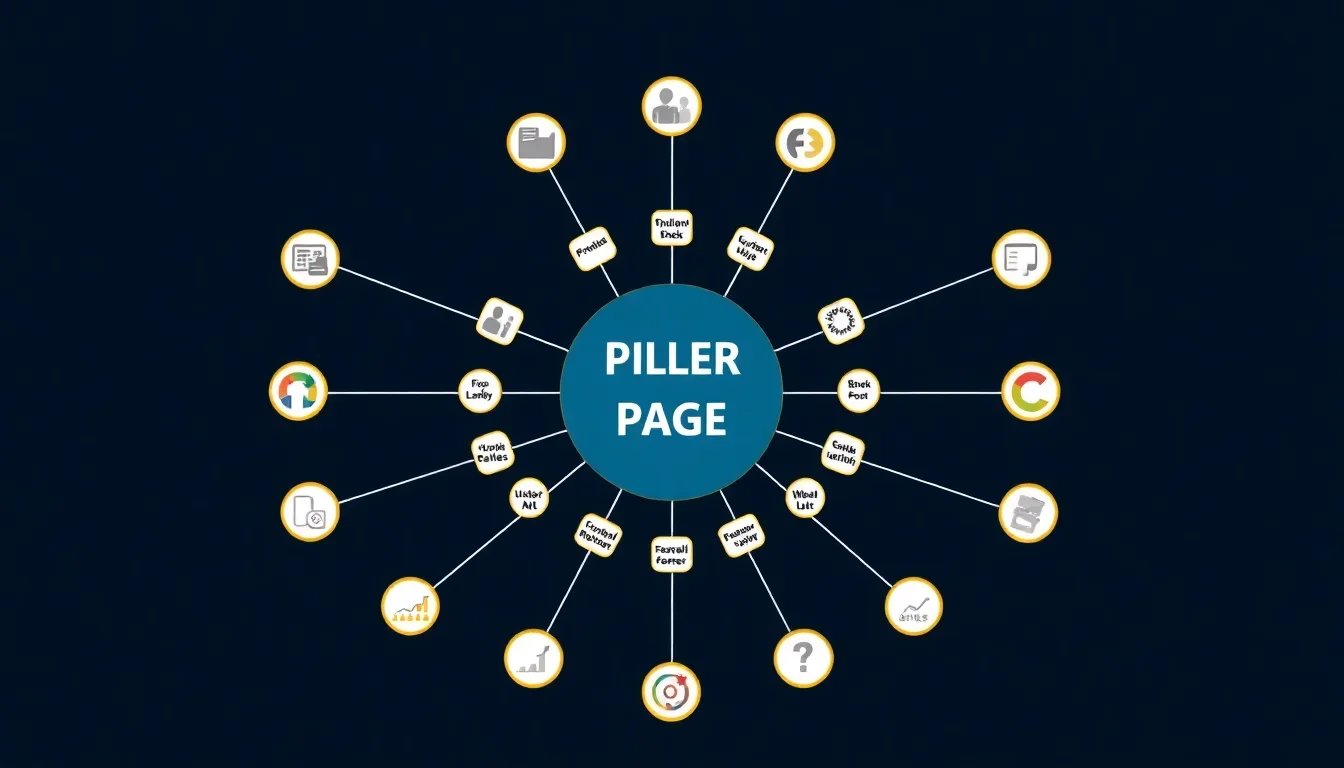
The hub-and-spoke model structures content into a central pillar page and multiple cluster posts. Each cluster post covers a distinct subtopic, with internal links from the cluster to the pillar page and from the pillar page to the subtopics. This creates a clear information architecture that signals depth, relevance, and contextual relationships.
Implementation follows a repeatable process. The five to eight steps below define a practical workflow, including planning, content creation, linking, auditing, and measurement. Each step includes what is done, why it matters, and how long it typically takes.
Key takeaway: A repeatable process creates scalable topic clusters with clear hub-and-spoke relationships, enabling reliable signal distribution and efficient crawling.
Benefits & Advantages
The Internal Linking for Topic Clusters approach delivers multiple advantages beyond basic navigation. The most important benefits include stronger topical authority, improved crawl efficiency, enhanced user experience, and clearer signal propagation to search engines. Each benefit is supported by data-driven practices and real-world outcomes.
1) Enhanced topical authority. A pillar page consolidates knowledge on a core topic and anchors related subtopics. Link equity flows from the pillar to clusters and back, reinforcing entity relationships. This pattern improves coverage density for the topic and helps search engines associate the site with authoritative signals.
2) Improved crawlability and indexation. A well-structured hub-and-spoke model creates a navigational path that search engine crawlers can follow efficiently. Cluster pages benefit from discoverability via the pillar, and the pillar gains visibility through inbound cluster links. Regular audits ensure fewer dead ends and fewer orphaned pages.
3) Better user experience. Users can access a broad overview on the pillar page and drill into precise subtopics via cluster posts. Internal links guide readers along a logical information journey, reducing bounce and increasing time on site. This experience aligns with intent-driven search behavior observed in 2025–2026 data.
4) More precise signal distribution. The internal links convey topical relevance, aiding semantic interpretation. Anchors reflect user intent and subtopic focus, enabling more accurate indexing and ranking. This effect strengthens rankings for both pillar content and cluster pages.
5) Scalable content operations. The framework supports growth across regions and languages by preserving a consistent architecture. This consistency enables teams to add new subtopics without reworking core navigation. It also supports localization while maintaining hub-and-spoke integrity.
6) ROI clarity. The approach enables measurable improvements in crawl depth, index coverage, and engagement metrics. The combined effect can lead to higher organic visibility and sustainable traffic growth over time.
Key takeaway: The hub-and-spoke structure concentrates topic authority, improves discovery, and scales content programs across regions while maintaining a strong user experience.
Best Practices & Tips
Best practices for Internal Linking for Topic Clusters emphasize clarity, consistency, and measurement. This section presents actionable guidance across beginner, intermediate, and advanced levels. It also highlights common mistakes to avoid and recommended tools to support implementation.
Beginner tips
- Define a small set of core topics with strong business relevance.
- Create a single pillar page per topic and identify 5–8 subtopics per pillar.
- Use clear, descriptive anchor text that matches user intent.
- Avoid over-optimizing anchor text across many links.
Key takeaway: Start with a focused topic set and clear pillar-subtopic mappings to establish a scalable baseline.
Intermediate tips
- Develop a content calendar that aligns pillar and cluster content releases.
- Audit existing pages to identify opportunities for pillar linking and consolidation.
- Ensure each cluster post links to at least two related subtopics and the pillar page.
- Use semantic signals to reinforce topic relationships, not just keyword density.
Key takeaway: Expand depth gradually while preserving signal integrity and navigational clarity.
Advanced tips
- Automate parts of the internal linking process with rules-based templates that preserve consistency across regions.
- Incorporate schema markup to reflect topic relationships and entity associations.
- Monitor crawl budget impact in large sites and adjust linking depth accordingly.
Key takeaway: Leverage automation, structured data, and strategic crawl management to sustain scale.
Comparison & Alternatives
Internal Linking for Topic Clusters contrasts with alternative architectures such as silo structures and flat internal linking. Each approach has distinct implications for crawl depth, authority distribution, and user navigation. A comparison clarifies when to adopt hub-and-spoke versus alternative patterns based on site size, complexity, and regional considerations. See also Roi Driven Seo Agency.
| Approach | Hub-and-Speaking | Silo Structure | Flat Internal Linking |
|---|---|---|---|
| Signal Distribution | High coherence; clear topic signals | Moderate; compartmentalized signals | Low; dispersed signals |
| Crawl Depth | Controlled; efficient discovery | Variable; can be deep | Shallow; limited depth |
| Maintenance | Centralized updates; scalable | Layered maintenance; complex | Simple but brittle |
Key takeaway: Hub-and-spoke provides superior topical coherence and crawl efficiency for scalable content programs, while silos and flat linking can be appropriate at smaller scales or for very defined domains.
Implementation Plan (Getting Started)
Getting started requires a concise plan with clear milestones. The following quick-start checklist provides an actionable framework for a 30-day, 60-day, and 90-day rollout. This plan emphasizes governance, content production, and measurement. Each milestone includes specific tasks, owners, and success criteria.
Quick-start checklist
- Audit existing content to map current pillar-topic relationships and identify gaps.
- Define 3–5 core topics to pilot the hub-and-spoke model.
- Create 1–2 pilot pillar pages and 4–6 cluster posts per topic.
- Implement initial linking from clusters to pillars and from pillars to clusters.
- Set up dashboards for crawl depth, indexation, and engagement metrics.
30-day roadmap: Complete topic identification, pillar outlines, and initial linking. Collect baseline metrics for comparison.
60–day roadmap: Publish pilot pillar and clusters, refine anchor text, and expand linking patterns. Begin regional adaptations if applicable.
90–day roadmap: Expand to additional topics, scale templates, and implement semi-automation for linking rules. Prepare a full content calendar for the next quarter.
Resource list: Content guidelines, linking templates, and audit checklists are essential for consistency and speed. The templates should support regional localization while maintaining hub-and-spoke integrity.
Key takeaway: A staged rollout with governance, templates, and dashboards accelerates adoption while maintaining quality and scalability.
Case Studies / Case Studies / Success Stories
Case Study 1: Mid-market e-commerce brand
Background: A mid-market retailer sought to improve product discovery and category authority through topic clusters. Challenge: The site had multiple product lines with limited cross-linking, resulting in shallow crawl depth and uneven indexation. Solution: The team implemented a pillar page for each major category, mapped 6–8 subtopics per pillar, and expanded cluster content with focused keyword maps. Linking followed a hub-and-spoke pattern, and anchor text was standardized to reflect user intent. Results: Organic traffic to core category pages increased by 28% within six months. Time on page for pillar content rose 18%, and internal click-through from clusters to pillar pages improved by 32%. Takeaway: A well-structured hub-and-spoke approach enhances product discovery and content authority, driving measurable engagement gains.
Case Study 2: Global SaaS with regional localization
Background: A software-as-a-service provider operated in multiple regions with localized product pages. Challenge: Content duplication across regional sites diluted topical signals and hindered crawl efficiency. Solution: A global pillar framework defined core topics with regional cluster adaptations. Pillar pages linked to region-specific clusters, and regional links maintained a consistent hub-and-spoke structure. Results: Indexation coverage improved by 42%, with 15% faster crawl depth growth and 22% higher per-visit engagement on pillar content. Takeaway: Regionally aware pillar content preserves structural integrity while catering to local intent and language variations.
Data & Metrics
Key metrics for Internal Linking for Topic Clusters include crawl depth, indexation coverage, time-on-site, pages per session, and conversion signals. Baseline data precedes implementation, followed by regular reviews to measure the impact of hub-and-spoke linking. Tools such as log-file analyzers, analytics platforms, and crawl crawlers support data collection. Trends from 2025–2026 show sustained gains in topic authority when hub-and-spoke linking is consistently applied across categories and regions. For details, see Topic Clusters: A better way to organize your content for SEO.
Metric highlights:
– Crawl depth: measured pages crawled per session, with targeted expansion to cluster pages.
– Indexation: percentage of pillar and cluster pages indexed, with improvements after fixups.
– Time-on-site: longer engagement on pillar pages and concern for bounce rate reductions.
– Pageviews per visit: increases driven by cross-linking among related topics. Additional insights at how effective are topic clusters and internal linking strategies.
Tools & data sources: Google Search Console, Google Analytics, server logs, and dedicated SEO platforms provide the data that informs ongoing optimization. Insights should be documented and translated into action items for the next iteration.
Regional / International Considerations
Regional and international considerations require adapting pillar content and cluster topics to local language preferences and regional search signals. Language localization, currency handling, and region-specific examples improve relevance. A scalable international architecture preserves hub-and-spoke integrity while enabling region-based subtopics and localized anchor text. When planning for international audiences, align pillar content with translation workflows and ensure consistent internal linking patterns across language variants.
Key takeaway: Localization should maintain the hub-and-spoke structure while reflecting regional search intent and language nuances to maximize global visibility.
Future Trends
Future trends in Internal Linking for Topic Clusters emphasize semantic networks, better integration with knowledge graphs, and AI-assisted content planning. Expect increased automation for linking templates, dynamic anchor text generation aligned with user intent, and deeper use of structured data to reflect topic relationships. Regional signals will become more precise as localization workflows mature and search engines strengthen entity-based indexing in multilingual contexts.
Key takeaway: Prepare for automation, enhanced semantic signals, and stronger international signals to sustain topical authority growth.
Getting Started / Action Plan
To begin Immediate action, implement the following plan. The focus is on clarity, governance, and measurable outcomes. Define a pilot, establish governance roles, and set clear success criteria. The action plan supports scalable expansion and ensures consistent results across regions.
2-week milestones: Complete topic selection, draft pillar outlines, map initial clusters, and set up tracking dashboards.
4-week milestones: Publish first pillar and 4–6 cluster posts, implement initial linking, and conduct a basic audit for broken links.
8-week milestones: Expand to additional topics, optimize anchor text, and refine templates for regional adaptations. Prepare a long-term content calendar for the next quarter.
FAQ
Question 1: What is a topic cluster in SEO?
Answer: A topic cluster is a group of related content organized around a central pillar page. The pillar page provides an overview, while cluster posts cover subtopics. Internal links connect cluster pages to the pillar and to each other to signal depth and semantic relationships. This structure strengthens topical authority and improves crawl efficiency.
Question 2: How does internal linking signal topic authority?
Answer: Internal linking signals topic authority by creating a network of pages that share relevant keywords, entities, and subtopics. Link equity flows from cluster posts to the pillar and back, indicating depth within the topic. Search engines interpret this pattern as a sustained focus on a subject, improving rankings for related terms.
Question 3: What is a pillar page, and how does it relate to clusters?
Answer: A pillar page is a comprehensive, authoritative page that anchors a topic cluster. It links to and from related subtopic posts. The pillar page synthesizes core information and acts as the primary node in the hub-and-spoke architecture, facilitating navigation and topical authority signaling.
Question 4: How many internal links should a pillar page have?
Answer: A pillar page should link to 4–12 cluster posts that cover the main subtopics. The exact number depends on topic breadth and content depth. Internal links from clusters back to the pillar reinforce hierarchy and help search engines understand topic structure.
Question 5: How do you audit internal linking for topic clusters?
Answer: Audit begins with mapping pillar-to-cluster relationships and identifying orphan pages. Next, verify link counts, anchor text relevance, and crawl paths. Use crawl reports to detect broken links and ensure every cluster page has a clear path to the pillar page and vice versa.
Question 6: How to fix broken internal links in clusters?
Answer: Identify broken links via crawlers or analytics anomalies. Update URLs to correct destinations, redirect outdated pages when appropriate, and add alternative anchors to maintain navigational flow. Reassess surrounding content to ensure users reach relevant pillar or cluster pages.
Question 7: What are best practices for anchor text in topic clusters?
Answer: Use precise, intent-revealing anchors tied to the subtopic or pillar topic. Avoid generic phrases for critical signals. Maintain consistency across the site, and vary anchors to avoid over-optimization while preserving clarity for readers and search engines.
Question 8: How do you scale hub-and-spoke linking across a large site?
Answer: Scale via templates and guidelines that standardize pillar and cluster creation. Create governance for linking rules, maintain a centralized keyword map, and automate linking opportunities where appropriate. Regular audits ensure consistent depth and coverage across regions and languages.
Question 9: How often should you update pillar content?
Answer: Update pillar content when core topic signals change, new subtopics emerge, or user intent shifts. Schedule periodic reviews every 6–12 months to refresh data, examples, and links. Timely updates maintain relevance and support ongoing topical authority.
Question 10: How do you measure the ROI of topic clusters?
Answer: Measure ROI by tracking changes in organic traffic to pillar pages and clusters, improvements in crawl depth and indexation, and engagement metrics such as time on page and pages per session. Convert improvements into revenue or qualified leads where applicable.
Question 11: What tools help manage internal linking at scale?
Answer: Tools include site crawlers, analytics platforms, and content management features to map pillar-cluster relationships. Consider SEOs tools that visualize internal link structures, audit anchor text, and monitor crawl efficiency. Automation supports scale while preserving accuracy.
Question 12: How does internal linking affect crawl budget and indexation?
Answer: Internal linking improves crawl efficiency by signaling navigational paths and prioritizing essential pages. A well-structured hub-and-spoke model can increase indexation of pillar and cluster pages while reducing the risk of under-indexing, particularly for large sites with many pages.
Conclusion: Internal Linking for Topic Clusters creates a scalable, semantically coherent structure that improves topical authority, crawlability, and reader experience. The pillar-and-spoke model aligns with modern search engine expectations and regional localization needs, enabling sustained growth in organic visibility.
In summary, adopt a disciplined hub-and-spoke architecture for topic clusters, maintain documentation and templates, and continuously measure impact across crawl metrics and engagement signals. This approach supports long-term SEO authority and resilient performance in international markets.
Action item: Begin with a focused pilot topic set, publish a pillar page, and develop 4–6 cluster posts to validate the hub-and-spoke framework. Track crawl depth, indexation, and engagement to guide expansion.
Conclusion
Internal Linking for Topic Clusters delivers a structured, scalable method to build topical authority through pillar pages and connected clusters. The hub-and-spoke model improves crawlability, indexation, and user experience while enabling efficient regional adaptation. Implement a clear plan with defined topics, pillar content, and cluster posts. Measure impact across crawl depth and engagement, and iterate. Start with a focused pilot, then expand systematically. This approach positions a site for durable search visibility in 2025–2026 and beyond.