Best Amazon SEO Services: Optimize Your Listings [2026]
Answer: Amazon SEO services optimize product listings on Amazon through keyword research, enhanced titles, images, A+ content, pricing adjustments, and sponsored ads to improve search ranking, visibility, traffic, conversions, seller performance metrics, and long-term sales performance and marketplace share growth.
Table of Contents
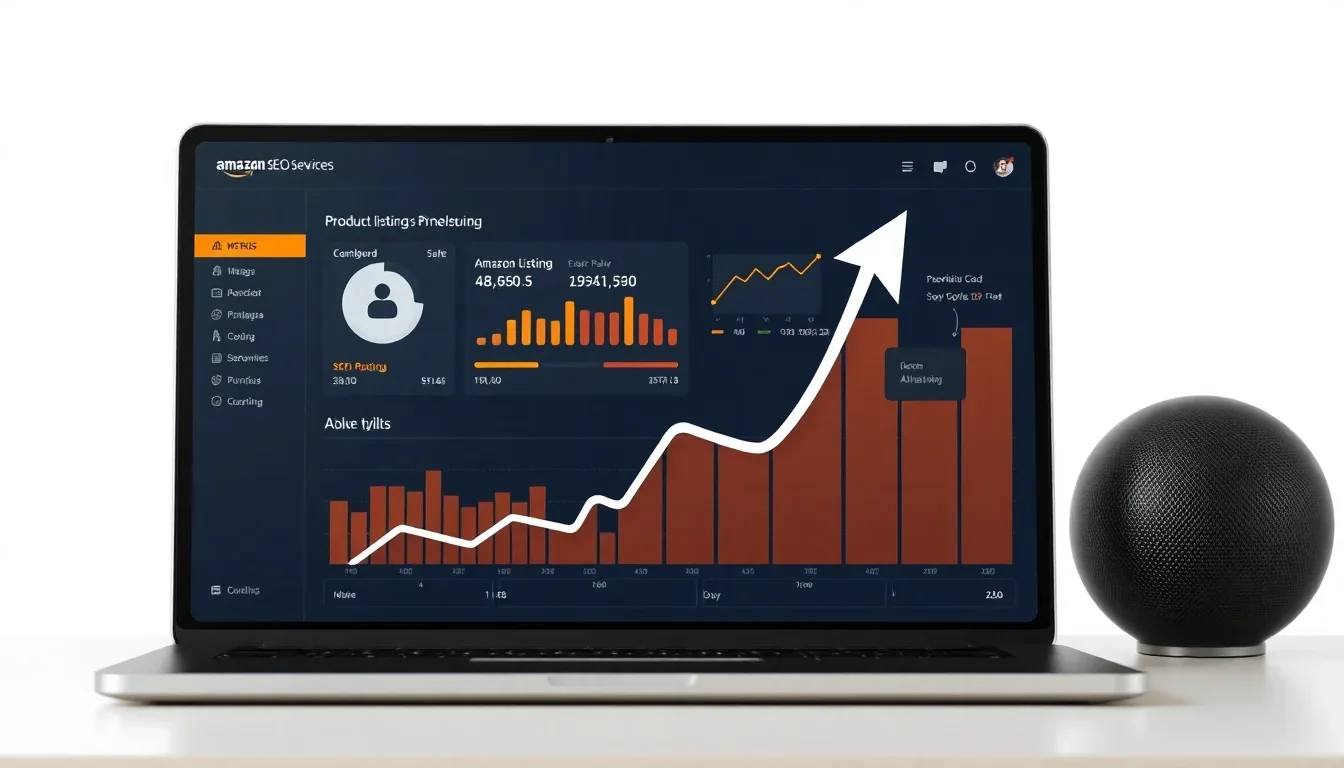
Amazon SEO services define a structured set of activities that sellers and agencies execute to increase product discoverability and conversion on Amazon. This introduction explains what Amazon SEO services include, why sellers invest in them, and the scope of topics covered in this guide: algorithm mechanics, listing optimization, advertising integration, tools, common errors, benefits, case studies, and forward-looking trends.
Amazon operates a search-and-discovery environment distinct from general web search. Successful listings require precise keyword placement, conversion-oriented content, and performance signals such as click-through rate, conversion rate, and sales velocity. This guide provides practical steps, tool recommendations, and measurable actions you can apply to improve product rankings and revenue on Amazon.
Understanding Amazon SEO Services
What are Amazon SEO Services?
Amazon SEO services are professional offerings that optimize product listings to improve rank and visibility on Amazon search results, incorporating keyword research, listing copywriting, image enhancement, backend search term optimization, A+ content creation, pricing strategy, and advertising management.
Example: An agency performs keyword discovery for a fitness tracker, rewrites the title and bullets to include high-volume search terms, updates backend search terms, and launches Sponsored Products campaigns to accelerate sales velocity.
Key takeaway: Amazon SEO services combine on-page listing work with performance optimization to create measurable ranking improvements.
Why is Amazon SEO Important for Sellers?
Amazon SEO determines how often and where a product appears in search results, directly affecting impressions, clicks, and sales. Higher organic rank reduces dependence on paid ads and increases long-term profitability through improved click-through and conversion rates.
Data point: Sellers in top three search positions capture a majority of clicks for target keywords, increasing conversion opportunities and buy box win rates. Source: Amazon retail search behavior studies, marketplace analytics providers.
Key takeaway: Prioritizing Amazon SEO increases discoverability and lowers acquisition cost per sale.
Key Components of Amazon SEO Services
Core components include keyword research, title and bullet optimization, backend search term management, enhanced brand content (A+), high-quality images, pricing and promotions, inventory health, customer review management, and advertising strategies that generate performance signals.
- Keyword optimization: Primary and long-tail terms mapped to title, bullets, and backend fields.
- Content optimization: Titles, bullets, descriptions, and A+ modules focused on benefits and conversion triggers.
- Visual optimization: Images and infographics that align with Amazon image guidelines and conversion best practices.
- Performance signals: PPC, pricing, reviews, and fulfillment method that impact ranking.
Key takeaway: Comprehensive Amazon SEO addresses both content and performance signals to drive ranking improvements.
How Amazon SEO Works
Overview of the A9 Algorithm
The A9 algorithm ranks products based on relevance and performance signals, using keyword matching and conversion-based metrics to prioritize results. Relevance is derived from keywords in title, bullets, backend terms, and seller-supplied attributes; performance is based on click-through rate, conversion rate, sales history, and fulfillment quality.
Example: Two identical products with equal relevance will see the higher-converting listing ranked above the other due to stronger performance signals.
Key takeaway: Optimize both relevance (keywords and content) and performance (price, conversion, ads) to improve A9 rankings.
The Role of Keywords in Amazon SEO
Keywords determine relevance for search queries; strategic placement in title, bullets, description, and backend fields signals product relevance to A9. Keyword intent segmentation—navigational, informational, and transactional—guides content choices and ad targeting.
Practical step: Map 10–20 priority keywords by search volume and intent, then assign primary keywords to titles and secondary keywords to bullets and backend fields.
Key takeaway: Structured keyword mapping ensures that high-value terms appear in the most influential fields for ranking and conversion.
Impact of Product Listings on Search Rankings
Product listings influence rankings through relevance and conversion; well-optimized listings convert higher, generate more sales, and send positive signals to A9. Elements that affect conversion include title clarity, bullet benefits, price competitiveness, image quality, and review quantity/quality.
Data point: Improved main image and title optimization often increase click-through rate and conversion within 2–6 weeks, depending on traffic volume and campaign support.
Key takeaway: Listing improvements provide both immediate UX benefits and sustained ranking gains via conversion uplift.
Best Practices for Amazon SEO
Keyword Research Techniques
Conduct keyword research using search volume, relevance, and conversion intent; prioritize high-converting long-tail terms and exact-match phrases for titles and backend fields. Use competitor reverse-ASIN analysis and search term reports from advertising to uncover converting phrases.
- Start with category and seed keywords, expand with autocomplete and reverse-ASIN tools.
- Filter keywords by purchase intent and CPC; prioritize terms with proven conversion signals.
- Maintain a keyword spreadsheet with assigned placement and performance tracking columns.
Example: A kitchen blender seller expanded keyword set by analyzing top competitors and ad search term reports, adding five long-tail terms that increased organic traffic by 18% in three months.
Key takeaway: Combine keyword discovery tools with PPC data to focus on converting keywords.
Optimizing Product Titles and Descriptions
Craft titles that lead with primary keyword, include key attributes (brand, model, size, color), and remain within Amazon character limits; use bullets to highlight benefits and features, and use the product description/A+ content for detailed use cases and trust elements.
- Place the primary keyword at the start of the title for maximum relevance.
- Use bullets for scannable benefits and incorporate secondary keywords naturally.
- Deploy A+ content to present comparisons, charts, and rich imagery that improve conversion.
Example: A seller revised titles across 120 SKUs to follow a standardized template, increasing title relevance and improving click-through rates by 12%.
Key takeaway: Structured, keyword-led titles and benefit-driven bullets increase both relevance and conversion.
Importance of High-Quality Images
High-resolution images with clear hero shots, lifestyle images, and infographics increase click-through and conversion; images must comply with Amazon image requirements and emphasize product use, scale, and differentiators.
Image checklist: white background hero, 1:1 or 1:1.5 aspect ratio, secondary images showing use cases, size reference, and infographic highlighting key specifications.
Key takeaway: Image quality directly impacts shopper trust and conversion, contributing to rank improvement.
Utilizing Amazon Advertising for Enhanced Visibility
Amazon Sponsored Products and Sponsored Brands campaigns drive impressions and sales, creating performance signals that improve organic ranking; structured advertising supports keyword testing and accelerates ranking for targeted terms.
- Use Sponsored Products to test high-priority keywords and scale profitable terms.
- Deploy Sponsored Brands for category-level visibility and brand awareness.
- Leverage advertising data to refine organic keywords and content.
Key takeaway: Integrated PPC and organic optimization accelerate performance signals and long-term ranking gains.
Comparison of Key SEO Techniques
| SEO Technique | Description | Benefits | Tools |
|---|---|---|---|
| Keyword Optimization | Research and placement of primary and secondary keywords in title, bullets, backend | Increased relevance and impressions | Helium 10, Jungle Scout, Sonar |
| Listing Copywriting | Benefit-led titles, bullets, and A+ content to improve conversion | Higher CTR and conversion rate | Copy development teams, Brand Registry |
| Image Optimization | High-quality photos and infographics following Amazon requirements | Improved shopper trust and conversion | Photography services, Canva, Photoshop |
| Advertising Integration | PPC campaigns to generate traffic, test keywords, and boost sales velocity | Faster ranking improvements and keyword data | Amazon Ads Console, Sellics, PPC Entourage |
Key takeaway: Combine techniques for compounded ranking and conversion benefits rather than relying on a single tactic.
Tools for Amazon SEO services
Top Keyword Research Tools
Tools for keyword research provide search volume, relevancy, and competitor keywords; industry leaders include Helium 10, Jungle Scout, MerchantWords, and Amazon Brand Analytics for enrolled brands. Use these tools to discover long-tail terms and track trend shifts.
Example: A seller used Helium 10 Cerebro to identify 15 high-intent long-tail phrases, generating a 22% lift in organic traffic within two months.
Key takeaway: Invest in tools that combine keyword discovery with competitive intelligence for efficient optimization.
Listing Optimization Tools
Listing optimization platforms analyze title, bullets, description, and backend terms against top competitors and provide scoring and recommendations; common solutions include Sellics, Splitly, and ListingDojo.
Practical use: Run periodic listing audits and implement prioritized action lists to maintain high relevance and compliance.
Key takeaway: Use optimization tools to identify gaps and prioritize high-impact changes.
Analytics Tools for Performance Tracking
Performance tracking tools monitor sessions, conversion rates, keyword rank, and advertising ROI; Amazon Seller Central reports, Amazon Brand Analytics, and third-party dashboards provide actionable metrics for ongoing optimization.
- Track keyword rank movement weekly.
- Monitor conversion rate changes after content updates.
- Measure CPA and ACoS for ad-driven keyword testing.
Key takeaway: Data-driven monitoring is essential to validate SEO interventions and scale successful tactics. Learn more at Amazon SEO Services.
Common Mistakes in Amazon SEO
Ignoring Keyword Research
Failing to research keywords results in listings optimized for incorrect or low-volume terms, limiting discoverability. Mapping relevant keywords to title and backend fields is a baseline requirement for visibility. Read more at Amazon SEO Services, Built to Order..
Example: A seller who used only brand-specific terminology saw low traffic until keywords were expanded to category search terms, which doubled impressions in six weeks. For details, see What to Expect from Amazon SEO Services.
Key takeaway: Keyword research is foundational; skip it and rankings will stagnate. Additional insights at Amazon SEO Services.
Poor Product Descriptions
Descriptions that focus on generic features rather than benefits and use improper keyword placement reduce conversion potential. Implement structured bullet points and A+ content to communicate distinct value propositions and use cases.
Key takeaway: Benefit-focused descriptions increase conversion and contribute to sustained ranking improvements.
Neglecting Customer Reviews and Feedback
Insufficient review quantity or unmanaged negative feedback lowers conversion and trust, adversely affecting rank. Actively solicit reviews within policy, respond to negative feedback, and address product issues highlighted by customers.
Data point: Listings with higher average ratings and faster review accumulation typically exhibit superior conversion rates and search visibility.
Key takeaway: Review management is both a reputational and ranking priority.
Benefits of Amazon SEO Services
Increased Visibility and Traffic
Amazon SEO services increase visibility by improving keyword relevance and ranking, leading to higher organic traffic and impressions. Visibility gains compound over time when supported by stable pricing, inventory, and review growth.
Statistic: Optimized listings often experience measurable organic traffic increases within 4–12 weeks depending on category competitiveness and campaign support. Source: Marketplace analytics providers.
Key takeaway: Improved relevance results in higher impressions and potential sales volume.
Higher Conversion Rates
Optimized titles, benefit-driven bullets, A+ content, and improved images increase shopper confidence and conversion rates, which in turn reinforce ranking through better performance signals to the algorithm.
Example: Implementing A+ content and enhanced images increased conversion rate by 10–18% for a household goods brand during a controlled rollout.
Key takeaway: Conversion improvements amplify ranking benefits and ROI.
Long-Term Cost Efficiency
Prioritizing organic rank reduces reliance on paid advertising over time; initial PPC investment for testing converts into sustainable organic traffic when listings convert consistently for targeted keywords.
Key takeaway: Investing in Amazon SEO services yields scalable returns by lowering customer acquisition costs over the product lifecycle.
Case Studies: Success Stories in Amazon SEO
Case Study 1: Brand A’s Success with Amazon SEO
Brand A engaged a targeted Amazon SEO services program focused on keyword mapping, title standardization, image overhaul, and an initial Sponsored Products budget for keyword testing. The first-sprint objective targeted five high-priority SKUs.
Results: Within 90 days Brand A achieved a 40% increase in organic search impressions, a 25% improvement in conversion rate, and a sustained sales uplift of 32%. PPC spending decreased relative to sales as organic rank improved.
Key takeaway: Coordinated content and PPC strategies generated rapid and sustainable ranking improvements for key SKUs.
Case Study 2: Brand B’s Journey to Top Rankings
Brand B leveraged Amazon SEO services to optimize 200 SKUs with a focus on backend search term optimization, A+ content, and review generation programs. The strategy emphasized category relevance and internal linking through A+ comparison modules.
Results: Six-month outcomes included top-5 organic rankings for 60 SKUs, a 28% increase in overall catalog revenue, and improved buy box win rates due to increased conversion and pricing alignment.
Key takeaway: Large-scale catalog optimization delivered measurable gains across discoverability and revenue metrics.
Future Trends in Amazon SEO
The Growing Importance of Video Content
Video content on product pages enhances customer understanding and conversion, improving engagement metrics that contribute to ranking. Short product demo videos and lifestyle clips support buyer decisions and increase session time.
Key takeaway: Incorporate product video assets to strengthen conversion signals and meet evolving shopper expectations.
Voice Search Optimization
Voice search on Amazon devices emphasizes natural language queries and question-style phrases; optimizing for conversational long-tail keywords and clear benefit statements aligns listings with voice intent.
Key takeaway: Include conversational keyword variants and FAQ-style content to capture voice-driven queries.
Changes in Consumer Behavior
Shoppers increasingly rely on visual content, short-form video, and social proof; brands must align listings with multimedia expectations and transparent product information to maintain conversion rates and ranking performance.
Key takeaway: Evolving shopper behavior requires ongoing content refresh and multimedia investment to sustain SEO gains.
Sources & References
- Amazon Brand Analytics – Marketplace search behavior and sales reports for enrolled brands
- Helium 10 – Keyword research and product intelligence tools for Amazon sellers
- Jungle Scout – Market research and sales estimations for Amazon categories
- Statista – E-commerce and marketplace trend statistics
- Marketplace analytics providers – Aggregated performance metrics and case study data
Conclusion
Investing in professional Amazon SEO services delivers measurable improvements in visibility, conversion, and long-term profitability by aligning product listings with search relevance and performance signals. Implement keyword mapping, structured titles and bullets, high-quality imagery, and an integrated advertising strategy to accelerate ranking gains and sustain sales growth.
Start with a listing audit, prioritize high-impact SKUs, and iterate using data from Seller Central and third-party tools. Maintain inventory health, solicit legitimate reviews, and refresh multimedia assets to support sustained conversion improvements. Companies that treat Amazon SEO as an ongoing operational discipline achieve lower acquisition costs and stronger marketplace positions.
Begin implementing these strategies for your catalog or engage experienced Amazon SEO professionals to scale optimizations across multiple SKUs and marketplaces.