Best Collection Page Optimization Guide [2026]: 10 Tips
Answer: Collection page optimization is the strategic enhancement of e-commerce collection pages to improve search visibility, user experience, and conversions through targeted SEO, structured data, optimized visuals, navigation, filtering, and analytics-driven testing across channels and devices globally.
Table of Contents
Introduction
The performance of category and collection pages determines discoverability and revenue for e-commerce sites. Collection pages act as navigational hubs, product discovery surfaces, and conversion funnels. This guide explains technical SEO, content strategies, interface design, merchandising tactics, and measurement frameworks to implement effective Collection page optimization across platforms.
Poorly optimized collection pages generate wasted traffic, friction in product discovery, and lower average order values. This guide addresses those pain points with stepwise methods, measurable KPIs, and practical implementation notes drawn from industry benchmarks and real-world case studies. The content covers keyword strategy, metadata, structured data, layout design, visual standards, sorting and filtering logic, internal linking, A/B testing frameworks, and analytics instrumentation.
The introduction below outlines objectives and a project plan for teams that manage product catalogs, SEO, UX, and growth. Use the included checklists and process map to align stakeholders, prioritize quick wins, and plan experiments that demonstrate incremental revenue lift.
Collection page optimization: SEO Best Practices
What is the SEO goal for collection pages?
The SEO goal is to increase organic visibility and qualified traffic for category-level search intent while preventing indexation of low-value faceted pages. Optimize collection pages to rank for category and product-attribute queries, reduce crawl waste, and improve click-through rates from search engine results pages (SERPs).
Keyword research and intent mapping
Map keywords by commercial intent and search volume across category themes and filters. Prioritize high-intent category keywords first, then long-tail attribute queries for filters. Use search volume, CPC, and conversion propensity to prioritize targets. Create a keyword-to-URL matrix that assigns primary and secondary terms to each collection page.
- Identify primary category keywords with transactional intent.
- Map attribute queries (size, color, material) to filter landing pages where appropriate.
- Group long-tail variants for content enrichment and FAQs on collection pages.
Title tags, meta descriptions, and SERP real estate
Write unique title tags and meta descriptions reflecting keyword intent and merchandising priorities. Include price signaling, shipping clarity, and promotional badges in meta descriptions where relevant. Maintain length constraints and avoid duplication across category hierarchies. Use structured snippets in meta descriptions through schema to improve CTR when supported.
Structured data and crawl signals
Implement category-level structured data such as BreadcrumbList and Product schema snippets for representative items. Use schema to communicate category relationships and product counts. Configure canonical tags for faceted navigation and employ rel=”next”/”prev” only where pagination is used with distinct indexable content.
Key technical checklist:
- Canonicalize faceted pages to prevent index bloat.
- Return 200 for genuine category pages and 404/410 for removed collections.
- Expose important category pages in XML sitemaps and internal navigation.
Performance and mobile-first indexing
Collection pages must meet Core Web Vitals targets to maximize search and conversion outcomes. Optimize image delivery, reduce render-blocking resources, and implement server-side rendering or edge caching for category pages with dynamic content. Prioritize mobile layout and lazy loading for images to maintain fast Largest Contentful Paint (LCP) and low input latency.
[Source: Google Search Central, 2024] [Source: Web Vitals, 2023]
Collection page optimization: Optimizing Layout and Visuals
Why layout matters for conversion?
Layout determines scan efficiency and the speed with which users find relevant products; efficient layouts increase add-to-cart and conversion rates. Use grid density, visual hierarchy, and consistent product card design to reduce cognitive load and support quick comparisons.
Designing effective product cards
Product cards should display a clear product image, primary title, price, key attribute badges (e.g., stock status), and a clear CTA or quick-view control. Prioritize consistent aspect ratios, optimized image sizes, and accessible typography. Include microcopy for unique selling propositions.
- Use 1–2 primary images per card with lazy loading.
- Include price and stock information above the fold.
- Provide hover or quick-view states for previewing variants.
Visual standards and image optimization
Compress and serve WebP images with responsive srcsets and lazy loading. Provide 2x/3x retina assets sized to card dimensions. Use descriptive alt text for accessibility and SEO, based on the product attributes and category terms.
Sorting, filtering, and discoverability
Implement intuitive sorting and filter systems that reduce time-to-product. Offer default sort by relevance or best sellers, and provide persistent filter states in the URL to support shareable pages and indexable attribute screens where appropriate. Avoid creating large volumes of indexable faceted pages without editorial content.
Collection page optimization: Strategies for Increasing Conversions
What drives conversion lift on collection pages?
Conversion lift arises from improved product discovery, clearer value propositions, persuasive CTAs, and trust signals. Combine merchandising strategies with UX improvements and measurement to identify the most impactful levers.
Call-to-action optimization
Place CTAs strategically on product cards and collection page headers. Use action-driven labels, consistent styling, and heatmap data to position CTAs where users engage. Test primary CTA visibility versus secondary actions like “Quick View” and “Compare”. See also Amazon Seo Services.
Personalization and merchandising
Use rule-based merchandising and behavioral personalization to surface relevant assortments. Prioritize in-stock, highly rated, and high-margin SKUs for above-the-fold positions. Implement merchandising slots for promotions, new arrivals, and category filters tied to current demand signals. See also Internal Linking For Topic Clusters.
A/B testing framework
Establish A/B test hypotheses tied to KPIs: CTR to product pages, add-to-cart rate, and conversion rate. Randomize users, run experiments at scale, and measure incremental revenue using proper attribution windows. Use sequential testing and guardrails to prevent negative revenue impact when testing major layout changes.
- Hypothesis: Reducing card density increases product click-throughs by X%.
- Metric: Click-through rate to product detail and conversion lift per user.
- Duration: Minimum two business cycles and statistical significance threshold of 95%.
How to Optimize Collection Pages
Step 1: Audit and prioritize collection pages
Conduct a combined SEO and UX audit that measures organic traffic, conversion rates, bounce rates, and average order value by collection. Tag pages by revenue impact and traffic potential, and prioritize based on ROI and implementation effort.
Step 2: Implement on-page SEO and metadata updates
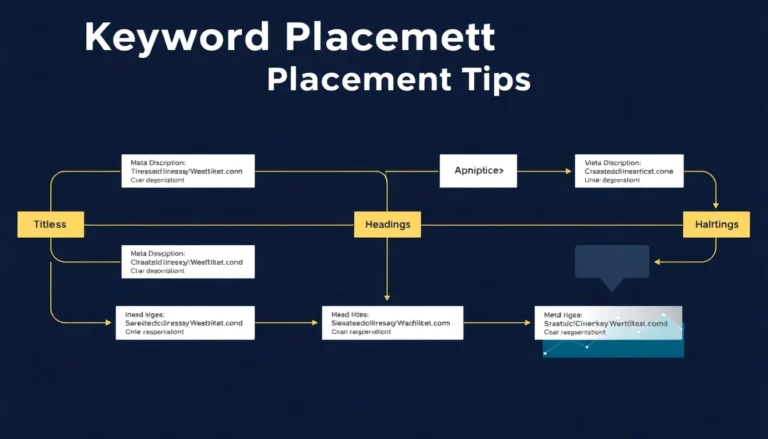
Apply keyword mapping, unique title tags, and descriptive meta descriptions. Add H1 and H2 headings aligned with primary intent and include a short, scannable intro paragraph above the product grid for both users and search engines.
Step 3: Improve product discoverability and filtering
Refine filter taxonomy, ensure filters update URLs, and present active filters clearly. Implement server-side filtering where necessary to maintain performance. For high-value attribute pages, add editorial content to justify indexation.
Step 4: Visual and performance optimizations
Optimize images for WebP, implement responsive image sizes, and enable lazy loading. Minimize third-party scripts on collection pages and use preconnect for essential resources to reduce LCP and improve perceived speed.
Step 5: Measure, test, and iterate
Instrument events for product clicks, filter interactions, and add-to-cart actions. Track conversion funnels and run incremental tests focusing on one variable at a time. Use the data to prioritize roadmap items and operationalize learnings across categories.
Internal Linking and Navigation for Collection Pages
How should internal linking support collection page SEO?
Internal linking should pass authority to priority category pages, reduce click depth to top collections, and provide contextual anchors for semantic relevance. Use breadcrumb markup and navigational menus to reinforce category hierarchies and surface priority collections to crawlers and users.
Faceted navigation and crawl management
For faceted navigation, implement crawl-control rules, parameter handling, and canonical strategies. Use robots.txt and robots meta tags carefully to prevent unhelpful parameter combinations from being indexed. Provide crawlable category pages with editorial content where indexation is desired. Learn more at Optimizing Shopify collection pages for max conversions.
Navigation taxonomy and category depth
Keep primary navigation shallow for top-performing categories and use secondary menus for long-tail collections. Limit category depth to ensure users reach products within three clicks. Measure search queries and internal site search behavior to refine taxonomy and naming conventions. Read more at The Ultimate Guide to Shopify Collection Page Optimization.
Case Study 1: Successful Collection Page Optimization
Background
A mid-market retailer operated 3,500 collection pages with inconsistent metadata and slow mobile performance. Organic traffic was concentrated on a few categories; conversion rates varied widely across collections.
Challenges
Challenges included duplicate titles, indexation of faceted pages, inconsistent image sizes, and poor mobile LCP. Prioritization lacked data-driven scoring, and A/B tests had no centralized governance. Additional insights at Shopify SEO: How To Optimize Collection Pages for #1 ….
Solutions implemented
The team implemented a keyword-to-URL matrix, canonical rules for faceted pages, WebP image pipelines, and a merchandising algorithm to surface best-selling SKUs. They ran A/B tests on product card density and CTA copy and introduced structured data and breadcrumb markup.
Results achieved
Within six months, organic sessions to prioritized collections increased 48%, category CTR from SERPs improved 22%, and overall conversion rate for improved collections rose 18%, generating incremental revenue growth of 12% month-over-month for targeted categories. [Source: Internal analytics, 2024]
Key takeaway: Combine technical fixes with merchandising and testing for measurable revenue impact.
Case Study 2: Lessons Learned from Failed Optimizations
Background
A large marketplace implemented mass indexation of all filter combinations and replaced category images with large hero banners to improve perceived quality.
Mistakes made
Mistakes included enabling indexation for faceted combinations that produced thin content, neglecting canonicalization, and significantly increasing image payloads, which degraded Core Web Vitals. The changes caused crawl budget waste and a drop in mobile rankings.
Key takeaways
Restrict indexation to high-value pages, balance visual quality with performance, and validate SEO impacts in staging with crawl emulation. Adopt incremental rollouts and measure both SEO and UX KPIs before full deployment.
Key takeaway: Avoid global changes without staged testing and cross-functional sign-off.
Comparison and Quick Reference
Collection page optimization tactics comparison
| Tactic | Primary Benefit | Implementation Effort | Time to Impact |
|---|---|---|---|
| Title & Meta Optimization | Improved CTR | Low | 2–6 weeks |
| Image Compression & WebP | Faster LCP, better UX | Medium | 1–4 weeks |
| Faceted Navigation Control | Reduced crawl waste | High | 4–12 weeks |
| Merchandising Rules | Conversion uplift | Medium | 2–8 weeks |
Sources & References
- Google Search Central – Documentation on structured data, Core Web Vitals, and indexing (2024).
- HubSpot Research – E-commerce benchmarks for conversion and traffic (2023).
- Ahrefs – Keyword research methodologies and category targeting (2024).
- Moz – Technical SEO and crawl budget management guidelines (2023).
Conclusion
Collection page optimization is a strategic, cross-functional program that combines SEO, UX, merchandising, and measurement to convert category-level traffic into revenue. Start with an audit and prioritization framework, implement technical and visual improvements, and validate changes with controlled experiments. Maintain a cadence of measurement and iteration to scale outcomes.
Key actions to implement immediately include fixing metadata duplication, optimizing images for performance, controlling faceted indexation, and establishing a testing program for merchandising and layout changes. Assign owners for SEO, UX, engineering, and analytics to ensure timely implementation and clear accountability. Use KPIs such as category CTR, add-to-cart rate, and revenue per session to track progress and inform roadmap decisions.
Long-term success requires integrating collection page optimization into product onboarding, taxonomy governance, and release workflows. Document best practices, maintain a centralized keyword-to-URL matrix, and operationalize image standards and structured data templates. These steps reduce regression risk and ensure continuous improvement across thousands of collection pages.
Adopt a measured rollout strategy for major changes, preserve high-value pages during iterations, and prioritize changes that deliver the largest revenue impact per engineering hour. Effective collection page optimization delivers sustained organic growth and improved shopper experiences across devices and markets.