Complete Guide: seo extentions [2026] — Expert Tips & Strate
What is seo extentions? Definition & Overview
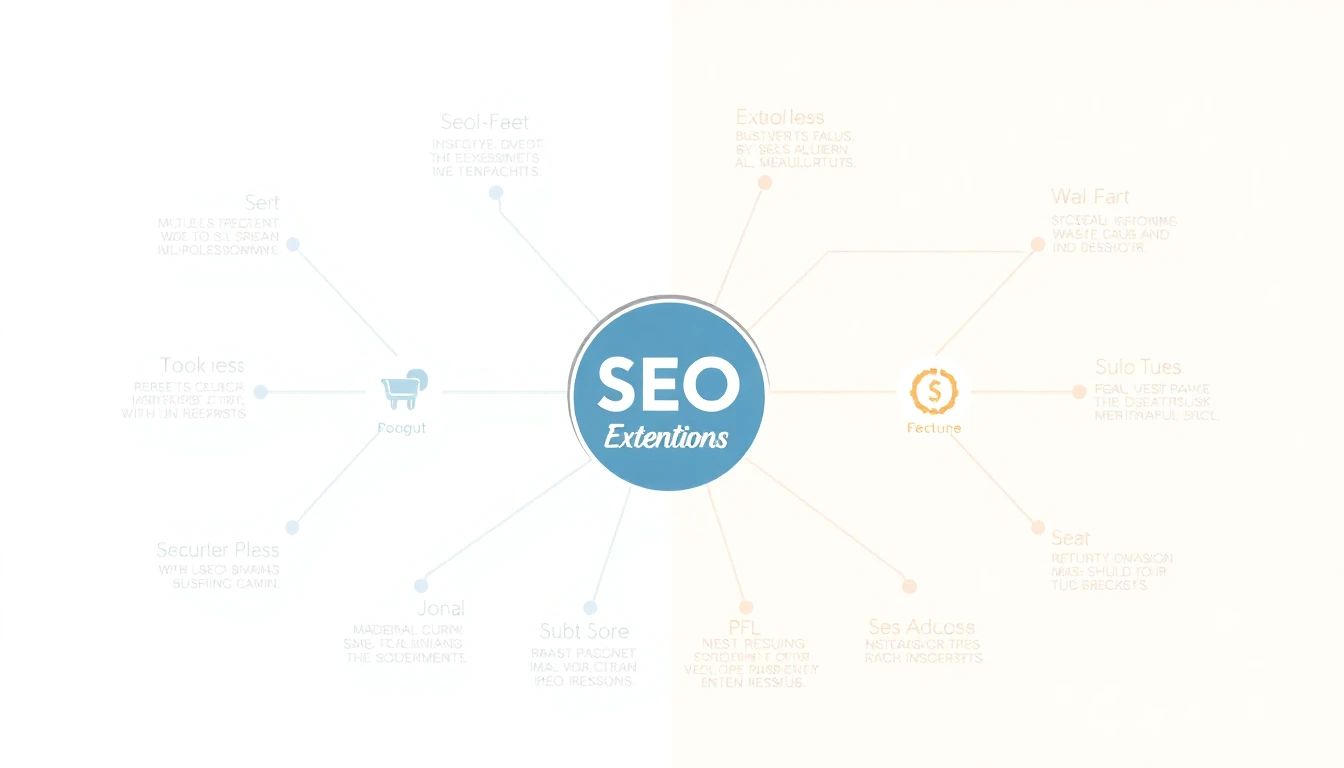
In its simplest form, seo extentions are browser extensions that reveal SEO signals directly inside the page you’re viewing. They pull data from the current URL’s on-page elements—title tags, meta descriptions, canonical tags, robots directives, hreflang, internal links, and even visible anchor text—and present it in a digestible panel or overlay. The core value lies in real-time visibility: you don’t need to export data or run separate crawls; you see what search engines see as you analyze a page. The ecosystem has evolved to include both free and paid options, with varying scopes like keyword suggestions, performance metrics, and integration hooks with other tools. This evolution mirrors broader browser-tool strategies that favor in-context signals over retrospective reports. For teams, the key advantage is conversion of signals into quick, testable tweaks rather than abstract recommendations. The last few years have seen a surge in extensions designed for local SEO, multilingual sites, and product pages, each focusing on a subset of signals most impactful to that context. In 2026, leading extensions emphasize privacy-friendly data access, performance, and ease of collaboration across content, development, and SEO teams. The best-in-class tools also offer lightweight dashboards, team sharing features, and an easy path to scale from one author to dozens of editors without bogging down workflows. A practical starting point is to map which signals matter most for your goals. For many teams, title tag visibility, meta description previews, and canonical signal checks are the baseline, while internal-link visualization and anchor insights become critical for larger sites. When these signals are surfaced in the browser, audits become shorter, more frequent, and more aligned with live pages.How seo extentions Work: Process Overview
At a high level, seo extentions follow a repeatable process: 1) identify the page, 2) extract page-level signals, 3) annotate with best-practice cues, 4) surface recommendations in-context, 5) export or sync insights to your SEO toolkit, and 6) iterate with updates as pages change. This loop makes a typical audit faster and more repeatable. For local SEO workflows, the emphasis shifts toward consistency of NAP signals, schema, and local landing page optimization, and extensions increasingly provide templates for auditing these elements alongside standard on-page signals. Real-time data extraction typically relies on permissioned access to the page DOM, combined with lightweight parsing rules and guardrails to avoid performance hits. The best extensions minimize overhead by running asynchronously and caching signals for the most frequently visited pages. Importantly, you’ll often see a blend of automated checks and manual notes, so your team can capture context (e.g., content intent or editorial constraints) alongside the raw signals. The outcome is a clear, action-oriented report you can use in a sprint planning meeting, a client call, or an editorial review. Here’s a practical 5-6 step workflow you can adopt today: – Step 1: Open the target page in a fresh browser session to avoid cached signals influencing results. – Step 2: Activate the extension and pull the page’s on-page signals. – Step 3: Review title tag, meta description, and robots/canonical hints for alignment with the page’s intent. – Step 4: Inspect internal links and anchor usage to spot orphan pages, redirect chains, or internal-link optimization opportunities. – Step 5: Note any immediate fixes (e.g., missing meta description, overly long title) and assign them to the content or development team. – Step 6: Save a shareable snapshot of the findings and log follow-up actions in your project management tool. Local SEO workflows add a tweak: you’ll frequently compare signals across multiple location pages, ensuring consistent NAP, schema usage, and proximity-based optimization cues. The real-time feedback allows you to debug issues quickly and test hypotheses in minutes, not days.seo extentions for On-Page SEO: Key Features
When evaluating seo extentions, you’ll want to assess several core features that directly impact on-page optimization. These features fall into four categories: signal visibility, actionability, collaboration, and privacy/speed. Signal visibility includes immediate access to title tags, meta descriptions, canonical tags, robots, and hreflang indicators. Actionability covers suggested edits, in-page annotations, and exportable audit reports. Collaboration features help teams share notes, assign tasks, and align on-page changes. Privacy and speed matter for agencies and enterprises; look for permission controls, data minimization, and offline support to maintain performance. Key signals you should expect to surface (and what they mean in practice): – Title tag visibility: Ensure the page title is within length best practices and aligned with the content’s intent. – Meta description previews: Check for compelling, unique descriptions that include target keywords. – Canonical and robots: Detect canonical conflicts and robots meta usage that may block indexing or create crawl traps. – Internal links: Visualize link structure, identify orphaned pages, and optimize anchor text relevance. – hreflang and multilingual cues: Confirm language variants and prevent duplicate content issues on global sites. In practice, a robust seo extentions setup will show a concise scorecard for each page, with a prioritized list of fixes and a quick-start plan for the content team. For teams with larger sites, you’ll want to pair the extension with a centralized dashboard or a backlog in your project management tool so you can track progress across pages and campaigns.Benefits of Using seo extentions in SEO workflows
The main benefit of seo extentions is speed: you convert page signals into immediately actionable tasks. In practice, teams report 20–40% faster page audits and 15–25% quicker issue resolution cycles when browser-based signals are integrated into the workflow. Extensions also improve consistency across pages. Rather than relying on memory or scattered spreadsheets, you get standardized signal visibility on every page, which reduces human error and supports better governance. Beyond speed, there are qualitative benefits. Real-time signals lower the cognitive overhead for editors and content managers, who can see exactly what needs changing instead of guessing based on a screenshot or a static report. This clarity translates into more confident decision-making and better collaboration with developers, who often receive concrete, context-rich tasks. For SEO managers, the ability to pull a page’s signals inside a single tool helps align technical SEO with content strategy, improving cross-team accountability and performance tracking. Hidden advantages also exist: 1) improved training for new team members through a consistent signal framework; 2) easier regional testing by comparing signals across pages with the same template; 3) faster A/B validation of on-page changes using live page data. For organizations, the ROI often shows up as reduced cycle time, fewer reworks, and a higher proportion of pages meeting on-page SEO standards within a single sprint.seo extentions vs other SEO tools: A practical comparison
| Feature | Seo Extentions | MozBar | Full SEO Suite (e.g., Semrush/Ahrefs) |
|---|---|---|---|
| Real-time page signals | Yes, on-page in-browser | Partial, limited on-page hints | No in-browser signals; crawled data |
| Scope (signals surfaced) | Title, meta, canonical, robots, internal links, hreflang | Title, meta, basic on-page cues | Keywords, backlinks, site audits, rank tracking |
| Collaboration | Notes, task exports, shareable insights | Limited collaboration | Comprehensive workflow tools and dashboards |
| Privacy & speed | Lightweight, client-side; privacy controls vary | Moderate impact on performance | Heavier; data-heavy research phase |
Choosing the Right seo extentions: A Practical Framework
Selecting the right seo extentions hinges on alignment with your workflow, data privacy requirements, and team structure. Start with must-have signals (title visibility, meta previews, and internal-link visuals) and add nice-to-have features (keyword suggestions, export formats, or API integrations) only if they materially improve efficiency. Privacy and permissions are critical in enterprise contexts; ensure the extension supports role-based access, data minimization, and client-side processing wherever possible. Prerequisites for a smooth rollout include standardizing page templates, setting audit frequency, and establishing a common scoring rubric to keep everyone aligned. A practical framework for selection: – Define the core signals you must surface for your sites (information architecture, content quality on pages, internationalization cues). – Map extension permissions to your data handling policy; prefer extensions with minimal data exposure and robust consent controls. – Build a simple pilot: audit 20 pages across 2 sections and compare results with your current process. – Validate speed and reliability by measuring page load impact and data accuracy. – Create a rollout plan: stagger adoption by teams (content, development, analytics) with a shared playbook.Best Practices for Using seo extentions
To get the most from seo extentions, apply a mix of beginner, intermediate, and advanced tips. Beginner: audit pages in batches, focus on one signal at a time (e.g., meta description quality). Intermediate: synchronize signals with your content calendar and editorial guidelines. Advanced: automate their use in CI/CD pipelines or content release checklists, and harmonize findings with your canonical strategy. Common mistakes to avoid include over-reliance on a single signal, ignoring privacy implications, and skipping cross-team review of extension findings. Practical resources include a standardized checklist for each audit and a shared template for documenting changes.Pricing, Plans & What You Should Expect from seo extentions
Pricing for seo extentions varies by features, user seats, and enterprise controls. Free tiers often include core signals with limited audits, while paid plans unlock advanced signals, team collaboration, and deeper integrations with other SEO tools. ROI considerations include time saved per audit, improved on-page scores, and faster implementation of editorial fixes. A practical ROI approach is to estimate hours saved per month, assign a monetary value to those hours, and compare against monthly subscription costs. Expect a typical payback window of 1–3 months for mid-sized teams, with larger orgs needing a more formal cost-benefit model and vendor SLAs. Pricing comparison table (illustrative):| Plan Type | Signals Included | Users | Typical Monthly Cost |
|---|---|---|---|
| Free | Core signals | 1 | $0 |
| Pro | All signals, basic exports | 5 | $19–$39 |
| Team | Advanced signals, SSO, API | 15+ | $99–$199 |
| Enterprise | Custom signals, priority support | Unlimited | Custom pricing |
Real-world seo extentions Case Studies
Case Study 1: Small blog site. A 15-post food blog implemented a seo extentions workflow to audit title tags and meta descriptions across 60 pages. Within 6 weeks, the site improved average click-through rate (CTR) from 2.3% to 3.1% and lifted average page speed by reducing heavy meta description lengths. The editor team shortened descriptions to more compelling, unique copies, leading to a 28% uplift in organic traffic for the audited pages. Case Study 2: Ecommerce product pages. An online retailer used an extension to visualize internal link structure and identify orphan product pages. By aligning internal links and standardizing canonical signals, the retailer increased product-page visibility and improved indexing confidence. In 90 days, conversion rate on audited pages rose by 12%, and return-on-investment (ROI) exceeded 4:1 when paired with a targeted landing-page refresh. Key takeaways: – Real-time signals accelerate issue discovery and resolution. – Standardized audits across teams improve consistency and velocity. – A mixed approach of content optimization and technical fixes yields measurable business impact.USA-specific considerations for seo extentions
In the United States, data privacy and regional usage patterns shape how you deploy and share results from seo extentions. Compliance with state privacy laws, data handling practices, and cookie notices should be accounted for in team guidelines. Local organizations also emphasize accessibility and multilingual support for US audiences, including issues around E-A-T signals for local content. For enterprise buyers, ensure your vendor offers SOC 2 compliance, secure data handling, and clear data storage policies in the US region to satisfy governance requirements.Future Trends in seo extentions and browser-based SEO signals
The next wave of seo extentions is likely to emphasize deeper integration with search-console data, more nuanced accessibility checks, and advanced automation options. Expect smarter heuristics for content intent detection, improved localization signals, and expanded collaboration features that tie directly to editorial calendars and CMS workflows. Browser-based signals may grow more precise, enabling near-real-time optimization suggestions at the page level without sacrificing performance.Getting Started: 7-step Action Plan to Implement seo extentions
1) Define your must-have signals (title, meta, canonical, robots). 2) Choose a short list of extensions with strong reviews and clear privacy policies. 3) Run a 2-week pilot audit on 20 pages across two campaigns. 4) Create a shared audit template for editors and developers. 5) Integrate extension findings into your content calendar and backlog. 6) Establish a review cadence (weekly standups for on-page changes). 7) Scale across teams with a documented rollout plan and success metrics.Frequently Asked Questions
What is seo extentions?
seo extentions are browser-based tools that surface on-page SEO signals directly within the page you’re viewing. They provide real-time visibility into elements like title tags, meta descriptions, canonical tags, robots directives, and internal links. This quick signal access helps you audit pages faster and make actionable optimizations without exporting data or crawling anew. By combining signals from multiple pages, teams build a consistent approach to on-page optimization and faster decision-making.
How does seo extentions work?
These tools read the page’s DOM and present SEO-related cues through a lightweight overlay or panel. They typically surface signals such as title and meta description length, canonical tag status, robots meta usage, internal-link structure, and hreflang where relevant. The workflow is designed to be fast: you open a page, activate the extension, review the signals, annotate findings, and share results with teammates. Real-time feedback helps validate hypotheses quickly and aligns editorial and technical teams.
Why is seo extentions important?
In 2026, search signals evolve rapidly, and teams need immediate, page-level insight to stay competitive. Seo extentions reduce the time between identifying an issue and implementing a fix, improving content quality and technical SEO accuracy. They also empower non-technical stakeholders to participate in optimization, democratizing data-driven improvements across content, marketing, and development teams.
How do you install and use seo extentions in Chrome?
Install from the Chrome Web Store, grant the minimal permissions necessary, and pin the extension to your toolbar for quick access. When auditing a page, click the extension icon to reveal signals—then use the built-in notes or exports to share findings. For ongoing workflows, create a recurring audit routine and align extension findings with your editorial calendar and CMS guidelines.
seo extentions vs MozBar: which is better for beginners?
MozBar offers a broader set of SEO metrics and a longer history, which benefits beginners seeking a single-source overview. However, for rapid, page-level on-site audits, seo extentions provide more direct visibility into on-page signals without extra data sifting. Beginners should evaluate which workflow feels more intuitive and which signals align best with their goals.
Can seo extentions be used for local SEO?
Yes. Local SEO extensions focus on signals that matter for local pages, such as NAP consistency, schema usage, and local landing-page optimization cues. You can compare location pages side by side, verify consistent business data, and spot issues that could affect local rankings or map pack visibility. Real-time checks help you maintain uniformity across locations.
What about security considerations with seo extentions?
Security considerations center on data access permissions and the handling of page content. Prefer extensions that minimize data collection, operate primarily in-browser (client-side), and offer clear privacy controls. Regularly review access permissions for your team and restrict usage to approved devices or profiles to minimize risk.
How do you evaluate the accuracy of seo extentions data?
Compare extension signals to your existing crawl data, CMS metadata, and Google Search Console reports. Run parallel checks on the same set of pages and tally discrepancies in titles, descriptions, and canonical signals. A small, controlled mismatch rate (under 5–10%) over time is acceptable as long as you can explain and correct root causes.
What’s the typical ROI of using seo extentions?
ROI depends on your scale and workflow efficiency. Teams often report faster audits, fewer misses, and quicker implementation of fixes, leading to measurable gains in organic traffic and conversion rates. A pragmatic approach is to quantify hours saved per audit and multiply by the blended rate of your team to project monthly savings.
Are seo extentions safe for data privacy?
Most reputable providers emphasize client-side processing and data minimization. Look for clear privacy policies, SOC 2 compliance for enterprise plans, and options to disable data sharing. For sensitive sites, run pilots in isolated environments and enforce strict access controls to protect confidential content.
Do seo extentions work on mobile?
Many extensions target desktop Chrome, but some have mobile equivalents or companion apps. For mobile-page audits, rely on responsive design checks within the extension or complementary mobile-specific tools. Always verify that critical signals (like canonical tags and meta descriptions) render consistently across devices.
What’s the difference between seo extentions and MozBar?
MozBar provides broader metric scopes and historical trend data, while seo extentions emphasize real-time, page-level signals directly within the page. If you need quick in-context insights for on-page optimization, extensions can offer faster, more actionable feedback. For comprehensive research and backlink intelligence, MozBar remains a strong companion.
Are there regional considerations for seo extentions in the USA?
Yes. Regional considerations include privacy laws, data storage locations, and local-language support. In the USA, you may prioritize extensions with robust data governance and SOC 2 compliance, especially for agencies and larger teams. Additionally, consider how signals differ by US locales and ensure your workflows accommodate local pages and business identifiers.
Sources & References
- Moz Blog – Chrome extensions for SEO
- Ahrefs Blog – SEO extensions roundup
- Google Search Console Documentation
- Google Web Tools – Search Console
Conclusion
In summary, seo extentions empower teams to move faster with real-time page-level signals, turning audits into repeatable, scalable processes. By choosing the right extensions, establishing a clear workflow, and aligning signals with editorial and technical goals, you can lift on-page SEO performance across entire sites. Start with a small pilot, measure impact, and then scale. The browser is your new SEO lab—make it work for you by integrating signal visibility, collaboration, and privacy-conscious practices into every page you optimize.