Content Structure & Heading Hierarchy
Answer: Content structure refers to how information is organized and presented, including headings, lists, and sections, to boost clarity, accessibility, and engagement; it shapes reader flow, comprehension, and retention, while enabling navigation, scalable optimization, and effective search engine indexing across content.
content structure and heading hierarchy is a topic that requires comprehensive understanding.
Content Structure & Heading Hierarchy: A Comprehensive Guide to Organizing Your ContentEffective content structure acts as a map for readers and search engines. A well-defined system of headings, topics, and visual cues helps readers skim and absorb key ideas. For organizations, structure supports consistent messaging, reusability of content, and scalability as topics grow. This guide explains the concept of Content Structure & Heading Hierarchy, its significance, and practical approaches to implement robust structures. You will learn definitions, the role of heading hierarchy, best practices, common mistakes, practical examples, and tools to apply in real projects. The discussion prioritizes clarity, accessibility, and navigability, ensuring content remains usable across devices and formats. Readers will gain a framework to assess current content, plan improvements, and measure impact with concrete metrics. The guide aligns with best practices from industry researchers and practitioners, while offering actionable steps for content teams, marketers, and educators. The emphasis is on reproducible patterns that support long-term content health, search visibility, and user satisfaction. The journey covers foundational definitions, practical techniques, and real-world outcomes demonstrated through case studies and examples. By applying structured headings and disciplined content organization, teams can reduce redundancy, enhance comprehension, and drive engagement across diverse audiences.
Definition of Content Structure
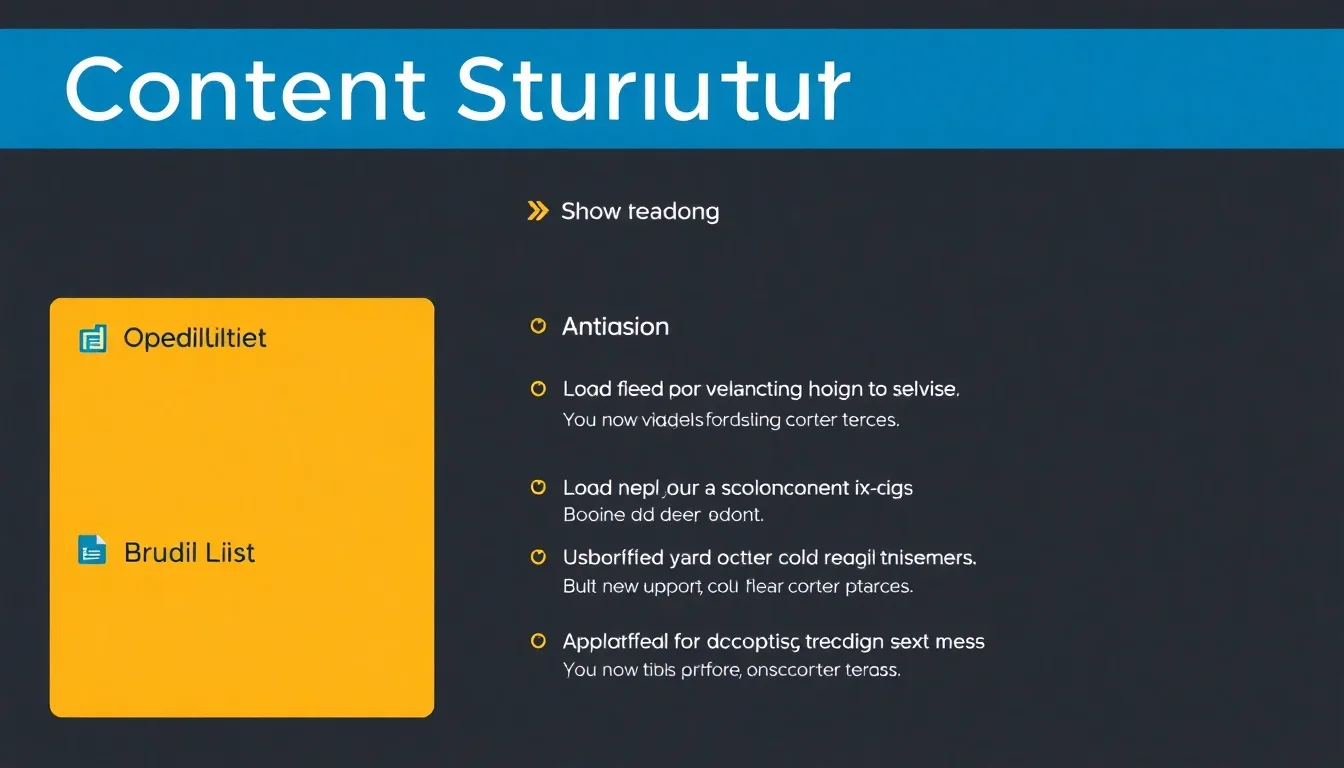
The term Content Structure describes the deliberate arrangement of information within a document or webpage. It encompasses the selection of topics, the ordering of sections, and the use of headings, lists, and navigational cues to guide readers. A well-defined structure supports clarity by reducing cognitive load and increasing predictability. It also enhances accessibility, enabling assistive technologies to parse content efficiently. A robust structure improves navigability by providing consistent paths through material, allowing users to locate essential points quickly. In practice, structure manifests as a hierarchical outline where main ideas are introduced with broad headings and refined through nested subheadings. This hierarchical organization is critical for both human readers and search engines, which rely on headings to infer topic relationships and content relevance. Examples include a research article that opens with an abstract, introduction, methodology, results, and conclusions, or a product guide that uses an overview, features, setup, troubleshooting, and FAQs.
Key attributes of effective content structure include clarity, consistency, accessibility, and scalable organization. Clarity ensures each section has a precise purpose and begins with a concise statement of intent. Consistency applies to terminology, formatting, and heading depth across the document. Accessibility requires semantic markup and readable contrast, supporting assistive devices. Scalability supports future topics and expansions without disrupting the existing architecture. The focus is Content Structure & Heading Hierarchy as the foundational framework for scalable content. Industry research highlights that clear structure improves readability, comprehension, and engagement metrics, while search engines favor well-structured pages in rankings. Researchers emphasize that headings help both users skim content and search engines understand content relevance. For example, a long-form guide benefits from a top-level overview section followed by progressively detailed subsections, enabling quick skimming and deep reading as needed. Real-world applications include education materials, corporate blogs, and product documentation that use consistent outlining conventions.
Importance of Heading Hierarchy
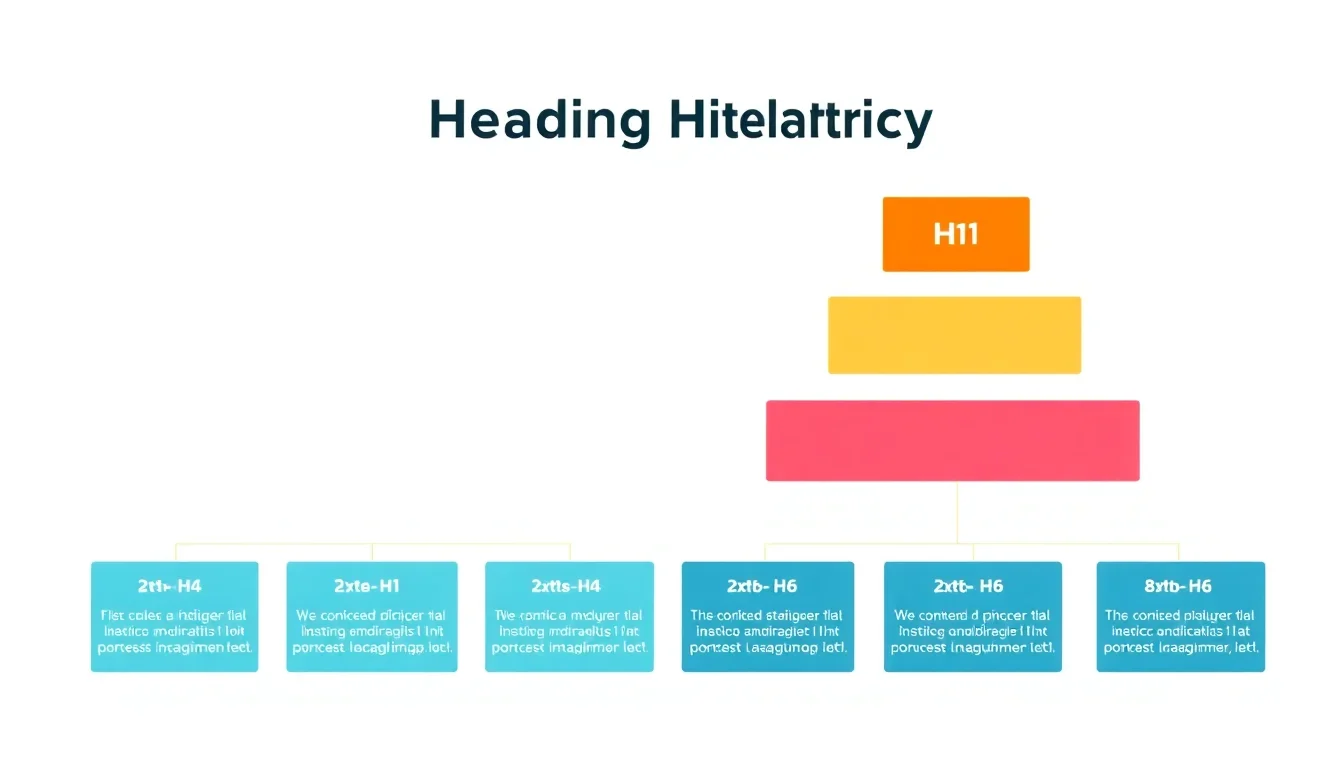
The heading hierarchy defines how content is structured through the levels H1 to H6. This hierarchy clarifies topic importance, relationships, and flow. For readers, a logical sequence supports quick scanning, comprehension, and retention. For search engines, headings signal topic boundaries and semantic relationships, aiding indexing and understanding of page relevance. A well-designed hierarchy prevents content from appearing as a wall of text and provides natural breakpoints for users to pause, reflect, and navigate. The primary heading (H1) should reflect the page’s main topic, while subsequent headings (H2, H3, etc.) organize supporting points. A consistent hierarchy improves accessibility by enabling screen readers to interpret structure accurately. In practice, a clear heading system reduces bounce rates by guiding readers to the most relevant sections and enabling efficient information retrieval. The result is improved user experience and stronger SEO signals through better content organization. The integration of semantic headings aligns with evolving search-engine expectations for structured content and topic modeling.
Visual cues, such as descriptive heading text, concise subheadings, and scannable formatting, contribute to readability and accessibility. Headings should be descriptive rather than cosmetic. They should indicate the content that follows and help readers determine whether to continue reading. For Content Structure & Heading Hierarchy, a disciplined approach to headings supports both comprehension and discoverability. Research indicates that pages with logical heading structures tend to perform better on metrics like time on page, scroll depth, and return visits. In addition, content teams benefit from a predictable pattern that accelerates content creation and review processes. This predictability supports editorial calendars, content audits, and future updates, ensuring consistency and quality over time.
Best Practices for Content Structure
- Define a clear purpose for each document. State the main objective in the opening paragraph and ensure every section supports that objective. Benefits include improved focus and easier measurement of outcomes. Example: A product guide begins with an overview of user needs, followed by features and setup steps.
- Use a descriptive, hierarchical heading system. Implement a consistent depth pattern (H2 for major sections, H3 for subsections, H4 for specifics). Benefits include improved readability and better crawlability. Example: A tutorial uses H2 for steps, H3 for sub-steps, and H4 for tips.
- Apply a predictable information architecture. Design a content model that defines core sections, recurring elements, and metadata. Benefits include scalability and easier content reuse. Example: A knowledge base uses a standard template with a consistent introduction, body, and conclusion for each article.
- Write descriptive headings. Headings should convey content purpose and scope. Benefits include improved skimming and keyword relevance. Example: “How to structure headings for SEO” is clearer than “Heading Tips.”
- Maintain consistent terminology. Use the same terms for concepts across all sections to reduce confusion. Benefits include lower cognitive load and better retention. Example: Always refer to “section,” not “part” or “segment” interchangeably.
- Chunk content into digestible units. Short paragraphs, bullet lists, and subheadings improve scannability. Benefits include faster comprehension and higher engagement. Example: A long-form guide uses short sections with key takeaways at the end of each.
- Incorporate navigational aids. Include a table of contents, sticky headings, or anchor links when appropriate. Benefits include easier navigation and longer page views. Example: A guide uses anchored H2 sections with a persistent side nav.
Checklist for quick reference:
- Clear purpose per document
- Descriptive, consistent headings
- Predictable architecture across sections
- Descriptive headings for SEO and usability
- Consistent terminology throughout
- Concise paragraphs and scannable formatting
- Accessible markup and predictable structure
Common Mistakes to Avoid
Common mistakes in content structure reduce readability, user satisfaction, and search visibility. The following list highlights typical issues, their definitions, and their impact on outcomes:
| Mistake | Description | Impact |
|---|---|---|
| Overusing H1 or missing H2s | Incorrect heading usage or skipping levels reduces navigability and confuses readers. | Lower readability, poorer SEO signals, and higher bounce rates. |
| Unclear or generic headings | Headings do not reflect content and fail to guide readers. | Decreased scan-ability and engagement. |
| Inconsistent terminology | Different terms describe the same concept within the same document. | Increased cognitive load and reduced retention. |
| Dense blocks of text without breaks | Long paragraphs hinder reading flow and comprehension. | Lower time-on-page and higher exit rates. |
| Non-semantic markup | Missing semantic headings or improper HTML structure. | Poor accessibility and weaker crawl signals. |
Practical Examples of Effective Content Structures
Case studies illustrate how deliberate content structure improves outcomes. Case Study A demonstrates a corporate blog that reorganized a 2,500-word article into a clear hierarchy with descriptive H2s and nested H3s. The result was a measurable rise in on-page time and completion rate, along with a higher share rate. Case Study B examines an e-learning platform that deployed a modular content model with standardized headings across modules, enabling rapid updates and improved learner retention. In both cases, the adopted structure prioritized clarity, scannability, and alignment with user goals. A third example concerns a product documentation site that reorganized a scattered knowledge base into topic-centered guides, improving searchability and reducing support inquiries. The common thread across these examples is a disciplined approach to headings, consistent terminology, and modular content blocks that can be reused and updated with minimal disruption.
Practical visuals reinforce the concepts. A sample content outline demonstrates the recommended structure: Overview, Context, Details, Steps, Tips, and FAQs. This outline aligns with your needs for educational content, technical documentation, or marketing materials. Screenshots of real content demonstrate the before-and-after effect of applying a robust structure, highlighting improved readability and navigability. The takeaway is that a consistent structure, supported by clear headings, supports both users and search engines. For Content Structure & Heading Hierarchy, the emphasis remains on reproducible patterns that scale as content volumes grow. See also Compare Seo Packages.
Tools for Structuring Your Content
Structured content benefits from the right tools. Notion serves as a flexible content model and workflow hub, enabling templates, checklists, and collaborative editing. Google Docs provides accessible collaboration with built-in heading styles and outline features. Content managers can use Trello or Asana for editorial planning, while a lightweight CMS or a dedicated content-structure template supports standardization. For analysis, content editors can leverage readability and structure checkers to enforce consistency. Key benefits include speed, collaboration, and repeatability. The aim is to establish a reliable system for creating, updating, and maintaining content while preserving a high standard of quality. The combination of templates, style guides, and governance supports sustained improvements in Content Structure & Heading Hierarchy.
Best practice is to document a simple content model that defines a core set of sections, typical subtopics, and anchor points. This model can be applied across articles, guides, and documentation. By standardizing inputs, teams reduce rework and ensure consistency across topics. In addition, content audits can verify whether each piece adheres to the model, identify gaps, and drive improvements. Integrating this approach with analytics enables measurement of how structure affects engagement, comprehension, and action. Industry researchers highlight the importance of a repeatable framework for long-term content health and SEO performance. The practical takeaway is to start with a small, scalable template and extend it as topics grow, maintaining discipline over headings and sectioning.
Future Trends in Content Structure
The future of Content Structure emphasizes AI-assisted planning, semantic understanding, and accessibility enhancements. AI can propose logical heading sequences, extract key topics from large documents, and suggest sectioning that aligns with user intent. Semantic markup, including structured data and schema-like patterns, supports search engines in understanding relationships, context, and intent. Advances in natural language processing enable dynamic headings and adaptive content models that adjust to user behavior without sacrificing clarity. Accessibility remains a priority, with automated checks ensuring headings, landmark regions, and ARIA roles support diverse readers. As content ecosystems expand, modular structures that allow rapid updates and reuse across formats become essential. The practical implication is that teams should invest in scalable templates, governance, and analytics to capture improvements in engagement, comprehension, and conversion metrics. These trends reinforce the central message of Content Structure & Heading Hierarchy as the backbone of high-quality content.
FAQ Section
In closing, the disciplined application of a clear Content Structure & Heading Hierarchy produces tangible benefits: faster authoring, easier updates, better comprehension, and stronger SEO signals. Begin with a simple template, enforce a defined heading depth, and expand gradually to accommodate new topics and formats. This approach yields durable content health and lasting value for readers and search engines alike.
Conclusion
Key takeaways from this guide include the importance of a clear definition of content structure, the critical role of a well-planned heading hierarchy, practical best practices, common mistakes to avoid, and actionable strategies for implementation. The recommended action is to adopt a modular content model, establish consistent heading conventions, and perform periodic audits to maintain structure and accuracy across all content. The long-term outcome is improved readability, increased engagement, and stronger search performance. Start applying these practices today to elevate your content quality and reach.
This article reinforces the core idea that Content Structure & Heading Hierarchy are foundational elements of high-quality content. By embracing consistent heading depth, modular content blocks, and scalable templates, content teams can achieve durable improvements in user experience and SEO outcomes. The structure you establish today informs the quality of your content tomorrow and beyond.
End of article.
“, “visible”: true}], “titleWrapper”: “h3”} /–>