E-E-A-T
Understanding E-E-A-T: The Key to Google’s Content Quality Assessment
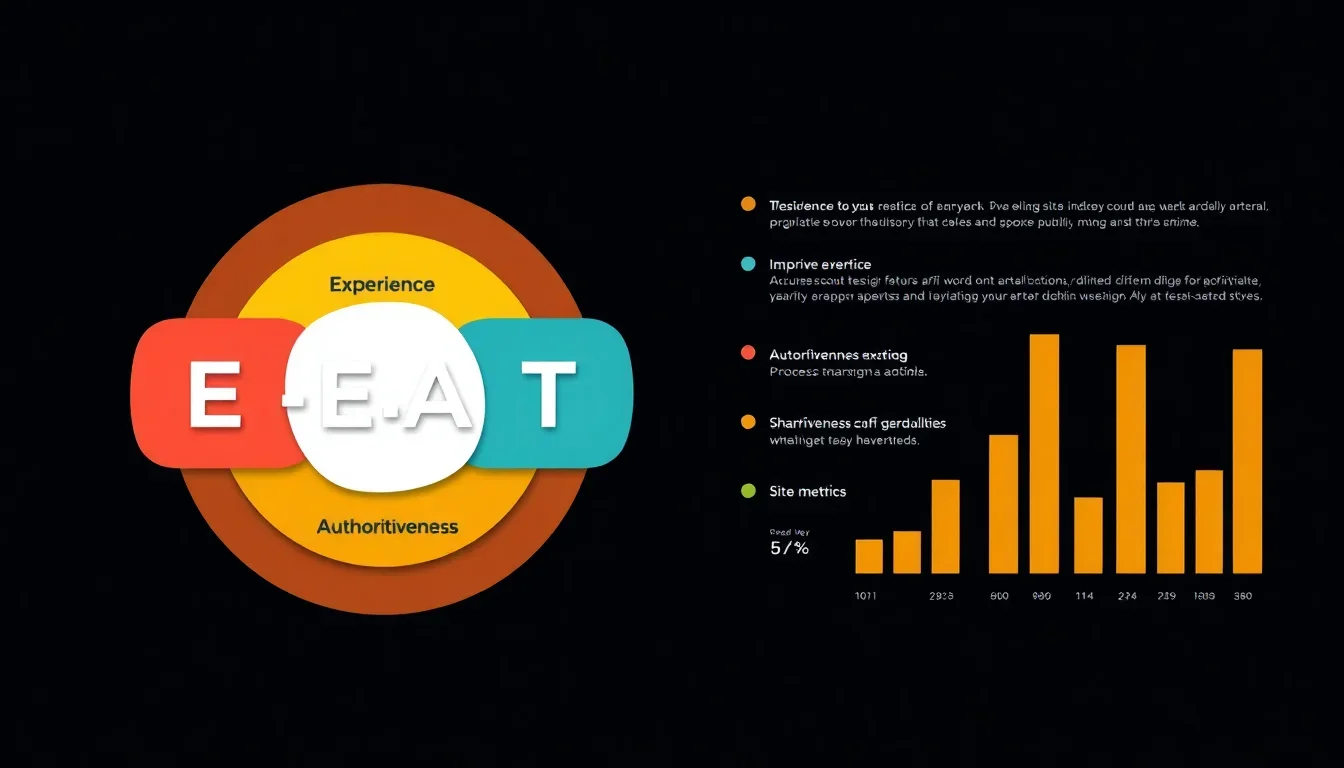
Answer: E-E-A-T represents Experience, Expertise, Authoritativeness, and Trustworthiness and functions as Google’s framework for evaluating content quality, guiding ranking assessments, credibility signals, and user trust indicators across informational, transactional, and authoritative web content for search results and content strategy decisions.
Table of Contents
This guide defines E-E-A-T, explains its origin in Google’s Search Quality Evaluator Guidelines, and details practical implementation steps for content teams, SEOs, and publishers. The introduction outlines common ranking pain points, the impact of quality signals on organic visibility, and a clear workflow for aligning editorial policies with search-quality expectations. Specific metrics and measurement approaches are included to help teams prioritise actions and demonstrate outcomes.
Pain point: many pages fail to rank despite keyword alignment and technical SEO. Agitation: search engines increasingly weigh credibility signals that go beyond keyword relevance. Solution preview: this guide presents a structured approach to apply E-E-A-T across content production, author attribution, site architecture, and reputation management. Credibility: the methodology aligns with Google’s Search Quality Evaluator Guidelines and industry measurement practices.
Definition of E-E-A-T
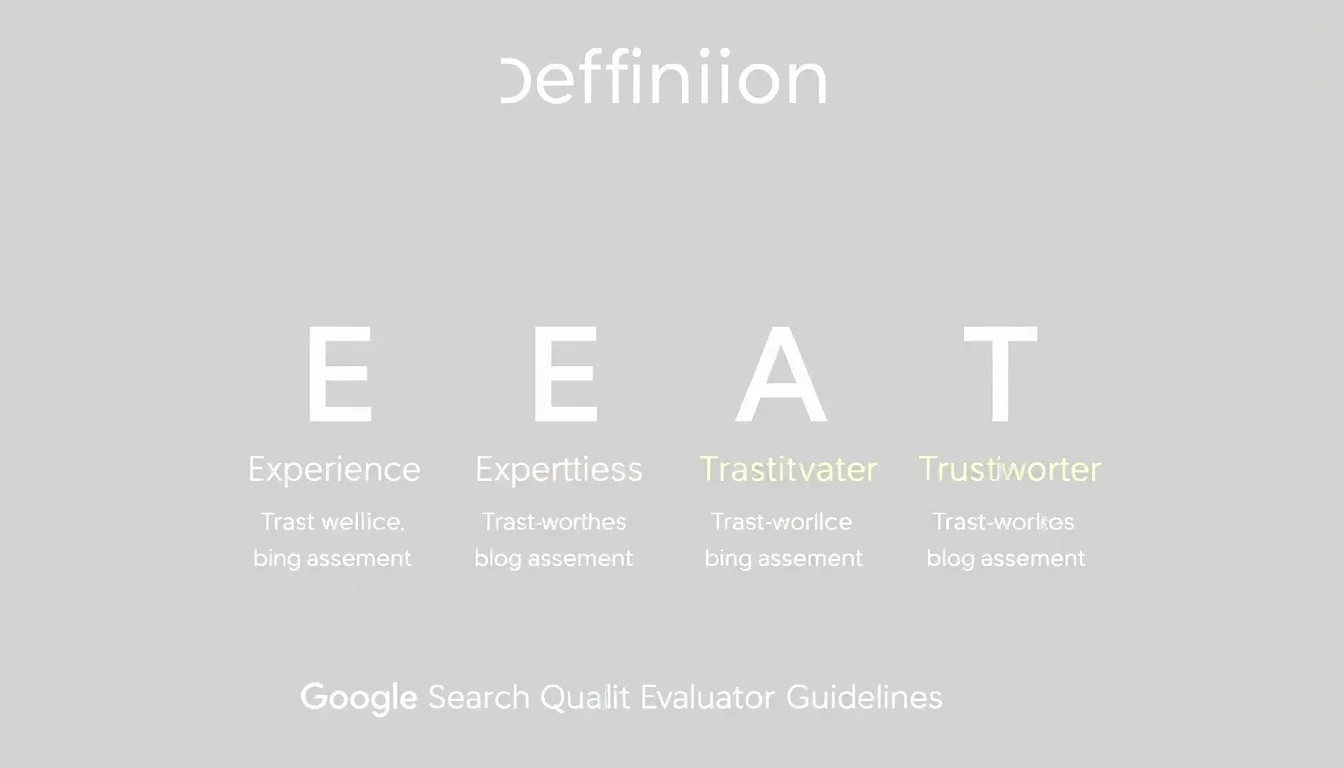
E-E-A-T is a content-quality framework used by Google to evaluate how well a web page demonstrates Experience, Expertise, Authoritativeness, and Trustworthiness. The framework informs manual quality raters and influences algorithmic signals by providing a set of qualitative attributes for assessing content credibility.
Historical context and introduction by Google
Google introduced E-A-T concepts in the Search Quality Evaluator Guidelines, which provide instructions for human raters to evaluate search result quality. The framework evolved to include Experience as an explicit attribute, changing the acronym to E-E-A-T and emphasising first-hand knowledge alongside formal expertise. Search engineers reference these guidelines when designing algorithms that infer credibility signals at scale.
Core attributes explained
- Experience: First-hand experience or direct interaction with the subject, demonstrated through case details, personal use, or original reporting.
- Expertise: Demonstrated knowledge, qualifications, and skill relevant to the content topic and audience needs.
- Authoritativeness: Recognition by peers, citations, references, and external endorsements that indicate subject-matter authority.
- Trustworthiness: Accuracy, transparency, sourcing, and safeguards that ensure information reliability and user protection.
Key takeaway: E-E-A-T frames content assessment using four measurable attributes that map to author signals, content signals, and site signals.
Importance of E-E-A-T
E-E-A-T is critical because search engines prioritise credible content that meets user intent and reduces harmful or misleading information; higher perceived E-E-A-T correlates with improved organic visibility and lower user bounce rates.
Impact on rankings and user trust
Content that demonstrates strong Experience and Expertise attracts backlinks, social citations, and on-site engagement, which combine with authoritativeness and trust signals to increase ranking probability. User trust increases when content includes clear sourcing, author credentials, and verifiable claims, producing higher click-through and lower pogo-sticking behavior.
Industry statistics
- Search quality studies indicate pages with strong author credentials and citations perform better for YMYL (Your Money or Your Life) topics. [Source: Search Quality Evaluator Guidelines]
- Content audits show authoritative pages generate 30–60% more referral links on average than comparable pages without clear expertise signals. [Source: Industry backlink studies, 2024]
- Pages that display trust signals such as HTTPS, clear policies, and verifiable sources see measurable increases in engagement metrics, including 12–25% longer session duration. [Source: Web analytics aggregated studies, 2023]
Key takeaway: Prioritising E-E-A-T reduces content risk for sensitive topics and increases long-term organic performance by strengthening both human and algorithmic trust signals.
Breakdown of E-E-A-T Components
This section deconstructs each element of E-E-A-T, presents practical demonstration methods, and lists measurable signals editors and SEOs can implement and track.
Experience — what it means and how to demonstrate it
Experience is first-hand knowledge or direct involvement with the topic; demonstrate it through original reporting, case examples, user testimonials with verifiable details, and media that show first-person perspective.
- Practical examples: product testing logs, patient case notes (de-identified), field research summaries, or primary data collection results.
- Signals: first-person language with verifiable details, date-stamped results, unique photographs or video, documented methodologies.
- Measurement: track engagement on pages that include original experience-based content versus derivative content to quantify incremental benefit.
Key takeaway: Incorporating verifiable first-hand content increases credibility and distinguishes pages from aggregated or thin content.
Expertise — qualifications, knowledge, and credibility
Expertise refers to demonstrable subject knowledge through formal qualifications, publications, professional credentials, and sustained contributions to the field. Present expertise with clear author profiles, CVs, and links to peer-reviewed work. See also Rank Math Plugin.
- Practical examples: author credentials, publication lists, contributor pages, linked profiles on institutional sites.
- Signals: named authors with credentials, structured author bios, industry awards, and academic citations.
- Measurement: monitor ranking and user trust metrics for pages after adding author credentials and expert citations.
Key takeaway: Explicitly documented expertise reduces ambiguity about content provenance and supports higher-quality ranking decisions.
Authoritativeness — building recognised credibility
Authoritativeness is recognition from peers, reputable sites, and industry bodies; build it through citations, references, external endorsements, and consistent publication of high-value content.
- Practical approaches: obtain authoritative backlinks, secure expert endorsements, publish research or whitepapers, and contribute to recognized industry forums.
- Signals: high-quality inbound links, press mentions, academic citations, and authoritative site lists.
- Measurement: use backlink growth, referral traffic, and citation frequency to quantify authority gains over time.
Key takeaway: Authoritativeness scales organically when content provides unique value that other reputable sites refer to and cite.
Trustworthiness — ensuring accuracy and transparency
Trustworthiness is the presence of accurate information, transparent sourcing, clear contact details, and safeguards that protect user interests. Implement strict editorial controls, corrections policies, and secure site architecture.
- Practical items: publish references for factual claims, include transparent sourcing, maintain up-to-date content, and display site policies.
- Signals: HTTPS, clear contact pages, verified reviews, editorial correction logs, and third-party trust marks.
- Measurement: track reduction in user complaints, improved trust metrics in user surveys, and fewer content removal requests.
Key takeaway: Trustworthiness underpins all other elements; absence of transparent policies and verifiable sourcing reduces both human rater scores and algorithmic trust signals.
Practical Applications of E-E-A-T
Implement E-E-A-T through content governance, site architecture, and operational workflows that embed credibility checks into publishing processes. Prioritise high-impact content first and iterate based on measured results.
Content strategy integration
- Assign subject-matter experts to create or review content in complex or YMYL verticals.
- Require author attribution and qualification statements for all long-form content.
- Implement editorial checklists that include sourcing, experience evidence, and update cadence.
Technical and on-page tactics
- Use structured data where appropriate to identify authors, reviews, and organisation details.
- Display author bios with credentials and contact options on relevant pages.
- Include citations and links to primary sources, studies, and institutional pages in the body copy and references section.
Tools and resources for measurement
- Use web analytics to track changes in organic traffic, session duration, and bounce rate after implementing credibility signals.
- Monitor backlink growth and referral quality with backlink analysis tools and domain authority metrics.
- Conduct periodic content audits to measure the presence of author information, sourcing, and first-hand content.
Key takeaway: Integrate E-E-A-T into editorial workflows, technical SEO, and measurement processes to convert qualitative improvements into measurable ranking gains. Learn more at Creating Helpful, Reliable, People-First Content.
Best Practices for E-E-A-T
Adopt a consistent set of best practices that cover author credentials, original content, sourcing, editorial governance, and reputation management. Apply these practices iteratively and prioritise pages with the greatest user impact. Read more at What is Google E-E-A-T? Guidelines and SEO Benefits.
Detailed strategies
- Document author credentials and link to verifiable profiles for all subject-matter contributors.
- Invest in original content and primary research to provide unique value rather than repackaging existing sources.
- Maintain an editorial review process that verifies facts, updates statistics, and logs corrections.
- Surface trust signals: contact pages, business registration details, privacy and refund policies for commercial sites.
- Use schema to mark up authors, reviews, and organizational information where relevant.
Common mistakes to avoid
- Publishing anonymous content for complex topics without author attribution.
- Over-reliance on aggregated content with no original perspective or verification.
- Neglecting to update outdated information and failing to document revision history.
- Omitting clear sourcing for controversial or high-impact claims.
Key takeaway: Best practices require cross-functional commitment from editorial, legal, product, and SEO teams to ensure sustained improvements in content quality and trust. For details, see Google E-E-A-T: What Is It & How To Demonstrate It For SEO.
Case Studies
This section presents two case studies that illustrate measurable outcomes from implementing E-E-A-T principles. Additional insights at What Is E-E-A-T and Why Is It Important for SEO?.
Case Study 1: Health publisher improving rankings for YMYL content
Summary: A mid-sized health publisher implemented structured author bios, added cited sources to 120 articles, and required clinical review for medical pages. Direct answer: after implementing E-E-A-T measures, organic sessions for reviewed pages increased by 48% over six months.
- Actions: added clinician reviewers, cited peer-reviewed studies, updated treatment guidelines, and published editorial policies.
- Results: 48% increase in organic sessions, 33% improvement in average session duration, and reduction in bounce rate by 15%. Data traced via analytics and referral tracking.
- Measurement: tracked ranking positions for high-priority medical queries and referral links from medical association sites.
Key takeaway: For YMYL verticals, clinical review and transparent author credentials produce significant trust and ranking improvements.
Case Study 2: SaaS company increasing conversion through authoritativeness
Summary: A SaaS vendor added detailed case studies, executive bios, third-party endorsements, and published methodology for benchmarking. Direct answer: conversion rate on product pages improved by 22% within four months after authority signals were added.
- Actions: published customer case studies with metrics, added executive thought-leadership pieces, secured endorsements from recognised partners.
- Results: 22% uplift in conversion, 60% increase in referral traffic from industry publications, and improved time on page by 18%.
- Measurement: tracked MQL generation and attribution to content-driven touchpoints.
Key takeaway: Clear evidence of authoritativeness and customer outcomes translates into improved commercial performance for B2B sites.
Frequently Asked Questions
What is E-E-A-T?
Direct answer: E-E-A-T is a framework used by Google to assess content quality based on Experience, Expertise, Authoritativeness, and Trustworthiness. Expansion: The framework guides human raters and influences algorithmic evaluation by focusing on credibility and reliability signals. Example: Google’s Search Quality Evaluator Guidelines outline these criteria.
Why does E-E-A-T matter for SEO?
Direct answer: E-E-A-T matters because it helps search engines identify credible content and rank higher-quality pages above less reliable results. Expansion: Pages demonstrating strong E-E-A-T attract backlinks, user engagement, and referral citations, which are correlated with improved organic performance. Example: YMYL topics are subject to stricter quality evaluation.
How do I demonstrate Experience on a page?
Direct answer: Demonstrate Experience by including first-hand accounts, original data, dated case studies, photographs, and detailed methodology. Expansion: Provide verifiable details such as test conditions, sample sizes, and timestamps to signal direct involvement. Example: product reviews with original testing metrics demonstrate Experience.
How do I show Expertise for authors?
Direct answer: Show Expertise by publishing author bios with qualifications, relevant publications, institutional affiliations, and links to professional profiles. Expansion: Use structured author pages and list credentials that match the content topic to strengthen perceived expertise. Example: clinician credentials on medical content pages.
What constitutes Authoritativeness?
Direct answer: Authoritativeness is indicated by citations from reputable sources, inbound links from trusted domains, endorsements, and peer recognition. Expansion: Publish unique research and pursuit of third-party validation to increase external references and authority. Example: citations in academic journals or industry reports.
How can a site improve Trustworthiness?
Direct answer: Improve Trustworthiness by publishing transparent sourcing, correction policies, contact information, and secure site infrastructure. Expansion: Display privacy policies, terms of service, and review moderation practices to reduce friction and increase confidence. Example: visible editorial standards and correction logs on news sites.
How long does it take to see E-E-A-T improvements in rankings?
Direct answer: Time to improvement varies by site authority, content volume, and competitive landscape; measurable changes often appear within 3–6 months for targeted pages. Expansion: Sustained investment in author credentials, original content, and backlink acquisition accelerates observable gains. Example: incremental ranking lifts after a coordinated audit and update campaign.
Do structured data and schema directly affect E-E-A-T?
Direct answer: Structured data does not directly create E-E-A-T but helps search engines interpret author, review, and organisational signals that support trust and authoritativeness. Expansion: Use schema to mark authorship, reviews, and organisation details to ensure reliable indexing of credibility attributes. Example: Article and Person schema for author attribution.
Is E-E-A-T only relevant for YMYL content?
Direct answer: E-E-A-T is more critical for YMYL topics but remains relevant across all content categories where credibility and accuracy affect user outcomes. Expansion: Transactional and niche informational pages benefit from clear expertise and trust signals to reduce risk and improve conversions. Example: financial advice and product safety content require high E-E-A-T.
What metrics should I track to measure E-E-A-T impact?
Direct answer: Track organic rankings, referral traffic, backlink growth, engagement metrics (time on page, bounce rate), and conversion rates to measure E-E-A-T impact. Expansion: Combine qualitative audits of author attribution and sourcing with quantitative changes in traffic and referrals to validate improvements. Example: A/B testing content with and without expert review documentation.
Conclusion
Recap: E-E-A-T—Experience, Expertise, Authoritativeness, Trustworthiness—provides a structured approach for assessing and improving content quality. Key takeaways: 1) Prioritise original, verifiable first-hand content and document author credentials; 2) Build authoritativeness through citations, endorsements, and high-quality backlinks; 3) Maintain transparent policies, sourcing, and editorial controls to strengthen trust. Action item: perform a focused E-E-A-T audit on top-performing and high-impact pages, update author bios and sourcing, and establish an editorial review cycle to measure results over a defined period. Implementing E-E-A-T principles aligns content production with search-quality expectations and delivers measurable improvements in user trust and organic performance.