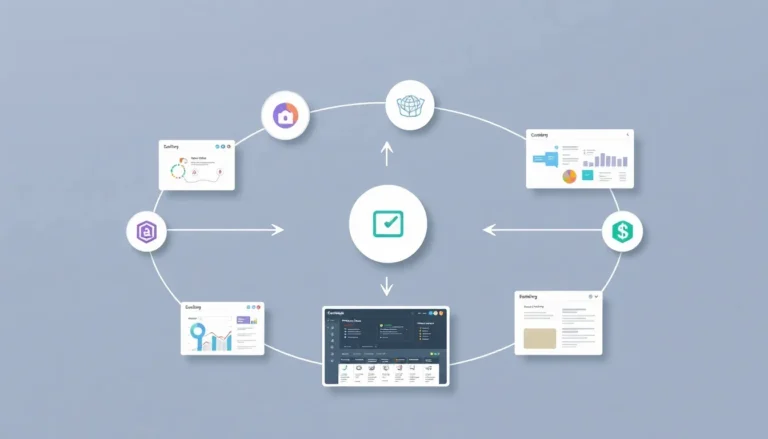
Complete Guide to Google Ads [2026]
Answer: google ads is an online advertising platform that enables businesses to create targeted pay-per-click campaigns across search, display, and video networks, providing measurable performance metrics, audience targeting, and scalable budget controls for advertising objectives and conversion tracking capabilities worldwide.
Unlocking the Power of Google Ads: Your Ultimate Guide to Online Advertising

This guide explains google ads comprehensively for marketers, business owners, and media planners. It defines the platform, describes the pay-per-click auction mechanics, details targeting and ad formats, and outlines setup steps with operational best practices. The content includes cost models, optimization tactics, three case studies with measurable results, common implementation mistakes with fixes, and forecasted platform trends. Each section contains actionable steps, data-driven examples, and a clear takeaway. This guide integrates tools such as Google Analytics for cross-channel reporting and addresses budget allocation, keyword strategy, quality score optimization, and conversion tracking implementation. The goal is to provide a single reference that supports planning, execution, testing, and scaling of search, display, and video campaigns across global markets. Readers will find a step-by-step campaign setup process, prioritization advice for small and large budgets, a pricing comparison table for plan-based budgeting, and a selection of performance benchmarks by industry. The methodology emphasizes test-and-learn cycles, structured A/B testing, audience segmentation, and attribution considerations for accurate ROI measurement. Use the checklist elements inside the Setting Up a Campaign section to prepare assets, establish tracking, and launch an initial test campaign. The case studies demonstrate measurable lift in conversions, return on ad spend, and cost-per-acquisition reductions. This guide concludes with 15 frequently asked questions that address common operational, technical, and strategic issues encountered during campaign lifecycle management.
Definition of Google Ads
google ads is an online advertising service developed by Google for businesses to bid on keywords to display brief advertisements, service offerings, product listings, and video content to web users. The platform supports text ads, responsive search ads, display banners, shopping listings, and video ads.
Brief history and evolution
Launched in 2000 as AdWords, the platform rebranded to Google Ads in 2018. The evolution introduced automated bidding, machine learning-driven smart campaigns, responsive ad formats, and expanded inventory across Google Search, YouTube, Google Display Network, and partner sites. Each major update increased automation capabilities and audience-targeting precision.
Importance in digital marketing
- Direct demand capture through search intent targeting.
- Scalable reach across search, display, and video inventory.
- Measurable performance and attribution with conversion tracking.
- Integration with Google Analytics for cross-channel insights.
Key marketing funnels commonly include search ads for acquisition, display for awareness, and video for engagement.
Key features and ad formats
- Ad formats: Search text ads, responsive search ads, display banners, responsive display ads, video ads on YouTube, Shopping ads, and Discovery ads.
- Audience signals: Remarketing lists, in-market segments, custom intent audiences, and demographic targeting.
- Bidding options: Manual CPC, Enhanced CPC, Target CPA, Target ROAS, Maximize Conversions, and Maximize Clicks.
- Extensions: Sitelink, callout, structured snippets, call, location, and price extensions.
Key takeaway: Google Ads provides flexible formats and advanced targeting to match objectives across stages of the customer journey.
How Google Ads Works
The platform operates primarily on a pay-per-click (PPC) model where advertisers bid on keywords and pay when users click ads; ad rank determines placement based on bid amount, ad quality, and expected impact.
PPC model overview
PPC charges advertisers only for clicks or other specified interactions. Advertisers set bids and budgets, then define targeting parameters and creative. Performance is tracked via conversions and metrics such as CTR, CPC, CPA, and ROAS.
Ad auctions and bidding
- Advertiser selects keywords and match types.
- User submits a search query or visits a publisher site.
- Google evaluates eligible ads and computes Ad Rank = Max Bid × Quality Score plus ad formats and expected impact.
- Ads are placed in order of Ad Rank; the actual CPC charged equals the minimum required to maintain position.
Quality Score factors include expected click-through rate, ad relevance, and landing page experience. Higher quality reduces average CPC for equivalent ad positions.
Ad placement and targeting options
- Keyword targeting with match types: broad, broad modifier, phrase, exact.
- Audience targeting: remarketing, affinity, in-market, custom intent.
- Contextual and placement targeting on the Display Network.
- Geographic, language, device, and schedule targeting.
Advertisers commonly combine keyword intent with audience signals to improve relevance and conversion rates.
Visual: Flowchart of Google Ads process
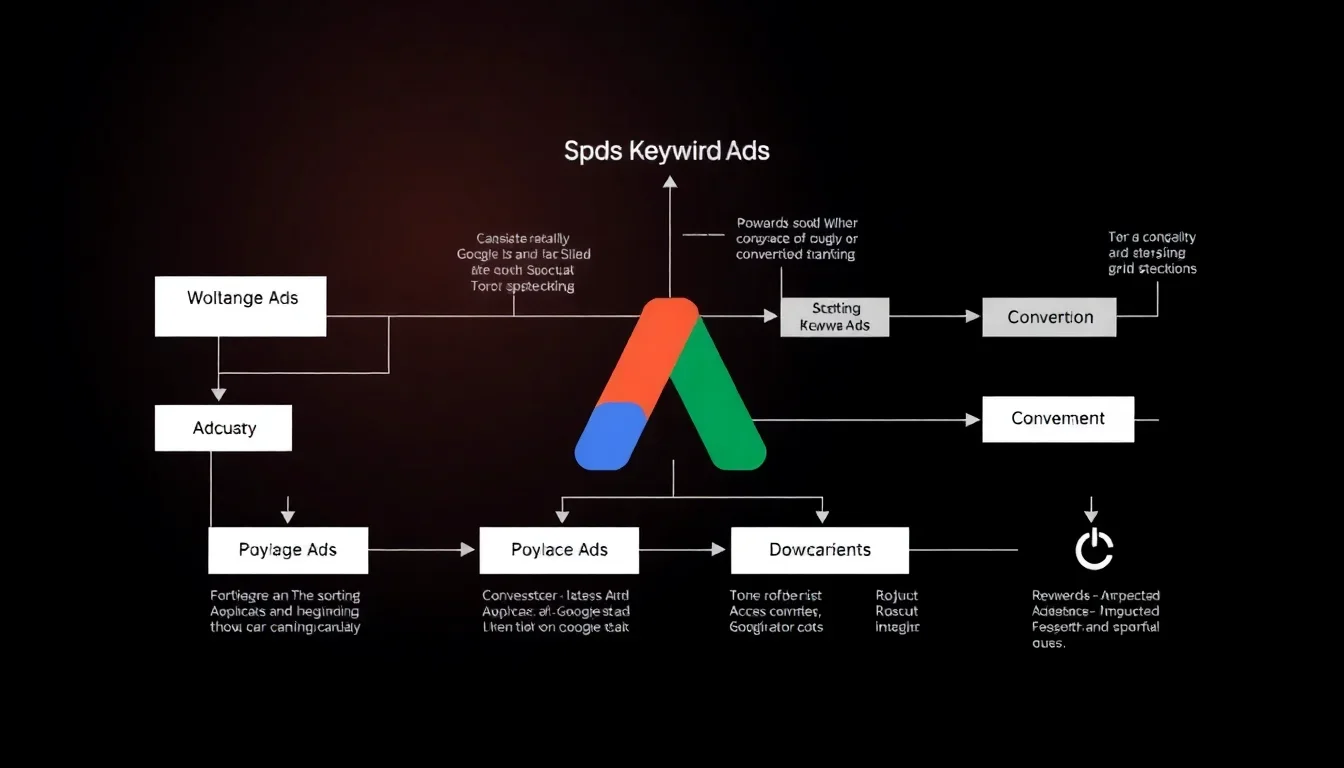
Key takeaway: Ad Rank and quality metrics determine cost and placement; combine precise targeting with optimized creatives to reduce CPC and increase conversions.
Benefits of Google Ads
Google Ads delivers measurable traffic, scalable audience reach, and flexible pricing models that suit varied objectives from brand awareness to direct response.
Key benefits
- Measurable ROI: Conversion tracking provides campaign-level return metrics.
- Immediate visibility: Ads can appear within hours of launch for target keywords.
- Precise targeting: Combine keyword and audience targeting for intent-driven reach.
- Scalable budgets: Scale spend up or down based on performance signals.
- Cross-format reach: Search, display, shopping, and video inventory across Google properties.
Evidence and statistics
Example metrics: average search ad CTR ranges 2–5% for search across industries; e-commerce ROAS benchmarks vary between 3:1 and 8:1 depending on category; average CPC varies widely—$1–$2 for search in many niches, higher for finance and legal. Source: industry reports and Google Ads benchmark studies from advertising analytics providers.
Unique advantages over traditional advertising
- Real-time bidding and performance control.
- Actionable attribution and reporting.
- Ability to target micro-segments and retarget interested users.
Key takeaway: Google Ads combines intent targeting with measurable outcomes, enabling direct performance optimization and scalable growth.
Setting Up a Campaign
Creating a campaign involves account setup, conversion tracking configuration, campaign structure design, keyword and audience selection, ad creative development, and budget allocation.
Step-by-step account and campaign creation
- Create or sign in to a Google account and access Google Ads.
- Set billing information and time zone preferences.
- Install a conversion tracking method: Google Tag, Google Tag Manager, or import conversions from Google Analytics.
- Define campaign objective: Sales, Leads, Website traffic, Product and brand consideration.
- Choose campaign type: Search, Display, Shopping, Video, or Performance Max.
- Configure network, locations, languages, and bidding strategy.
- Create ad groups organized by tightly themed keywords or product sets.
- Write ads using responsive search ad assets or upload creatives for display/video.
- Set ad extensions and launch with an initial test budget.
Selecting keywords and creating ad copy
- Perform keyword research using search volume and intent; prioritize long-tail keywords for lower CPCs.
- Match types should align with intent: use exact and phrase for high-intent queries, broad match with modifiers for discovery while monitoring negatives.
- Create responsive search ads with multiple headlines and descriptions to allow automated asset combinations.
- Include primary keyword in headline and display path where relevant. Maintain clear call-to-action and value proposition.
Campaign settings and budgeting overview
Use daily budgets equal to monthly budget divided by 30.4 for spend pacing. Select bid strategy aligned to objective: Target CPA for cost-per-acquisition goals, Target ROAS for revenue-centric campaigns, Maximize Conversions for experimental tests. Apply bid adjustments for devices, demographics, and locations based on performance data.
Key takeaway: Configure tracking and campaign structure before launch; use conservative budgets and clear success metrics for initial tests.
Best Practices for Google Ads
Optimizing campaigns requires structured testing, quality score improvements, regular data review, and coordinated cross-channel measurement.
Campaign structure and account organization
- Organize campaigns by objective: acquisition, retargeting, brand awareness.
- Ad groups should contain tightly related keywords and tailored ad copy.
- Use shared budgets for similar campaigns when appropriate, or individual budgets for separate objectives.
Improving Quality Score
- Improve expected CTR by using relevant keywords and compelling headlines.
- Enhance ad relevance with targeted ad copy and extensions.
- Optimize landing pages for relevance and load speed and implement clear conversion paths.
Quality Score improvements reduce CPC while improving ad position.
A/B testing and iterative optimization
- Run controlled A/B tests for headlines, descriptions, landing pages, and bidding strategies.
- Test one variable at a time and run experiments long enough to reach statistical significance; use at least 2–4 weeks for moderate traffic campaigns.
- Use ad variations and responsive ads to leverage automated asset optimization.
Tools and resources
- Google Analytics for cross-channel attribution.
- Google Tag Manager for tag deployment and tracking management.
- Keyword Planner for keyword volume and forecasting.
- Scripts and automated rules for routine maintenance at scale.
Key takeaway: Adopt a culture of measurement and iterative testing; align creative, landing pages, and bidding to improve cost-efficiency.
Pricing Structures
Google Ads supports multiple pricing models: cost-per-click (CPC), cost-per-thousand impressions (CPM), and cost-per-acquisition (CPA) or per-conversion bidding. Pricing depends on competition, quality score, industry, match type, and geographic targeting.
Explanation of pricing models
- CPC: Pay when a user clicks the ad; common for search and shopping campaigns.
- CPM: Pay per thousand impressions; common for display awareness campaigns.
- CPA: Target a cost per acquisition using automated bidding.
- vCPM and CPV: View-based models for video where you pay per view or per thousand viewable impressions.
Breakdown of costs by industry
Benchmarks: Retail and e-commerce often have lower CPCs but variable ROAS; finance and legal have high CPCs often exceeding $20 for competitive terms; B2B SaaS CPCs typically range $3–$15 depending on keywords. Adjust expectations based on average order value and lifetime value when assessing bids.
Comparison table of pricing options
| Feature | Basic Plan | Standard Plan | Premium Plan |
|---|---|---|---|
| Monthly Price | $500 | $2,500 | $10,000 |
| Recommended Monthly Ad Spend | $1,000–$5,000 | $5,000–$25,000 | $25,000+ |
| Includes | Basic campaign setup, standard reporting | Advanced targeting, A/B testing, conversion tracking | Full account management, bid automation, attribution modeling |
| Support | Email support | Account manager, phone & email | Dedicated strategist, 24/7 support |
Budgeting tips
- Start with a test budget equivalent to 5–10% of monthly marketing spend to collect initial data.
- Allocate budget by expected CPA and lifetime value; increase spend on high-ROAS campaigns.
- Use portfolio bid strategies for cross-campaign optimization when objectives align.
Key takeaway: Select a pricing model aligned to your objective and use industry benchmarks to set bid and budget targets.
Case Studies / Success Stories
This section presents three illustrative case studies showing how targeted campaigns produced measurable results using Google Ads.
Case Study 1: E-commerce retailer
Background: Online apparel retailer with low brand awareness sought to increase sales during seasonal launch.
Challenge: High competition on core keywords and diminishing organic uplift.
Solution: Implemented a combined Search and Shopping campaign with negative keyword lists, dynamic remarketing, and a Target ROAS bidding strategy. Integrated Google Analytics Ecommerce tracking and optimized product feed for Shopping ads. See also Content Writing.
Results: 45% increase in online revenue within eight weeks; ROAS improved from 2.1:1 to 4.8:1; CPA decreased by 38%.
Takeaway: Feed optimization and targeted bidding significantly improved conversion efficiency for product-based campaigns.
Case Study 2: B2B SaaS lead generation
Background: Mid-market software provider focused on lead quality rather than volume.
Challenge: High cost-per-lead and low demo booking rates from paid channels.
Solution: Shifted from broad keyword sets to long-tail, industry-specific keywords, added in-market and custom intent audiences, and implemented lead-scoring via form tracking. Adopted Target CPA after two months of conversion data.
Results: Cost-per-qualified-lead reduced by 32%; demo booking rate increased by 27%; CLTV projection improved campaign payback period by six months.
Takeaway: Audience refinement combined with conversion-quality metrics yields better ROI for B2B campaigns.
Case Study 3: Local services provider
Background: Regional home services company required immediate local lead growth.
Challenge: Limited local search visibility and inconsistent appointment bookings.
Solution: Launched geotargeted Search campaigns with call extensions, location targeting around service areas, and call-tracking integration. Optimized ad schedules for peak calling hours.
Results: 62% increase in inbound calls attributable to ads; cost-per-call decreased 41%; conversion-to-booking ratio increased from 18% to 29%.
Takeaway: Localized search campaigns with call tracking deliver high-impact lead volume for service businesses. Learn more at Google Ads.
Common Mistakes
Common implementation errors increase costs and reduce performance. Identifying and correcting these issues improves campaign efficiency. Read more at Google Ads Help.
Mistake 1: Poor account structure
Why it happens: Grouping unrelated keywords into single ad groups reduces relevance. For details, see Reach Customers & Sell More with Online Advertising.
How to fix: Reorganize ad groups into tightly themed clusters and tailor ad copy and landing pages per group. Additional insights at Google AdSense.
Prevention tip: Define campaign objectives and construct ad groups around single product categories or intents.
Mistake 2: Missing conversion tracking
Why it happens: Tracking only clicks leaves performance attribution incomplete.
How to fix: Implement Google Tag Manager and configure goal and transaction tracking in Google Analytics, then import conversions into Google Ads.
Prevention tip: Validate tracking using test conversions and debugging tools before scaling budgets.
Mistake 3: Over-reliance on automation without data
Why it happens: Automated bidding without sufficient conversion volume leads to unstable performance.
How to fix: Use manual or enhanced CPC until at least 50–100 conversions per month provide reliable data for automated strategies.
Prevention tip: Run experiments and monitor key metrics when switching bid strategies.
Mistake 4: Neglecting negative keywords
Why it happens: Broad match keywords can generate irrelevant traffic and wasted spend.
How to fix: Maintain a negative keyword list updated weekly and analyze search terms to exclude low-value queries.
Prevention tip: Include structured negative keyword lists during initial campaign setup.
Mistake 5: Ignoring landing page experience
Why it happens: Fast launch priorities often ignore conversion-focused landing pages.
How to fix: Optimize landing page load time, clarity of CTA, and mobile responsiveness; A/B test page variants.
Prevention tip: Implement landing page templates aligned with ad messaging before launch.
Key takeaway: Audit account structure, tracking, negative keywords, and landing pages regularly to reduce waste and improve conversion efficiency.
Future Trends in Google Ads
Emerging developments indicate greater automation, privacy-safe measurement, and expanded inventory types shaping advertising strategies.
Automation and machine learning
Automated bidding and responsive ad formats continue to evolve, using signal-driven optimization across auctions. Expect increased use of automated creatives and audience prediction models to streamline scale.
Privacy and measurement changes
Privacy-driven changes require advertisers to rely more on modeled conversions, server-side tagging, and first-party data strategies. Integration between Google Analytics and Google Ads will increase focus on aggregated measurement.
Cross-channel and omnichannel integration
Performance Max and other unified campaign types signal a push toward omnichannel automation. Advertisers will prioritize asset libraries and clear conversion definitions to allow algorithmic optimization across surfaces.
AI-driven creative and personalization
Generative AI will play a larger role in producing ad variations and personalized experiences at scale. Human oversight will remain necessary to guard brand voice and compliance.
Key takeaway: Invest in first-party data, robust tracking architecture, and controlled automation to adapt to platform changes.
FAQs
What is Google Ads?
Google Ads is an online advertising platform that allows businesses to create ads across Google’s search and display networks. It enables keyword bidding, audience targeting, and multiple ad formats to drive measurable actions such as clicks, leads, and sales.
How much does Google Ads cost?
Cost depends on bidding strategy, competition, industry, and targeting. Average CPC ranges from under $1 to over $50 for highly competitive verticals; set budgets according to CPA targets and expected lifetime value to determine sustainable spend.
How do I set up conversion tracking?
Set up conversion tracking by adding the Google tag via Google Tag Manager or site code, configuring conversion actions in Google Ads, and verifying events such as form submissions, purchases, or calls. Test events to ensure accurate reporting.
What is Quality Score and why does it matter?
Quality Score is an estimate of ad relevance based on expected CTR, ad relevance, and landing page experience. Higher Quality Scores reduce CPC and improve ad position for equivalent bids.
Which ad format should I choose first?
Select Search ads for demand capture when users show intent. Use Display and Video for awareness and retargeting. Choose Shopping ads for product-based businesses to show inventory directly in search results.
How long before I see results from a campaign?
Initial performance data appears within days, but reliable optimization requires at least two to four weeks depending on traffic volume to reach statistical significance and stabilize automated bidding.
Can Google Ads work for small budgets?
Yes; focus on long-tail keywords, tight geographic targeting, and strict negative keyword lists to maximize relevance and reduce waste. Start with tests at a conservative daily budget to gather actionable data.
What is the difference between broad and exact match?
Exact match targets queries identical to the keyword phrase, offering higher intent targeting. Broad match reaches a wider set of queries; use with caution and monitor search terms and negatives to control relevance.
How does remarketing work?
Remarketing targets users who previously visited your site or used your app by adding them to audience lists. Use tailored ad creatives and frequency caps to re-engage those users and drive conversions.
What metrics should I prioritize?
Prioritize metrics tied to objectives: CPA, ROAS, conversion volume for acquisition; CTR and impression share for awareness; and lifetime value for long-term assessments. Use a combination of efficiency and growth KPIs.
How to choose a bidding strategy?
Choose bidding based on conversion volume and objective: manual or enhanced CPC for low data; Target CPA or ROAS when sufficient conversion history exists; Maximize Conversions for experimentation. Monitor performance and switch as data allows.
Does Google Ads integrate with Google Analytics?
Yes; linking Google Ads and Google Analytics imports goals, audiences, and site engagement metrics for richer attribution analysis and remarketing. Use combined reports to assess assisted conversions and channel contribution.
What is a negative keyword list?
A negative keyword list prevents ads from showing on irrelevant searches by excluding terms. Maintain and update negative lists regularly based on search term reports to reduce wasted spend.
How to measure cross-channel attribution?
Use data-driven attribution models in Google Ads and Google Analytics to understand multi-touch journeys, and compare last-click to data-driven models to allocate budget more accurately across channels.
Is automated bidding reliable?
Automated bidding is reliable when sufficient conversion volume and clean tracking exist. Provide clear objectives and conversion data before shifting fully to automated strategies to avoid volatility.
Conclusion
This guide presented a complete operational framework for google ads, covering definition, mechanics, benefits, setup steps, best practices, pricing models, case studies, common mistakes, and future trends. Key takeaways include the primacy of tracking and account structure, the impact of Quality Score on costs, the value of iterative testing and audience refinement, and the need to plan for automation and privacy-driven measurement changes. The single most important next step is to implement conversion tracking and a clear campaign structure before scaling budgets. Begin with a focused test campaign using responsive search ads, tightly themed ad groups, and a conservative budget to collect reliable conversion data. Monitor CPA and ROAS, then iterate on keywords, creatives, and landing pages based on performance metrics. For additional support, consult advertising analytics providers and platform documentation to align measurement and attribution strategies with business objectives.