How to Create Backlinks for New Website [2026]: Effective Strategies
How to Create Backlinks for a New Website: A Comprehensive Guide
Answer: how to create backlinks for new website: publish high-quality linkable content, perform targeted guest posts on relevant sites, run personalized outreach to authoritative domains, submit to reputable directories and resource pages, leverage PR, and regularly monitor links with backlink-tracking tools.
Table of Contents
Launching a new website requires an intentional backlink strategy to achieve search visibility, referral traffic, and domain authority. This guide explains practical processes for building high-quality backlinks, the rationale behind each tactic, and measurable tasks you can implement during initial months. The first step is creating content designed to attract links: comprehensive guides, original research, industry resources, and tools that provide clear value to readers and webmasters. Next, prioritize relevance and authority when selecting outreach targets; links from subject-relevant and trustworthy domains deliver stronger ranking signals than high-volume, low-relevance links. The guide provides step-by-step workflows for guest posting, contributor networking, resource-page outreach, broken-link reclamation, HARO queries, and PR-driven content amplification. It includes recommended tools for discovery and monitoring, a comparison table to match tools to needs, and case studies demonstrating measurable outcomes where backlink acquisition produced organic traffic gains and ranking improvements. Common pitfalls are highlighted with remediation steps, including how to audit link quality, disavow toxic links, and maintain a diversified link profile. A practical 90-day action plan offers a timeline and checklist tailored to new domains, with priority tasks listed by expected impact. This guide emphasizes sustainable strategies aligned with search engines’ quality guidelines, avoiding manipulative schemes that risk penalties. Use the checklists and templates provided to convert outreach into consistent link wins, track progress with analytics and backlink tools, and iterate content based on referral performance. Readers will obtain a repeatable workflow to acquire authoritative backlinks, measure ROI, and scale efforts while protecting domain trust and relevance.
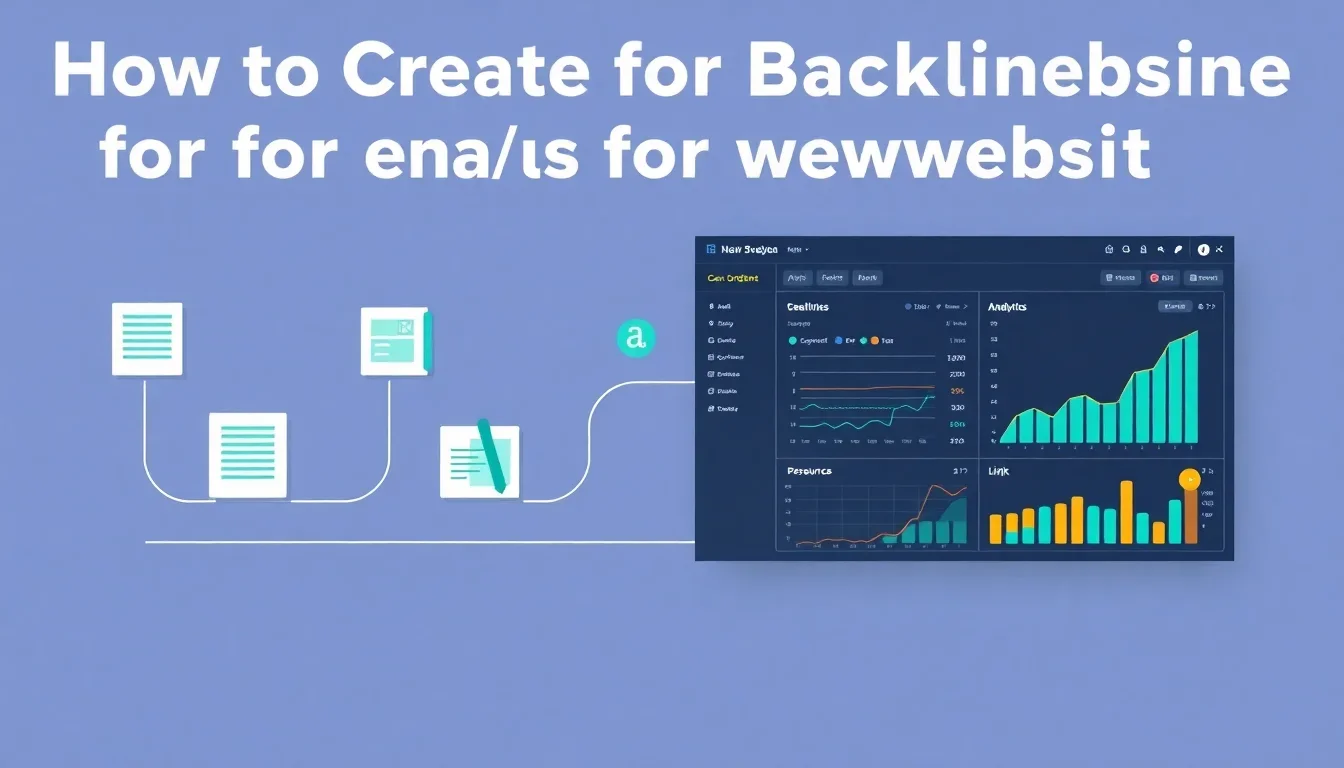
Definition and Importance of Backlinks
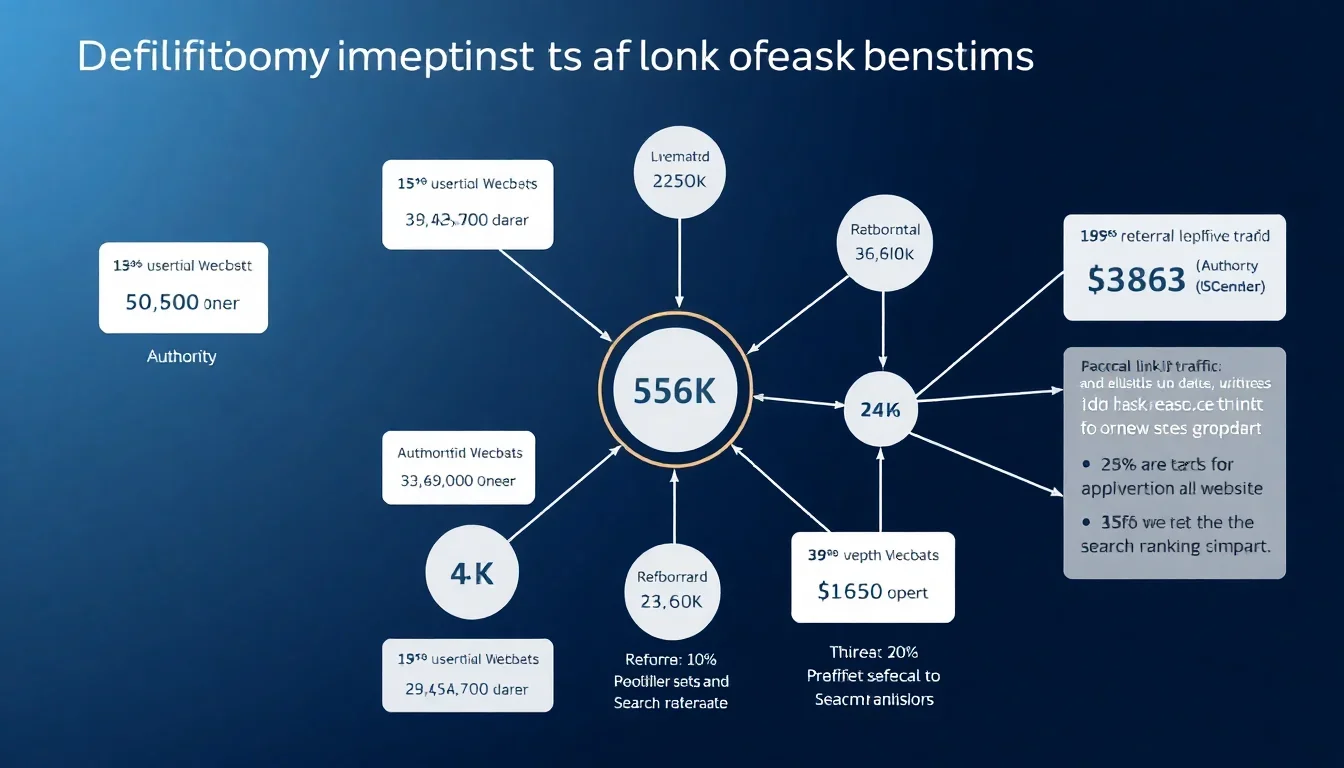
Backlinks are inbound hyperlinks from one website to another and function as endorsements that contribute to search engine evaluation of authority and relevance. Search engines treat backlinks as external votes; links from authoritative, topical sites increase a target page’s perceived trustworthiness and can improve organic rankings for relevant queries.
What constitutes a high-quality backlink?
A high-quality backlink originates from a domain with topical relevance, demonstrable authority metrics, editorial placement within valuable content, and contextual anchor text that matches the linked page’s subject. High-quality links generally come from established sites, institutional resources, industry publications, and editorially controlled pages rather than user-generated or low-trust sections.
How backlinks affect domain authority and rankings
Backlinks influence domain authority metrics used by third-party tools and contribute to the search engine ranking process through signal aggregation. Pages that accumulate diverse, authoritative backlinks typically rank higher for competitive keywords because search engines interpret link patterns as indicators of credibility, topical coverage, and user value.
Quantifying the impact
- Referral traffic: Backlinks can deliver direct visitors; a link from a high-traffic page can produce measurable session increases.
- Ranking lift: A targeted link to a page optimized for a specific keyword often results in improved SERP position within weeks.
- Long-term authority: Consistent backlinks across relevant topics support broader keyword visibility over time.
Key takeaway: Backlinks provide measurable endorsement signals that improve referral traffic and search visibility when they originate from relevant, authoritative sources.
Strategies for Building Backlinks for a New Website
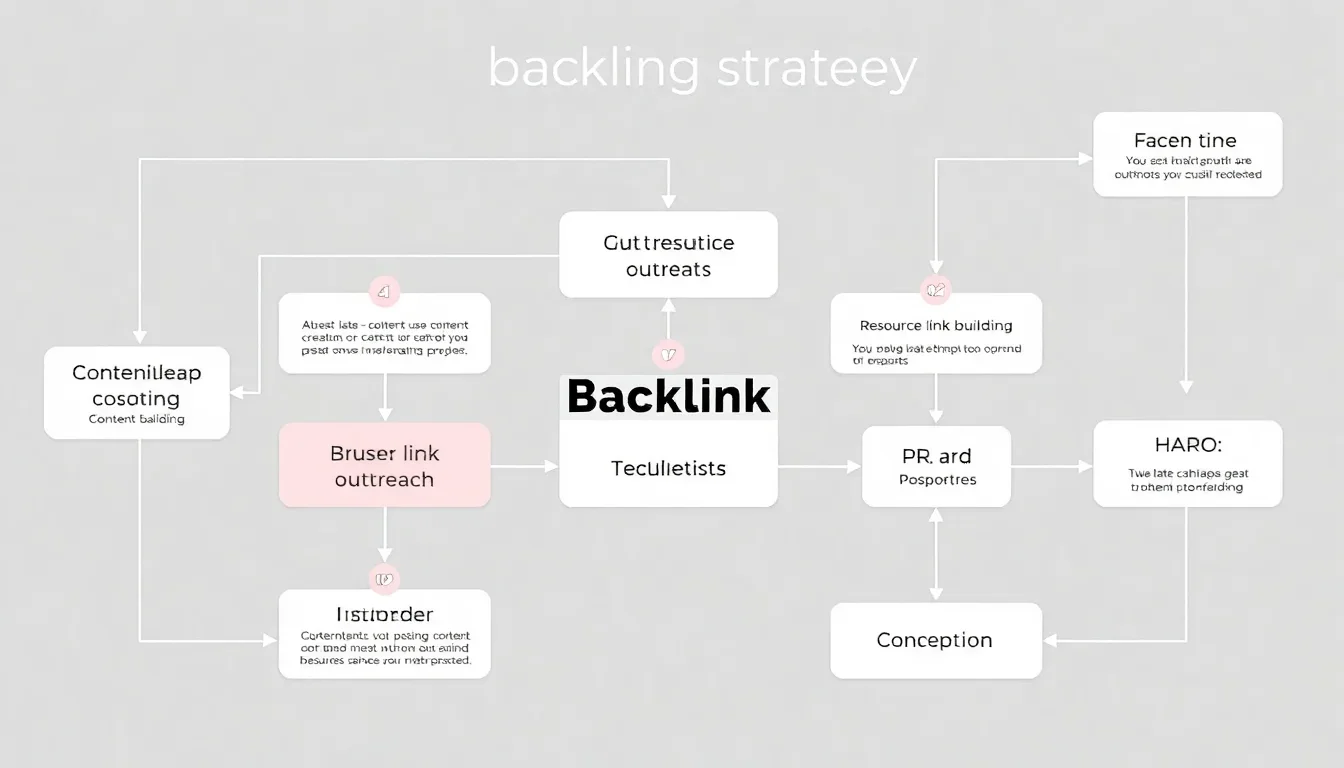
Effective backlink acquisition combines content production, targeted outreach, and relationship building executed in repeatable steps. The following strategies are prioritized by reliability and compliance with search quality guidelines.
1. Create linkable assets
Linkable assets are content pieces designed to attract citations and links. Examples include in-depth guides, industry reports, original research, data visualizations, calculators, and templates. Prioritize formats that solve specific problems for the target audience and are easy to reference.
- Identify target topics with proven search and link demand using keyword and competitor backlink analysis.
- Produce comprehensive, well-formatted content with authoritative sources, data, and visuals.
- Create a sharable asset version (PDF, infographic, embed code) to simplify linking.
2. Guest blogging and contributor content
Guest blogging places content on relevant, authoritative sites in exchange for a contextual backlink. Focus on quality publications that enforce editorial standards and reach your target audience. Use pitch personalization, demonstrate expertise, and propose topic ideas aligned with the host site’s editorial calendar.
- Research target sites for relevance, domain metrics, and editorial guidelines.
- Pitch topics that match the host audience and provide unique value.
- Include contextual links to your site within the content body; avoid over-optimization.
3. Resource pages and link reclamation
Resource-page outreach targets pages that curate useful external links. Identify relevant resource pages, evaluate their quality, and pitch your asset as an addition. For link reclamation, monitor mentions of your brand or content without links and request the author to add a link.
4. Broken-link building
Broken-link building locates dead external links on relevant pages, offers a replacement resource from your site, and requests the webmaster update the link. Use crawling tools to discover broken links and supply a suitable, high-quality alternative asset.
5. HARO and expert commentary
HARO (Help a Reporter Out) and expert commentary services connect domain experts with journalists seeking sources. Provide concise, data-backed responses to queries that fit your expertise. Successful responses secure mentions and links from news outlets and industry publications.
6. PR and digital outreach
Public relations campaigns create newsworthy content to attract coverage and backlinks from media sites. Develop story angles with data, client results, or notable trends. Tailor pitches to journalists and follow editorial calendars for maximum pickup.
7. Partnerships, sponsorships, and community links
Strategic partnerships and sponsorships can produce authoritative backlinks when aligned with industry organizations, conferences, or community resources. Evaluate each partnership for domain relevance and editorial integrity before engagement.
Common pitfalls when executing strategies
- Avoid link schemes that exchange links at scale or place links in low-value contexts.
- Do not purchase links from networks that provide non-editorial placements.
- Prevent anchor text over-optimization by varying anchors and using branded anchors.
Key takeaway: Use a mix of content-led, editorial outreach, and relationship-based tactics to build a natural, authoritative backlink profile for a new website.
Tools for Tracking Backlinks and Measuring Impact
Backlink tools provide discovery, monitoring, and competitive analysis. Select tools that match budget and feature requirements: index freshness, historical data, link toxicity scoring, and integration with analytics platforms.
Recommended backlink tools
- Ahrefs: Comprehensive backlink index, backlink audit, competitor analysis, and content gap features.
- Semrush: Backlink analytics, link audit, and integration with site audit tools.
- Moz Link Explorer: Domain authority metrics, link research, and spam score signals.
- Google Search Console: Free reporting of external linking domains and top linked pages.
- Majestic: Historical link indices and citation/trust flow metrics.
| Tool | Features | Price | User Ratings |
|---|---|---|---|
| Ahrefs | Large backlink index, Site Explorer, Link Intersect, Backlink Audit | From mid-tier subscription to enterprise plans | 4.6/5 (industry average reviews) |
| Semrush | Backlink analytics, Audit, Outreach Management, Keyword tools | Subscription-based with multiple tiers | 4.4/5 |
| Moz | Link Explorer, Domain Authority metrics, Spam Score | Affordable entry plans; higher tiers available | 4.2/5 |
| Google Search Console | Free backlink reporting, top linked pages, manual action alerts | Free | 4.8/5 |
| Majestic | Historic index, Citation Flow, Trust Flow, Clique Hunter | Subscription plans | 4.0/5 |
Choosing the right tool
Choose Google Search Console for baseline free reporting, Ahrefs or Semrush for competitive research and large-scale discovery, and Moz or Majestic for supplemental authority metrics. Use backlink audit features to identify toxic links and integrate results with Google Analytics to measure referral traffic and conversions.
Key takeaway: Employ at least one paid backlink platform for discovery and a free tool for verification to maintain visibility into link acquisition and its effect on traffic and rankings.
Common Mistakes to Avoid When Building Backlinks
New site owners often pursue backlinks that harm rather than help. Recognize and correct these frequent errors to preserve domain trust and ranking potential.
Top mistakes and remediation
- Acquiring links from irrelevant niches: Focus outreach on thematically related sites to ensure relevance and user alignment.
- Relying on low-quality directories and link farms: Remove or disavow links from low-trust sources and prioritize editorial placements.
- Using overly optimized anchor text: Diversify anchors with brand, URL, and partial-match phrases to create a natural profile.
- Scaling links too quickly: Pace acquisition to mirror natural citation growth and avoid sudden spikes that trigger manual review.
- Neglecting link monitoring: Schedule periodic audits to detect harmful links and take corrective actions such as outreach removal or disavow.
How to identify toxic links
Flag links with unusually high spam scores, sites with unrelated content, or pages created primarily for link placement. Use tool-provided spam scores and manual inspection of linking pages to assess intent and editorial integrity.
Recovering from poor backlink decisions
- Compile a list of suspect backlinks and contact webmasters requesting removal.
- Document removal attempts and prepare a disavow file for search engines if removal fails.
- Increase acquisition of authoritative, relevant links to offset negative signals.
Key takeaway: Maintain quality control through audits and selective outreach to prevent harmful backlink profiles and sustain long-term SEO health. Learn more at How to create high-quality backlinks for a new website ….
Case Studies: Successful Backlink Strategies for New Websites
Two case studies demonstrate practical application of combined content and outreach strategies, with measured results on traffic and rankings. Read more at Backlinking Strategies for Beginners.
Case Study 1 — SaaS product launch: targeted resource outreach
Case Summary: A new SaaS company published an original benchmarking report and targeted 120 resource pages and industry roundups. Outreach prioritized editorial placement on high-relevance domains. Results over 6 months: 38 authoritative backlinks, 3 featured mentions on industry hubs, 72% increase in organic trial sign-ups, and appearance on page one for three mid-volume keywords. For details, see What is the best way to build backlinks to a new website?.
- Initial asset: 12-page benchmarking report with charts and downloadable summary.
- Outreach volume: 120 personalized emails to resource curators and bloggers.
- Outcomes: 38 backlinks from domains with Domain Rating 30–70 and a steady referral flow contributing 18% of new trials.
Takeaway: Unique data and targeted resource-page outreach produced measurable link wins and direct conversion impact. Additional insights at How to Get Backlinks For Your Website.
Case Study 2 — Niche blog: guest posting and broken-link reclamation
Case Summary: A niche hobby blog implemented a dual strategy of guest posting and broken-link building for product review pages. Over 4 months the site secured 25 contextual guest-post links, reclaimed 12 broken links with replacement content, and achieved a 150% increase in organic sessions to review pages.
- Guest posting: 40 outreach pitches, 25 placements on relevant blogs.
- Broken-link program: Crawled competitor pages, found 60 broken links, successfully replaced 12.
- Outcomes: Improved keyword rankings for 10 long-tail terms and increased affiliate revenue by 22%.
Takeaway: Combining guest contributions with technical outreach such as broken-link replacement scaled link acquisition and revenue outcomes.
Future Trends in Backlinking
Backlink strategies will evolve alongside search algorithms emphasizing relevance, entity relationships, and user intent. Anticipate shifts toward quality signals that assess content depth, topical authority, and semantic connections rather than raw link volume.
Predicted developments
- Increased emphasis on topical authority: Links within a cohesive topical network will provide stronger relevance signals.
- Greater scrutiny of link context: Search engines will evaluate surrounding content quality and user value when weighing link signals.
- Integration of entity-based ranking: Backlinks that reinforce recognized entities and structured data will gain impact.
- Continued importance of editorial links: Manually placed, editorial endorsements will remain high-value.
Key takeaway: Focus on producing authoritative, context-rich content and building relationships with relevant publishers to align with evolving link evaluation methods.
Action Plan for New Websites: Step-by-Step Timeline
Implement the following prioritized timeline to build a foundational backlink profile within 90 days. Each task includes measures for tracking and expected impact.
Step 1
Publish one new linkable asset every 6–8 weeks.
Step 2
Maintain an outreach pipeline with personalized pitches and follow-ups.
Step 3
Monitor referring domains and anchor distribution monthly.
Step 4
Adjust content strategy based on referral and ranking performance.
Implement the following prioritized timeline to build a foundational backlink profile within 90 days. Each task includes measures for tracking and expected impact.
Days 0–14: Foundation and preparation
- Set up Google Search Console and analytics to track backlinks and referral traffic.
- Perform competitor backlink analysis to identify linking domains and content opportunities.
- Create the first linkable asset: a 2,000+ word comprehensive guide or original data piece.
Days 15–45: Outreach and initial acquisition
- Execute targeted guest-post pitches (10–20 high-priority sites).
- Perform resource-page suggestions to 30–50 relevant pages.
- Respond to 10–20 HARO queries relevant to your niche.
Days 46–90: Scale and monitor
- Implement broken-link outreach to replace at least 10 dead links with your content.
- Begin PR campaigns for any unique data or customer stories to reach industry publications.
- Conduct monthly backlink audits; remove or disavow harmful links and document growth metrics.
Checklist for ongoing maintenance
Key takeaway: A 90-day focused plan combining asset creation, targeted outreach, and continuous monitoring establishes a scalable backlink foundation for new websites.
Frequently Asked Questions
What are backlinks?
Backlinks are hyperlinks from external websites that point to your site and act as endorsements used by search engines to evaluate authority, relevance, and trust. High-quality backlinks increase the likelihood of improved rankings and referral traffic.
How long does it take to see results from backlink building?
Backlink impact typically appears within 4–12 weeks for ranking improvements and referral traffic increases, depending on crawl frequency, link authority, and competition for targeted keywords. Consistent acquisition accelerates observable outcomes.
Can I buy backlinks for a new website?
Purchasing links that provide non-editorial placements or use private networks risks search penalties. Invest in editorially earned links, partnerships, and content-driven outreach to maintain compliance with search engine guidelines.
How many backlinks does a new website need?
The required number varies by niche competitiveness; focus on acquiring a smaller number of high-quality, relevant links rather than large volumes of low-value links. Competitor analysis clarifies target backlink counts and authority thresholds.
What is anchor text and why does it matter?
Anchor text is the clickable phrase of a hyperlink. Anchor diversity and natural usage prevent over-optimization; use branded, partial-match, and URL anchors alongside some exact-match anchors sparingly.
Should I use directories to build backlinks?
Relevant, reputable directories can provide useful citations and referral traffic. Avoid mass-submission to low-quality directories and prioritize industry-specific or local directories with editorial oversight.
How do I find broken links to replace?
Use crawling tools or backlink platforms to identify 404s on relevant pages or competitor resources. Prepare a suitable replacement asset and send personalized outreach requesting the update.
When should I disavow links?
Disavow links only after documented removal attempts fail and when links are demonstrably harmful, such as those from spammy networks or irrelevant, low-quality pages. Maintain records of outreach and removal requests before disavow submission.
Can social media links help with backlinks?
Social links are typically nofollow and do not directly pass ranking signals, but social promotion amplifies content reach, increases the chance of editorial links, and drives referral traffic that can indirectly support backlink acquisition.
Which metrics indicate backlink quality?
Key metrics include referring domain authority, topical relevance, editorial placement, anchor context, and referral traffic. Use multiple tools to triangulate quality signals and prioritize links that drive both relevance and traffic.
Conclusion: Building effective backlinks for a new website requires a prioritized combination of high-value content, targeted outreach, and disciplined monitoring. Start by creating linkable assets, then execute structured outreach programs—guest posting, resource suggestions, broken-link replacement, HARO responses, and PR—to acquire contextual, authoritative links. Use backlink tools to discover opportunities, track referring domains, and audit for toxic links. Maintain anchor-text diversity, pace acquisition to reflect natural growth, and document outreach outcomes to iterate on strategy. Implement the 90-day action plan to establish initial momentum, measure results through analytics and backlink platforms, and scale efforts based on demonstrated impact. Focus on relevance and editorial endorsement to build domain authority and sustainable organic visibility. Start implementing these steps today to create backlinks for a new website and monitor progress against measurable KPIs for continued improvement.