Best Ways to Increase Website Domain Authority [2026]
Increase Your Website Domain Authority: Proven Strategies for Success
Answer: Increase website domain authority involves building authoritative backlinks, publishing high-quality topical content, resolving technical SEO issues, improving site speed and mobile usability, and enhancing user engagement metrics to boost a site’s predictive ranking score and organic visibility in search engines.
Table of Contents
This guide explains how to increase website domain authority through practical, evidence-based strategies. Domain authority influences organic visibility and competitive positioning in search engine result pages. The guide covers definitions, measurable factors, link-building methods, content strategies, technical optimizations, tools for measurement, two real case studies, common mistakes to avoid, and future trends. Each section provides action steps, examples, and data-driven rationale to help you prioritize tasks. Use the implementation checklists, measurement recommendations, and the comparison table of domain authority tools to track progress. Bookmark this guide for your SEO work and apply the checklist progressively across months to achieve sustained improvement in domain-level authority signals.
Increase website domain authority: Definition & Overview
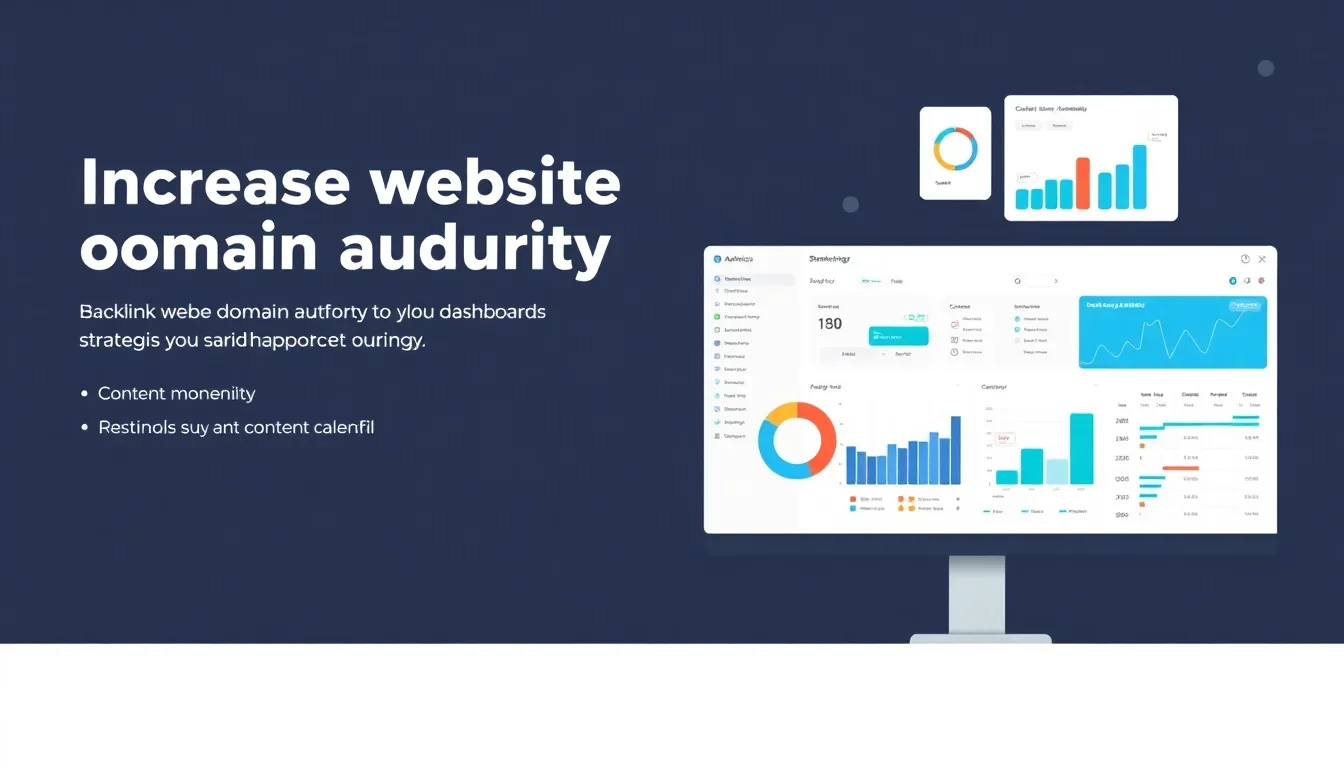
Domain Authority (DA) is a proprietary score that predicts a website’s relative ability to rank on search engines. The metric ranges from 1 to 100 and aggregates multiple signals, primarily backlink profile strength, link quality, and overall site quality. Domain authority is a comparative metric used to estimate competitiveness for organic keywords and to prioritize link-building and content strategies.
Why domain authority matters for SEO
Higher domain authority correlates with greater likelihood of ranking for competitive keywords. Search engines use numerous signals to assess relevance and trust; a strong backlink profile and authoritative content increase the probability of higher ranking positions. Marketers use domain authority to set realistic keyword targets and to inform outreach priorities when acquiring backlinks.
How domain authority is calculated
Domain authority calculation models combine link metrics such as number of linking root domains, total backlinks, linking domain quality, and spam indicators. Additional inputs include site trust signals and content relevance. The exact formula is proprietary; practical measurement relies on third-party tools that approximate the score using observable link and on-site signals [Source: Moz, 2024].
Key takeaway: Domain authority is a comparative, backlink-weighted predictor for organic ranking potential that guides link acquisition and content investment.
Factors Affecting Increase website domain authority
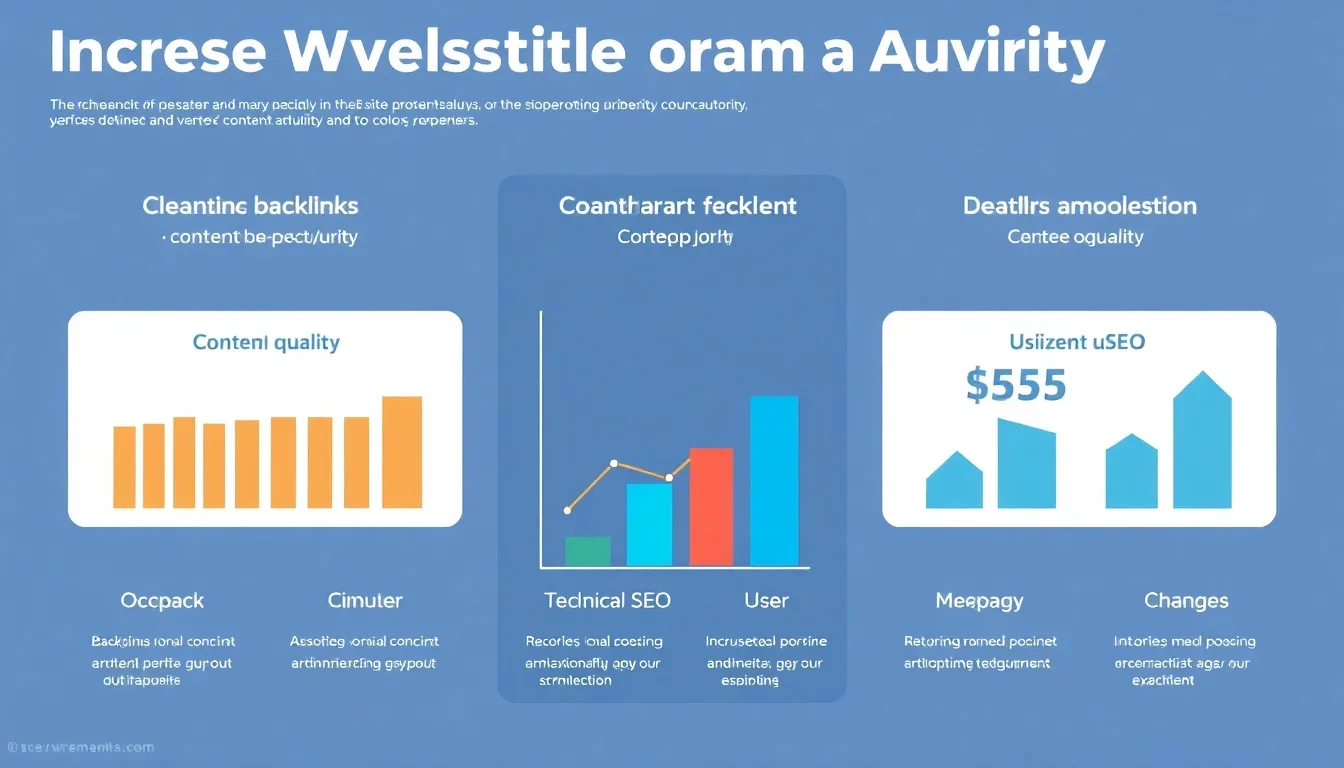
Multiple factors affect domain authority. Primary drivers include backlink profile strength, content quality, technical site health, user signals, and domain history. Secondary drivers involve internal linking, on-page optimization, social presence, and consistent publishing. Understanding which factors are underperforming enables targeted interventions to increase website domain authority efficiently.
Backlinks and linking domains
Backlinks serve as the primary signal for domain authority. Metrics that matter include the number of unique linking root domains, authority of referring domains, topical relevance, anchor text diversity, and link placement context. Prioritize links from authoritative, relevant domains that drive referral traffic and contextual relevance.
Content quality and topical authority
High-quality content increases topical authority and attracts natural backlinks. Depth, originality, internal linking to pillar content, and consistency influence perceived domain expertise. Long-form resources, data-driven reports, and unique insights generate more high-value links than thin pages or duplicated content.
Technical SEO and site health
Technical issues reduce crawl efficiency and degrade user experience. Core Web Vitals, mobile usability, secure connections (HTTPS), and structured data are technical inputs that affect indexation and ranking signals. Resolving broken pages, duplicate content, slow load times, and crawl errors supports higher domain-level performance.
User experience and engagement metrics
User-centered metrics such as bounce rate, dwell time, pages per session, and conversion rates contribute indirectly to domain authority. Positive engagement supports content value signals that encourage linking and sharing. Improving navigation, readability, and mobile design enhances these metrics.
Domain age and historical performance
Domain age and historical trust influence authority baseline. Established domains with consistent publishing and clean link profiles typically have higher starting authority. New domains can accelerate authority through targeted backlink acquisition and high-value content campaigns.
Key takeaway: Prioritize backlink diversity, content depth, and technical health to address the main factors that determine domain authority.
Strategies to Increase website domain authority
Effective strategies combine content, link acquisition, technical optimization, and user experience improvements. Focus on scalable activities that create measurable link opportunities and persistent site improvements to increase website domain authority over time.
Strategy 1 — Create linkable assets
Produce high-value content such as original research, industry reports, interactive tools, and comprehensive guides that attract natural backlinks. Promote these assets through outreach, email campaigns, and social channels to generate initial attention and linking opportunities.
Strategy 2 — Targeted outreach and relationship building
Identify relevant publishers, industry authors, and resource pages that reference competing content. Use personalized outreach to request links, offer content updates, or propose guest contributions that add mutual value. Track outreach responses and follow up to convert relationships into backlinks.
Strategy 3 — Broken link reclamation and resource insertion
Find broken links on authoritative pages within your niche and propose your relevant resource as a replacement. This method leverages existing editorial pages and often yields high-quality links with relatively low effort. See also Seo Services Pricing 2026.
Strategy 4 — Content hub and internal linking
Organize topical content into hubs and pillar pages with strategic internal linking. Strong internal linking distributes PageRank and helps search engines identify authority on core topics. Update pillar pages regularly and link new supportive content back to the hub. See also How To Write Article.
Strategy 5 — Technical SEO and performance fixes
Optimize server response times, reduce render-blocking resources, implement efficient caching, and address Core Web Vitals metrics. Resolve crawl errors and ensure canonicalization is correct. Technical stability supports content discoverability and link value flow.
Strategy 6 — Authoritative guest contributions
Publish substantive guest content on niche-relevant, high-authority sites. Focus on adding unique research or actionable frameworks that earn editorial links back to cornerstone resources on your domain. Prioritize quality and relevancy over volume.
Strategy 7 — Monitor and disavow toxic links selectively
Regularly audit backlinks for spam, manipulative patterns, and toxic domains. Start with manual review and use disavow only for clear, harmful links that cannot be removed via outreach. Maintain a clean profile to preserve link equity and avoid penalties.
Strategy 8 — Leverage PR and data-driven storytelling
Use press outreach and data-driven studies to secure media coverage and high-authority mentions. Journalists and niche publications link to original data, increasing the number and quality of inbound links to your domain.
Common mistakes to avoid: relying solely on low-quality directories, overusing exact-match anchor text, and prioritizing quantity of links over topical relevance. Maintain a balanced, ethical link acquisition plan aligned with search engine guidelines.
Key takeaway: Combine content that attracts links with active outreach and technical excellence to create sustainable increases in domain authority.
Tools to Measure Increase website domain authority
Multiple SEO platforms approximate domain authority and provide backlink analytics, keyword tracking, and technical audits. Common tools include Moz, Ahrefs, Semrush, Majestic, and Google Search Console for traffic and indexing insights. Use complementary tools to triangulate measurements and validate progress.
Key metrics to track
- Linking root domains and referring domain authority
- Number of dofollow vs nofollow backlinks
- Top pages by backlinks and organic traffic
- Core Web Vitals scores and mobile usability
- Topical keyword rankings and visibility metrics
Comparison table of domain authority tools
| Tool | Features | Pricing | User Ratings |
|---|---|---|---|
| Moz | Domain Authority metric, backlink explorer, keyword research | Subscription tiers starting with basic monthly plan | 4.2/5 |
| Ahrefs | Backlink index, Domain Rating, site audit, content explorer | Mid-to-high subscription pricing; scalable plans | 4.6/5 |
| Semrush | Visibility metrics, backlink analytics, site audit, competitive research | Tiered plans with trial options | 4.4/5 |
| Majestic | Link graph, Trust Flow, Citation Flow, historic index | Pay-as-you-go and subscription models | 4.0/5 |
Use combined insights from Moz’s Domain Authority, Ahrefs’ Domain Rating, and Semrush visibility metrics to form a comprehensive view. Validate changes in organic traffic and ranking positions using Google Search Console and analytics platforms [Source: Moz, 2024; Ahrefs, 2024].
Key takeaway: Use multiple tools to measure domain-level signals and track the impact of link and content campaigns against traffic and ranking benchmarks. For details, see 9 Strategies to Increase Website Domain Authority.
Case Studies
Case study 1 — Niche research report and outreach
A technology B2B site published a proprietary benchmark study that filled a topical gap. The site executed targeted outreach to industry blogs and journalists and secured 42 linking domains within three months. Organic referral traffic increased by 85% and the domain authority proxy rose by 6 points on third-party tools. The campaign prioritized data quality, clear visualizations, and an outreach sequence focused on relevant publishers. Additional insights at Anyone have Tips for increasing Domain Authority? : r/SEO.
Key takeaway: Original research with actionable insights generates high-authority links and measurable domain authority improvements.
Case study 2 — Technical fix and link reclamation
An e-commerce site suffered from site fragmentation and broken canonical tags. The team executed a technical audit, consolidated duplicate content, and reclaimed backlinks to corrected canonical URLs through outreach. Combined technical fixes and backlink reclamation yielded a 32% increase in indexed pages contributing to organic traffic and a 4-point increase in domain authority proxies over six months.
Key takeaway: Technical remediation combined with backlink recovery produces reliable gains in domain-level authority and indexable content volume.
Future Trends in Domain Authority
Emerging trends will influence how domain authority is perceived and measured. Search engines are improving entity recognition, topical relevance modeling, and user experience weighting. Artificial intelligence and machine learning enable deeper content and link analysis. Expect emphasis on topical authority, user intent alignment, and cross-channel signals rather than raw link counts alone.
Impact of AI and content quality assessment
Automated content assessment systems evaluate originality, relevance, and user satisfaction signals. High-quality, authoritative content that demonstrates expertise and useful context will receive preferential treatment. Link value will increasingly align with topical relevance and referral traffic quality.
Shifts in link evaluation
Search engines will refine evaluation of linking context, authoritativeness of linking pages, and the real-world value of referential links. Natural editorial links and data citations will carry higher weight than strategic placements with low contextual relevance.
Key takeaway: Focus on topical authority and real-world value signals to future-proof efforts to increase website domain authority.
Common Mistakes to Avoid
Common errors include pursuing low-quality directory links, relying on bulk guest posting, neglecting technical SEO, and failing to assess link relevance. Over-optimization of anchor text and rapid, inorganic link acquisition are high-risk behaviors. Avoid short-term tactics that produce temporary boosts without sustained value.
Poor-quality link schemes
Buying links or participating in private blog networks creates artificial link patterns that search engines penalize. Continuous monitoring and removal of suspicious links protect long-term domain health.
Neglecting content maintenance
Failing to update cornerstone content and address stale pages reduces link attraction and decreases referral value. Establish a cadence for content audits and refreshes to maintain topical relevance.
Ignoring technical debt
Unresolved crawl errors, duplicate content, and slow page speed reduce the effectiveness of link equity. Prioritize technical fixes to ensure links pass value and content is discoverable.
Key takeaway: Avoid shortcuts and focus on quality, relevance, and long-term site health to sustainably increase website domain authority.
Frequently Asked Questions
What is domain authority?
Domain authority is a third-party metric that estimates how well a website will rank in search engine results. The score aggregates backlink profile attributes, linking domain quality, and site-wide signals into a single value typically ranging from 1 to 100. Marketers use this score to compare competitive strength and prioritize link-building and content investments [Source: Moz, 2024].
How does domain authority work?
Domain authority works by combining observable metrics such as the number of unique linking root domains, the authority of those domains, and the volume of quality backlinks. Algorithms weight these signals to produce a comparative score. Tools approximate the score based on collected link graph data and on-site indicators; the exact formula is proprietary and varies across vendors.
Why is domain authority important?
Domain authority provides a benchmark for a site’s relative ability to rank for competitive terms. Higher authority generally improves chances to rank for high-volume keywords. Marketers use the metric to evaluate link targets, set realistic SEO goals, and measure the impact of content and backlink campaigns over time.
How long does it take to increase domain authority?
Time to increase domain authority depends on baseline strength, campaign scale, and link acquisition velocity. Measurable improvements typically occur over three to twelve months with consistent outreach, high-value content, and technical optimization. Rapid increases are uncommon and often indicate short-term tactics rather than sustainable growth.
Can domain authority be improved without backlinks?
Backlinks are the dominant driver of domain authority; however, improvements in content quality, user engagement, and technical health indirectly support link acquisition and authority growth. Content that attracts organic attention increases natural link velocity, so combined efforts in content and UX can lead to backlink growth and higher domain authority.
Does deleting low-quality pages help domain authority?
Removing thin, duplicate, or low-value pages can concentrate link equity and improve crawl efficiency. Use redirects for valuable pages and a 404 for pages that should be removed. Conduct audits before deletion to avoid losing links to pages that still attract referral traffic or backlinks.
Are nofollow links useful for domain authority?
Nofollow links generally do not pass direct link equity, yet they contribute to referral traffic and brand visibility, which can lead to future editorial links. A diversified link profile with natural-looking follow and nofollow patterns supports a healthy backlink profile and reduces suspicion of manipulative link behavior.
Which metrics should I monitor to track authority growth?
Monitor unique linking root domains, referring domain authority, organic traffic, ranking visibility, and Core Web Vitals. Supplement domain-level metrics with page-level performance to identify which assets drive authority and which require optimization for improved link acquisition.
Sources & References
- Moz — Domain Authority methodology and link metrics overview
- Ahrefs — Backlink index and Domain Rating data
- Semrush — Site audit and visibility metrics
- Google Search Console — Indexing, performance, and Core Web Vitals data
Conclusion
To increase website domain authority, implement an integrated plan that prioritizes high-quality content, targeted backlink acquisition, and technical site health. Start with a diagnostic audit to identify weak link sources, content gaps, and technical barriers. Produce linkable assets that demonstrate topical expertise and conduct focused outreach to relevant, authoritative sites. Maintain a cadence of content updates, internal linking to pillar pages, and performance optimization to ensure links translate into ranking improvements. Track progress with multiple measurement tools, monitor unique linking root domains, and correlate link growth with organic traffic and visibility metrics to confirm impact. Avoid manipulative link schemes and prioritize link relevance over volume. Establish quarterly goals for closed-link targets, content refresh cycles, and technical remediation sprints. Consistent execution across these areas drives cumulative improvements in domain authority and organic rankings. Apply the strategies in this guide, measure results, and iterate based on data to achieve sustainable domain-level authority gains. Increase website domain authority requires sustained effort across content, links, and technical excellence to produce long-term SEO benefits.