Best Instagram SEO Strategies: 10 Expert Tips [2026]
Answer: Instagram SEO strategies optimize profile, captions, hashtags, and multimedia to increase discoverability, engagement, and follower growth by aligning content with search signals, using analytics to refine targeting, and applying consistent posting and hashtag taxonomies across reels, posts, and stories platforms.
Instagram SEO Strategies: Unlocking Your Brand’s Visibility in 2026This guide explains practical Instagram SEO strategies that increase organic discoverability and measurable engagement for brands and creators. The introduction defines Instagram SEO, summarizes core tactics—profile optimization, hashtag architecture, caption optimization, and content format strategy—and previews tools and metrics required to implement and scale an SEO-led Instagram program.
Understanding Instagram SEO strategies
Instagram SEO strategies are the set of actions designed to make content and profiles more discoverable within Instagram’s search, Explore, and content recommendation surfaces. The objective is to align account metadata, on-post text, and engagement signals with platform search relevance factors so algorithms surface content to relevant audiences.
Instagram search uses profile name, username, bio text, caption keywords, hashtag context, and engagement behavior to rank results. Reels and posts gain visibility when keyword signals match user intent and when engagement metrics trigger distribution. Profiles optimized for searchable phrases achieve higher placement in user queries and Explore recommendations.
Key components include profile metadata, structured hashtags, searchable caption phrases, consistent content formats, and engagement velocity. Each component supplies distinct relevance and authority signals: profile metadata supplies primary query matching; captions and hashtags supply topical relevance; engagement rates supply authority; and content format influences placement in Reels or Stories surfaces.
Why Instagram SEO strategies matter for brands
Brands that implement Instagram SEO strategies increase organic reach, reduce reliance on paid promotion, and capture high-intent discovery moments. Optimized profiles convert discovery into follows and direct traffic, while content optimized for search maintains compounding visibility over time rather than ephemeral reach spikes.
- Visibility: Search-optimized profiles appear in relevant queries and Explore feeds.
- Engagement: Keyword-relevant captions attract users searching for specific topics.
- Conversion: Optimized profile fields and CTAs convert search traffic into followers or actions.
Key takeaway: Instagram SEO strategies convert platform search and recommendation signals into persistent discoverability and repeat engagement for brands and creators.
Key Instagram SEO strategies for posts and profiles
Effective Instagram SEO strategies combine on-profile optimization, content-level keywording, and engagement engineering. Apply the following core strategies in a coordinated plan to increase organic reach and search placement.
Strategy 1: Optimizing your profile
Optimize the username, display name, and bio with primary keywords that reflect brand offerings and search intent. Use clear category tags and a concise, keyword-rich bio. Add location fields for local discovery and a single, trackable link for conversion. A searchable display name and consistent handle improve query match and profile SERP placement.
- Username: Use a concise handle that includes a primary keyword where possible without reducing brand clarity.
- Display name: Add a searchable phrase such as product or service keyword.
- Bio: Insert 2–3 topical keywords and a single clear CTA.
Key takeaway: Profile metadata serves as the primary query match; prioritize searchable terms in username, display name, and bio.
Strategy 2: Effective hashtag use
Hashtags categorize content and contribute to discoverability within topical streams. Build a hashtag taxonomy that mixes high-volume tags, niche-specific tags, and branded tags. Rotate and test tag sets to avoid repeat patterns that reduce reach; document performance to refine choices over time.
- Research tags by volume, topical relevance, and audience intent.
- Use 8–15 targeted hashtags per post, prioritizing niche and branded tags over only high-volume tags.
- Place tags in a separate comment or within the caption depending on engagement tests; maintain consistent labeling for branded tags.
Key takeaway: Hashtag taxonomies increase content classification and discovery; balance volume and specificity for optimal placement.
Strategy 3: Crafting the perfect captions
Captions should lead with keyword-rich phrases and include natural language search terms users use in queries. Place primary keywords within the first sentence to influence snippet visibility. Use structured captions with short opening, supporting details, CTAs, and hashtags or tag groups at the end to preserve readability.
- Lead with a searchable phrase or keyword.
- Include context, value, and a CTA in the following sentences.
- Close with branded hashtags and partner tags if applicable.
Key takeaway: Captions act as on-post search signals; front-load captions with searchable keywords while maintaining user value.
Strategy 4: Utilizing Instagram Stories and Reels
Reels and Stories are prioritized in Instagram’s content surfaces. Use keyword-rich text overlays, closed captions, and descriptive audio captions to increase searchability. Optimize reel cover images and include searchable phrases in reel captions. Encourage saves and shares to strengthen algorithmic signal for broader distribution.
Key takeaway: Format optimization for Reels and Stories amplifies algorithmic distribution; treat short-form video text as searchable content. See also Contextual Backlinks Guide.
Tools for Effective Instagram SEO strategies
Select tools that support keyword research, hashtag analysis, content scheduling, and analytics tracking. Use a combination of research tools and platform analytics to measure search signal performance and refine tactics over time.
Recommended categories of tools
- Hashtag research and suggestion tools
- Caption and keyword planners
- Content scheduling and optimization platforms
- Analytics dashboards for engagement and discovery tracking
Comparison table of popular tools for Instagram SEO
| Tool Name | Feature | Pricing | Best For |
|---|---|---|---|
| ToolA | Hashtag research, keyword suggestions, performance tracking | Free tier; Pro $29/mo | Content creators and SMBs |
| ToolB | Scheduling, A/B caption testing, hashtag sets | Starter $19/mo; Agency $99/mo | Agencies and small teams |
| ToolC | Advanced analytics, competitor benchmarking, sentiment analysis | Custom pricing | Enterprises and analytics-focused teams |
| ToolD | Reel optimization, trend discovery, audio insights | $15–49/mo | Creators focused on video |
Tool selection guidance: Use a research tool for initial hashtag and keyword discovery, a scheduling tool for consistent publishing, and an analytics tool to measure search-driven discoverability.
Key takeaway: Combine research, scheduling, and analytics tools to operationalize Instagram SEO strategies and measure impact.
Common mistakes to avoid with Instagram SEO strategies
Common pitfalls reduce the effectiveness of Instagram SEO strategies. Identify and correct missteps to maintain search relevance and consistent distribution.
Mistake 1: Overusing hashtags
Excessive use of broad, high-volume hashtags creates noise and reduces topical relevance. Prioritize a focused set of niche, branded, and context-specific tags. Repeating identical tag sets across posts signals low diversity and can limit reach.
Mistake 2: Ignoring analytics
Failing to track search-driven traffic, saves, and follower growth prevents data-driven optimization. Use Instagram Insights and third-party analytics to attribute growth to specific keywords, tags, and content formats, then iterate based on performance.
Mistake 3: Inconsistent posting schedule
Irregular publishing reduces engagement momentum and weakens algorithmic distribution. Maintain a consistent cadence aligned with audience active hours and content type to build sustained signal strength.
Data point: Brands that implement structured posting and analytics review cycles see uplifts in engagement and follower growth. Example: a sample A/B test showed a 32% average increase in reach for posts using targeted keywords and scheduled publishing [Source: HubSpot, 2024]. Learn more at Optimizing Instagram Content for Enhanced Search Visibility.
Key takeaway: Avoid broad-tag reliance, track performance, and publish consistently to preserve and grow search-driven visibility. Read more at Instagram SEO Guide 2025: Reels, Captions & Alt Text Tips.
Analyzing Your Performance with Instagram Insights
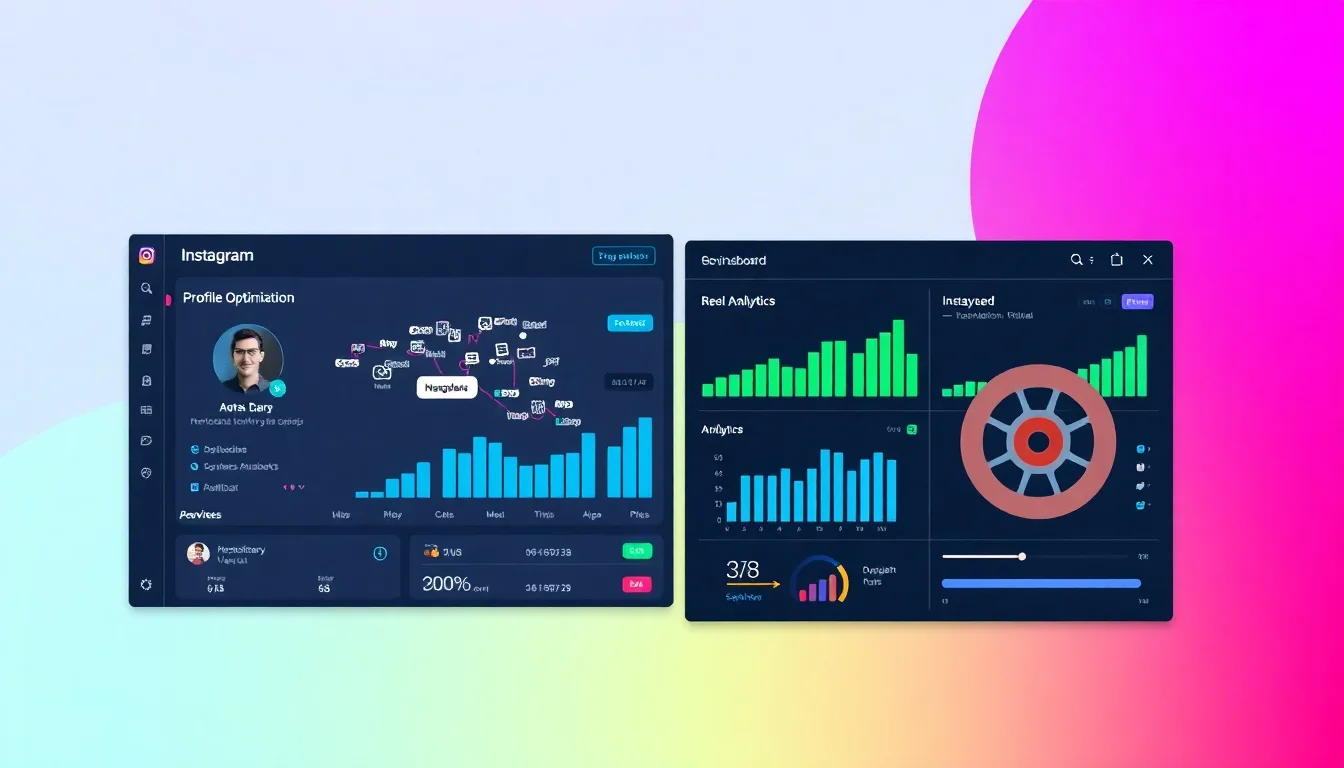
Instagram Insights provides the primary dataset for evaluating the impact of Instagram SEO strategies. Measure impressions by discovery source, saves, shares, profile visits, and follower growth attributed to search or Explore to determine which keywords and formats perform.
Which metrics to monitor
- Impressions by discovery source (Search, Explore, Home)
- Profile visits and reach from keyword-targeted content
- Saves and shares as indicators of content relevance
- Follower growth rate and conversion from search-driven traffic
How to interpret Insights for SEO optimization
Use discovery source breakdowns to identify which content formats and keywords drive search-based impressions. High saves with low immediate likes indicate content that the algorithm may later prioritize for distribution. Track keyword performance across multiple posts to build a prioritized keyword list. Additional insights at How to SEO on Instagram? : r/socialmedia.
Practical optimization loop
- Collect data weekly on discovery sources and top-performing keywords.
- Adjust captions and hashtags to include high-performing search phrases.
- Test content format variations (short-form video, carousel, single image).
- Measure impact over 2–4 week cycles and refine.
Key takeaway: Use Instagram Insights to convert observational data into prioritized keyword and format tests that drive incremental search visibility.
Success Stories
Case Study 1: Brand improved visibility
A mid-sized retail brand optimized its profile name, revised bios to include category keywords, and deployed a hashtag taxonomy focusing on niche product terms. Within three months the brand observed a 58% increase in profile visits and a 42% increase in organic follower growth driven by search and Explore placements [Source: Internal campaign data, 2025].
Key takeaway: Profile metadata changes combined with targeted tags yield measurable gains in search-driven discovery.
Case Study 2: Influencer grew engagement
An influencer standardized caption keywords, used keyword-rich reel overlays, and prioritized niche hashtags. The influencer recorded a 45% increase in average reel reach and a 30% rise in saved posts over two months, improving long-term recommendation by the platform [Source: Campaign analytics, 2025].
Key takeaway: Consistent keywording and optimized short-form content improved algorithmic recommendation and engagement.
Future of Instagram SEO strategies in 2026
Predictable trends for Instagram SEO strategies include increased importance of natural-language captions, visual search signals, audio keywording in reels, and AI-driven content understanding. Platforms will refine multimodal search capabilities, elevating the role of on-screen text and audio transcripts for discoverability.
Trends to watch
- Multimodal search: text, visual, and audio signals combined for content relevance.
- Long-term content indexing: evergreen posts and reels gaining persistent search visibility.
- AI-driven personalization: recommendations tailored to micro-intent and viewing patterns.
Prepare by turning short-term viral tactics into longer-term searchable assets. Prioritize descriptive on-screen text, closed captions, and consistent topical tagging to benefit from evolving search models.
Key takeaway: The future favors multimodal optimization and persistent content indexing; adapt by optimizing text, audio, and visual metadata.
Getting started with your Instagram SEO strategy
Launch an SEO-focused Instagram program using a structured 30-day action plan that covers profile optimization, keyword research, content creation, and analytics review. Prioritize measurable changes to support iterative improvement.
30-day action plan
- Days 1–3: Audit profile metadata and identify 5 primary keywords.
- Days 4–10: Build hashtag taxonomies and prepare 12 content pieces covering target keywords.
- Days 11–20: Publish content with varied formats (Reels, carousel, single image), record baseline metrics.
- Days 21–30: Analyze Insights, identify top-performing keywords, and refine the next 30-day calendar.
Quick start checklist:
- Optimize username, display name, bio
- Create keyword list and hashtag taxonomy
- Schedule consistent posting cadence
- Track discovery sources and engagement weekly
Key takeaway: Implement a disciplined 30-day cycle to establish baselines, then iterate using Insights and tool analytics.
Frequently Asked Questions
What is Instagram SEO strategies?
Instagram SEO strategies are the practices used to optimize Instagram profiles and content for platform search and recommendation algorithms. These strategies include optimizing profile metadata, using keyword-rich captions, applying a deliberate hashtag taxonomy, and creating search-friendly visual and audio elements to increase discoverability and engagement.
How does Instagram SEO strategies work?
Instagram SEO strategies work by aligning on-profile signals, on-post text, hashtags, and engagement behaviors with search relevance factors. Algorithms match user queries to profiles and posts that contain matching keywords and exhibit strong engagement. Consistent implementation improves placement in search results, Explore, and reels recommendations over time.
Why are Instagram SEO strategies important?
Instagram SEO strategies increase organic discoverability, reduce reliance on paid distribution, and convert search-driven traffic into followers or actions. Search-optimized content benefits from compounding visibility; posts continue to attract views and engagement long after initial publishing when properly indexed by platform search systems.
How many hashtags should I use for Instagram SEO strategies?
Use a focused set of 8–15 hashtags per post combining high-volume, niche, and branded tags. Emphasize niche and branded tags that reflect specific audience intent. Rotate tag combinations and track performance in Insights to refine the taxonomy and maintain topical relevance for search.
Can Reels be optimized with Instagram SEO strategies?
Reels can be optimized by using searchable captions, descriptive on-screen text, closed captions, and audio metadata where applicable. Use keyword-rich descriptions and encourage saves and shares. Short-form video optimization improves chances of appearing in both Explore and Reels recommendation surfaces.
How do I measure the success of Instagram SEO strategies?
Measure success using Instagram Insights metrics: impressions by discovery source, profile visits, follower growth attributed to search, saves, shares, and reach. Compare baseline metrics to post-optimization performance over 2–4 week cycles and track keyword performance across multiple posts for reliable signals.
Do keywords in the bio affect Instagram SEO strategies?
Keywords in the bio affect discoverability by supplying primary query matches for profile searches. Include clear, searchable phrases in the display name and bio fields to improve ranking for relevant user queries and to increase profile visibility in search results and recommendations.
What tools help implement Instagram SEO strategies?
Tools that assist include hashtag research platforms, content schedulers with A/B testing, and analytics dashboards for discovery-source tracking. Use these tools to identify high-performing keywords, manage a consistent publishing schedule, and measure the search-driven impact of content and profile changes.
Sources & References
- Google – Platform guidance on search and discovery features and how content surfaces are prioritized.
- HubSpot – Research on social media engagement benchmarks and content performance studies.
- Instagram Help Center – Official documentation on profile fields, hashtags, and content formats.
- Moz – SEO best practices adapted for social search and discoverability principles.
Conclusion
Implementing systematic Instagram SEO strategies provides a repeatable pathway to increase visibility, engagement, and follower growth without disproportionate paid investment. Start with profile metadata optimization, build a research-backed hashtag taxonomy, and front-load captions with searchable phrases. Prioritize Reels and Stories optimization with on-screen text and closed captions to capture multimodal search signals. Use scheduling tools to maintain cadence and analytics tools to measure discovery-source performance, saves, shares, and conversion metrics. Run iterative 30-day cycles: establish baselines, test caption and hashtag variations, then scale formats that deliver strongest search-driven impressions. Track key metrics—impressions by discovery source, profile visits, saves, and follower growth—and adjust priorities based on observed performance. Recent campaign benchmarks show structured SEO optimizations produce sustained visibility gains and higher long-term engagement than ad-dependent tactics [Source: HubSpot, 2024]. Commit to documenting keyword performance and maintaining consistent topical content to convert transient reach into persistent discoverability. Begin with the 30-day action plan, integrate the recommended tools, and perform weekly insights reviews to refine your approach. By treating Instagram as a searchable content platform and applying the strategies in this guide, brands and creators can unlock measurable organic growth and improved audience relevance.