Mobile Usability Testing Guide [2026]: 8 Essential Steps
Answer: Mobile usability testing evaluates how easily users navigate and interact with mobile applications or websites, identifying usability issues through user tasks, metrics, and observations to improve performance, accessibility, and satisfaction across devices, informing design iterations and reducing user errors globally.
Table of Contents

Definition & Importance of Mobile usability testing
Mobile usability testing is a process that measures user effectiveness, efficiency, and satisfaction when interacting with mobile applications or responsive websites. The process produces qualitative and quantitative data by observing representative users completing realistic tasks under controlled or natural conditions.
Core components of mobile usability testing
- Task-based scenarios: realistic activities users perform to reveal friction points.
- Metrics: task success rate, time on task, error rates, and System Usability Scale (SUS) scores.
- Observation: moderated sessions, screen recordings, and click/tap heatmaps.
- Recruitment: representative demographics, device models, and network conditions.
- Iteration: prioritized fixes, retesting, and tracking improvements over time.
Why mobile usability testing matters for product success
Mobile usability testing reduces abandonment, increases retention, and improves task completion rates by identifying friction in navigation, input, and content presentation. Measured improvements in usability correlate directly with conversion metrics, reduced support costs, and higher user satisfaction scores.
Key takeaway: Mobile usability testing provides actionable, measurable evidence to guide design decisions and increase the effectiveness of mobile products.
How to Perform Mobile usability testing
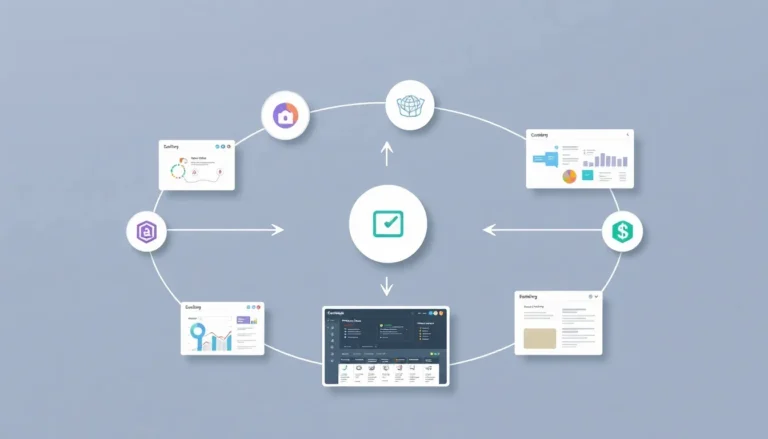
Perform mobile usability testing through a structured sequence of planning, recruitment, execution, analysis, and iteration designed to surface real user problems and validate solutions.
Step 1: Define goals and success metrics
- Define primary objectives: reduce checkout friction, increase feature discoverability, or improve accessibility.
- Select KPI metrics: task success rate, time on task, error frequency, completion rate, and SUS.
- Set thresholds for acceptable performance (for example, task success ≥ 85%).
Step 2: Develop task scenarios and test script
Create concise, goal-oriented tasks that reflect real user intentions and avoid leading language. Provide context, device constraints, and expected success criteria for each task.
Step 3: Recruit representative participants
- Recruit users who match target personas and device usage patterns (OS versions, screen sizes).
- Include a mix of novice and experienced users where applicable.
- Plan for 5–8 participants per iteration for qualitative testing; scale to 20–50 for statistical validation.
Step 4: Select testing environment and tools
Choose moderated lab sessions, remote moderated, or unmoderated remote testing depending on goals. Configure realistic network conditions and device states, including battery, permissions, and notifications.
Step 5: Execute sessions and collect data
- Begin with a brief introduction and consent; avoid coaching during tasks.
- Record screen, audio, and where possible, facial expressions or device interactions.
- Log quantitative metrics automatically and capture observational notes manually.
Step 6: Analyze results and prioritize issues
Combine quantitative metrics with qualitative observations to identify patterns. Use severity scales and frequency counts to prioritize fixes. Produce design recommendations and acceptance criteria for each proposed change.
Step 7: Implement changes and iterate
Integrate fixes into design and development sprints. Validate changes through A/B testing or follow-up usability tests. Track KPI movement to ensure improvements align with goals.
Key takeaway: A structured, iterative approach to mobile usability testing yields prioritized, verifiable improvements and reduces time spent on ineffective design changes.
Best Methods for Mobile usability testing
Multiple methods exist for mobile usability testing; the chosen method depends on objectives, timelines, budget, and required data type.
Moderated lab testing
Moderated lab testing produces rich qualitative insights through guided observation, probing, and real-time clarification. Use for complex tasks and early-stage prototypes.
- Pros: deep insight, immediate clarification, controlled environment.
- Cons: higher cost, smaller sample sizes, potential observer effect.
Remote moderated testing
Remote moderated testing replicates lab observation using screen-sharing and recording tools. Use when participants are geographically distributed.
Unmoderated remote testing
Unmoderated remote testing captures user behavior at scale with lower cost and faster turnaround. Use for task success metrics and funnel analysis.
- Pros: scalable, lower cost, faster results.
- Cons: limited clarification, potential context variability.
A/B testing and quantitative experiments
A/B testing measures the impact of design variations on behavioral KPIs in production environments. Use to validate hypotheses derived from qualitative tests.
Guerrilla testing
Guerrilla testing provides rapid, low-cost feedback on basic flows or visual hierarchies. Use for early validation with minimal resources.
When to use each method
- Use moderated testing for complex workflows and accessibility evaluations.
- Use unmoderated testing for scale and funnel optimization.
- Use A/B testing to measure production impact of implemented changes.
- Use guerrilla testing for early idea validation and rapid feedback.
Key takeaway: Combine qualitative methods for discovery with quantitative experiments for validation to cover both user needs and business metrics.
Tools for Mobile usability testing
Select tools that match testing methods, support target devices, and integrate with analytics and development workflows. Tool choice impacts data quality, recruitment speed, and reporting capabilities. See also Search Engine Optimization Services.
Popular tools and features
- Session recording and replay for tap, swipe, and scroll events.
- Remote moderated and unmoderated test support.
- Heatmaps, funnel analytics, and conversion tracking.
- Device labs for OS and screen size coverage.
- Recruitment panels and participant management.
Comparison table: Tools, features, pricing, and ratings
| Tool | Features | Pricing | User Ratings |
|---|---|---|---|
| UserTesting | Live moderated, unmoderated, recruitment, session recordings, analytics | Enterprise plans; per-test pricing for small teams | 4.2/5 |
| Lookback | Remote moderated/unmoderated, live notes, participant cams, prototype support | Subscription tiers starting with small team plans | 4.4/5 |
| Maze | Prototype testing, quantitative metrics, rapid unmoderated tests | Free tier; paid tiers per seat | 4.5/5 |
| Hotjar | Heatmaps, session recordings, feedback polls, funnel analysis | Free for low traffic; scalable plans | 4.3/5 |
| BrowserStack | Real device cloud, automated functional and visual tests, device coverage | Subscription per user with parallel testing options | 4.6/5 |
Recommendations based on needs
- Use UserTesting or Lookback for moderated research and rich qualitative insights.
- Use Maze for rapid prototype validation and quantitative metrics on designs.
- Use Hotjar for production heatmaps and session replays to identify friction in live apps.
- Use BrowserStack for ensuring device and OS coverage during QA and usability verification.
Key takeaway: Combine tools: dedicated research platforms for user insights, analytics for behavioral trends, and device clouds for coverage verification.
Common Mistakes in Mobile usability testing
Common mistakes reduce the validity and actionability of test results. Avoid these to ensure accurate, useful findings.
Mistake 1: Poor participant selection
Poor participant selection produces misleading results. Recruit participants that reflect real user demographics, device types, and usage contexts.
Mistake 2: Leading tasks and biased scripts
Leading prompts bias user behavior. Design neutral tasks that reflect user goals and avoid directing participants to specific interface elements.
Mistake 3: Ignoring context and network conditions
Testing in ideal conditions hides real-world issues. Simulate varied network speeds, battery levels, and interruptions to capture accurate performance data.
Mistake 4: Over-reliance on metrics without qualitative context
Quantitative metrics require qualitative explanation. Combine session replays and participant comments with metrics to understand why users behave a certain way.
Mistake 5: Failure to iterate and retest
Finding issues without implementing and retesting fixes wastes effort. Prioritize changes, implement measurable acceptance criteria, and validate impact through follow-up tests.
Key takeaway: Address recruitment, task design, environment realism, and iterative validation to avoid common pitfalls and produce reliable, actionable results.
Case Studies
Case Study 1: E-commerce checkout optimization
Background: A mid-size retailer experienced high mobile cart abandonment during checkout. Objective: reduce abandonment and increase completed purchases on mobile. Learn more at Mobile Usability Testing.
Methodology: Conducted 12 moderated remote sessions, collected heatmaps and session replays, and ran an A/B test on redesigned checkout flow. Read more at Usability Testing for Mobile Is Easy.
Results: Task success rate improved from 62% to 92% for the checkout flow. Conversion increased by 18% and average time-to-complete decreased by 28%. Key changes included simplified input fields, persistent progress indicator, and optimized keyboard behaviors. For details, see Mobile Usability Testing.
Lesson: Targeted usability testing that focuses on high-friction funnels yields measurable revenue improvements.
Case Study 2: Accessibility improvements for a banking app
Background: A banking app received accessibility complaints and low SUS scores among users with visual impairments. Objective: improve accessibility and compliance with WCAG standards.
Methodology: Recruited 10 participants with diverse accessibility needs for moderated sessions using screen readers and magnification tools. Audited app against WCAG 2.1 AA and implemented fixes.
Results: Accessibility issue count decreased by 76%. SUS scores rose from 54 to 78. Customer support tickets related to navigation dropped by 42% over three months after release.
Lesson: Inclusive testing that incorporates assistive technologies and real users delivers measurable quality and compliance improvements.
Key takeaway: Case studies demonstrate that targeted mobile usability testing directly improves conversion, accessibility, and user satisfaction metrics.
Future Trends in Mobile usability testing
Emerging technologies and changing user behaviors shape the future of mobile usability testing. Testing practices will evolve to incorporate automation, broader device contexts, and privacy-aware data collection.
Trend 1: AI-assisted session analysis
AI tools will accelerate identification of common friction patterns by summarizing sessions, tagging issues, and prioritizing problems based on impact and frequency.
Trend 2: Synthetic users and automated scenarios
Synthetic users will enable scaled, repeatable testing across devices and network scenarios for regression detection while complementing human-centered qualitative research.
Trend 3: Privacy-first data collection
Regulatory requirements and user expectations will drive adoption of anonymized, consented data collection and edge-based analytics to protect user privacy.
Trend 4: Cross-device and contextual testing
Testing will expand to multi-device journeys that include wearables, voice interfaces, and connected devices to evaluate continuity and context-specific usability.
Key takeaway: Integrate AI, synthetic testing, and privacy-aware practices to future-proof mobile usability testing workflows and maintain data integrity.
FAQ
Sources & References
- Google UX Research — Studies on mobile experience and task completion benchmarks
- Maze — Prototype testing methodologies and quantitative UX metrics
- W3C (WCAG) — Accessibility guidelines applicable to mobile interfaces
- NNGroup (Nielsen Norman Group) — Usability testing best practices and methods
Conclusion
Mobile usability testing is a disciplined, evidence-driven practice that identifies interface friction, validates design decisions, and aligns product experience with user expectations. Implement structured testing cycles—define goals, recruit representative users, select appropriate methods and tools, analyze results, and iterate—to measurably improve conversions, accessibility, and satisfaction. Prioritize realistic scenarios and combine qualitative insights with quantitative validation to ensure design changes produce business value. Begin small with targeted tests on critical flows, measure impact with clear KPIs, and scale research practices to maintain continuous improvement in mobile experiences.