
Best Progressive Web App SEO Guide for Success [2026]
Progressive Web App SEO: The Ultimate Guide to Boosting Organic Traffic
Answer: Progressive Web App SEO is the practice of optimizing PWAs for search engines, focusing on crawlability, performance, metadata, structured data, and mobile-first indexing to increase organic visibility, engagement, and long-term retention across devices, optimizing caching, accessibility, and load times.
Table of Contents
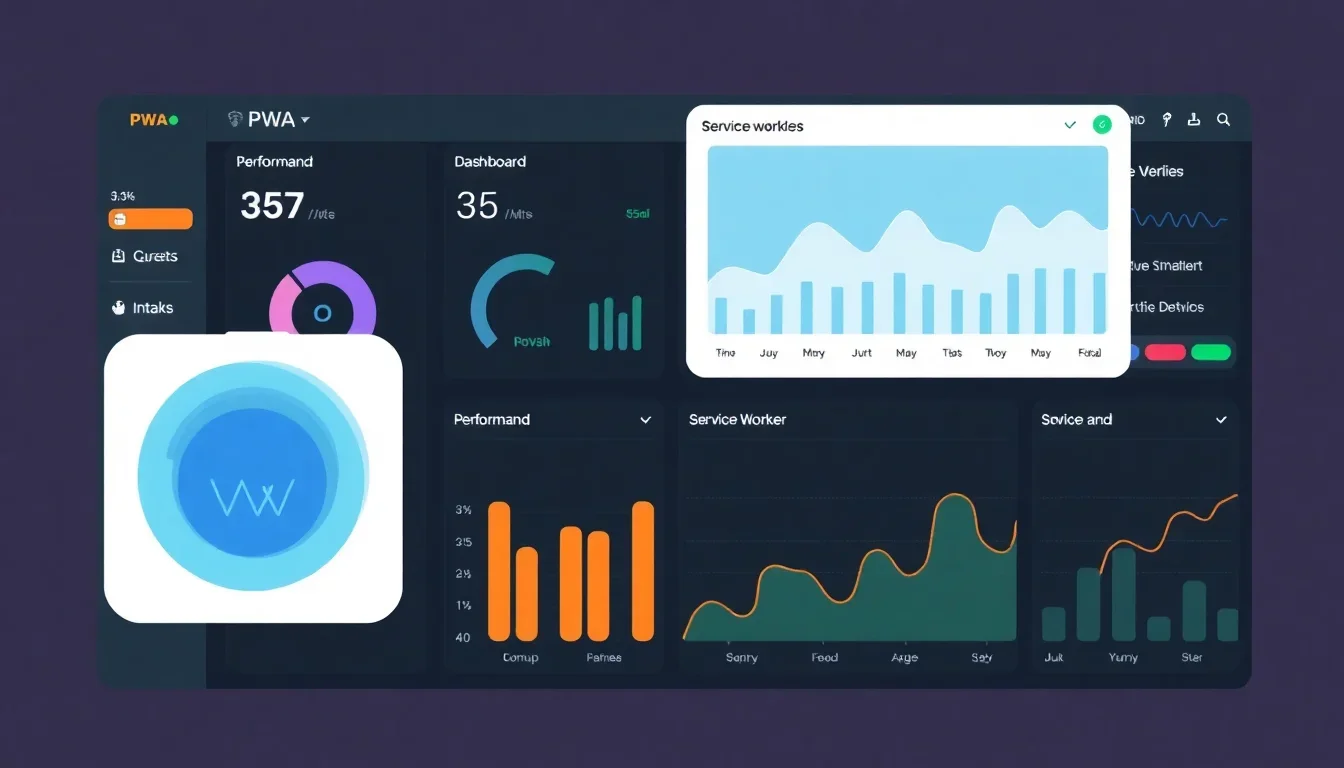
Progressive Web App SEO: Definition & Overview
Progressive Web App SEO defines the set of tactics and technical measures applied to Progressive Web Apps to ensure search engines can discover, index, and rank PWA content effectively. PWAs combine web standards and app-like features to deliver performance and engagement comparable to native applications.
What is a Progressive Web App?
A Progressive Web App is a web application that uses modern browser APIs, a web app manifest, and a service worker to provide offline capability, push notifications, responsive UI, and fast load performance similar to native apps. PWAs require HTTPS, a manifest.json, and a registered service worker to function correctly.
Brief history and evolution
PWAs emerged to bridge gaps between websites and native apps by delivering faster, more reliable experiences on mobile devices. Early implementations focused on caching and offline support; recent developments emphasize performance metrics, discoverability, and integration with search indexing standards.
Core components of a PWA
- Service worker: background script enabling offline caching and network requests interception.
- Web app manifest: JSON file that defines name, icons, theme color, and launch parameters.
- HTTPS: secure context required for service workers and many PWA features.
- Responsive design: adaptable layout for multiple screen sizes and orientations.
- Performance optimizations: fast first paint, efficient caching, and minimized payloads.
Key takeaway: Progressive Web App SEO begins with a properly implemented PWA foundation: service worker, manifest, HTTPS, responsive design, and performance-first development.
Benefits of PWAs for SEO
Progressive Web App SEO leverages PWA strengths—speed, reliability, and engagement—to improve search rankings and user metrics that influence organic performance. Faster, resilient experiences reduce bounce rates and increase session duration, which are signals correlated with improved visibility.
Speed and Core Web Vitals
PWA performance improvements directly affect Core Web Vitals metrics: Largest Contentful Paint (LCP), First Input Delay (FID) or Interaction to Next Paint (INP), and Cumulative Layout Shift (CLS). Optimizing these metrics through efficient caching and minimal render-blocking resources supports better ranking potential.
Reliability and crawlability
Service worker caching improves perceived reliability for repeat visitors and reduces server load. Proper server-side rendering or hybrid rendering ensures that search engine crawlers can access meaningful HTML, improving indexation of dynamic PWA content.
Engagement and retention
PWAs enable push notifications, home screen installation, and offline access, increasing return visits and user retention. Higher engagement metrics improve behavioral signals that search engines consider when evaluating content relevance.
Hidden benefits for SEO
- Reduced infrastructure costs from client-side caching and lower origin requests.
- Improved international reach through faster localized experiences and language-aware content delivery.
- Enhanced accessibility by designing for low-bandwidth and offline scenarios.
Key takeaway: Implementing PWA features improves user experience metrics that align with search engine ranking criteria, making Progressive Web App SEO an effective strategy for organic growth.
Progressive Web App SEO Strategies
Progressive Web App SEO requires a combination of technical and content strategies: ensure crawlability, optimize performance, implement structured data, and maintain accurate metadata for indexable content. Priority actions include server-side rendering, metadata management, and progressive enhancement.
Ensure crawlability and indexing
Serve indexable HTML through server-side rendering (SSR) or pre-rendering for critical routes; client-side-only rendering impedes crawler access to content. Submit a complete XML sitemap to search engines and ensure robots.txt permits crawler access to key assets and endpoints.
Metadata and canonicalization
Provide unique title tags, meta descriptions, and canonical links for each route to avoid duplicate content. Use manifest properties for app metadata and ensure Open Graph and Twitter Card tags are present for social previews and shared links.
Structured data and rich results
Implement schema.org structured data in server-rendered HTML to enable rich results; include Product, Article, BreadcrumbList, and Organization schemas where applicable. Structured data must be included in the HTML delivered to crawlers, not injected solely by service workers or client-side scripts.
Progressive enhancement and navigation
Design navigation that works without JavaScript, then enhance client-side behavior. Provide crawlable links with descriptive anchor text and ensure internal linking maps to server-rendered routes or prerendered snapshots.
Optimize performance and Core Web Vitals
- Audit resources and defer non-critical scripts.
- Implement efficient caching strategies in service workers (Cache First for assets, Network First for API endpoints when freshness required).
- Compress images and use responsive image sources (srcset) to reduce payloads.
- Use HTTP/2 or HTTP/3, Brotli or Gzip compression, and optimized server response times.
Handle dynamic content and personalization
Deliver personalized content via client-side APIs but ensure canonical, indexable versions exist server-side. Use escaped fragment patterns or dynamic rendering for highly personalized pages to provide static snapshots for crawlers while preserving user-specific experiences client-side.
Asset delivery and image SEO
Serve images in modern formats (WebP/AVIF) with descriptive filenames and alt attributes that include relevant terms. Ensure image placeholders and responsive sizing reduce layout shifts and support fast LCP times.
Monitoring, testing, and CI integration
Integrate Lighthouse, WebPageTest, and real user monitoring (RUM) for Core Web Vitals tracking. Automate performance budgets in CI pipelines and run prerendered snapshots to verify crawler-facing HTML remains consistent after deployments.
Common mistakes to avoid:
- Relying exclusively on client-side rendering without prerendering or SSR.
- Blocking crawlers via robots.txt or failing to expose critical JS/CSS files.
- Storing important content behind authentication or heavy client-side rendering without fallback snapshots.
Key takeaway: Progressive Web App SEO succeeds when SSR/prerendering, metadata, structured data, and performance optimizations are implemented together and validated in crawler-visible HTML.
Comparison of Traditional vs PWA SEO
This comparison highlights differences in SEO practices between traditional websites and Progressive Web Apps, focusing on technical delivery, caching behavior, and indexability.
Traditional vs PWA SEO table
| Feature | Traditional SEO | PWA SEO |
|---|---|---|
| Rendering | Server-side by default; direct HTML responses | Often client-side; requires SSR/prerender for crawlers |
| Caching | Browser cache and CDN; limited offline capabilities | Service worker controlled caching enabling offline access |
| Indexability | Direct indexable HTML; stable for crawlers | Indexable with SSR/prerender; client-only pages risk non-indexing |
| Engagement | Standard web sessions | Push notifications and home screen install increase retention |
| Performance signals | Depends on site optimization | Optimized by design for faster perceived performance |
When to use each approach: Use traditional server-rendered sites when content is static and SEO is prioritized without app-like features. Choose PWAs when user engagement, offline access, and mobile performance are business priorities and server-side rendering can be added for SEO.
Key takeaway: PWA SEO requires adapting traditional SEO techniques to account for service workers and client-side behavior while ensuring crawler-accessible HTML.
Common Challenges in PWA SEO
Progressive Web App SEO faces specific challenges: crawler access to content, service worker interference with crawlers, dynamic routing, fragmented metadata, and performance regressions caused by improper caching strategies.
Challenge: Client-side rendering blocks crawlers
Client-side-only rendering can prevent search engines from discovering content. Resolve by implementing SSR, prerendering critical routes, or using dynamic rendering solutions to serve crawler-facing snapshots.
Challenge: Service worker caching serving stale content
Misconfigured caching strategies cause outdated pages to be served to both users and crawlers. Use cache versioning, stale-while-revalidate patterns, and cache-busting strategies for HTML and API responses that require freshness.
Challenge: Fragmented metadata across routes
Single-page routing can lead to incorrect metadata for specific routes when metadata is injected client-side. Ensure metadata is rendered server-side or via prerendering so crawlers index correct titles and descriptions. Learn more at Progressive Web Apps and SEO explained.
Challenge: Measuring real user metrics correctly
Laboratory tools provide benchmarks, but field data is necessary for accurate Core Web Vitals measurement. Implement Real User Monitoring with analytics that capture LCP, INP, and CLS across geographic regions and device types. Read more at SEO for Progressive Web Apps: Boost Organic Traffic to ….
Solutions overview:
- Use SSR/prerender to make content available to crawlers.
- Configure service worker strategies per asset type with clear cache invalidation.
- Include structured data and metadata in server responses.
- Monitor RUM and set performance budgets integrated into CI pipelines.
Key takeaway: Address indexing, caching, metadata, and measurement issues through architecture choices and automated validation to maintain Progressive Web App SEO health. For details, see PWA and SEO.
Case Studies / Success Stories
This section presents two condensed case studies demonstrating measurable SEO and engagement improvements after PWA implementation and SEO optimization. Additional insights at Implementing Effective SEO for Progressive Web Apps.
Case Study 1: E-commerce retailer
Situation: An international e-commerce site experienced high mobile bounce rates and slow checkout flow. Action: The team implemented a PWA with server-side rendering for catalog pages, optimized images to WebP, and introduced service worker caching for static assets and product images. Results: Organic mobile sessions increased by 42%, conversion rate on mobile rose 28%, and LCP improved from 6.2s to 1.8s. Search visibility for product pages improved with increased impressions and click-through rates.
Case Study 2: News publisher
Situation: A news organization required faster article load times and offline access for readers in low-bandwidth regions. Action: The publisher deployed a PWA with prerendered article snapshots for crawlers, implemented structured data for articles and breadcrumbs, and added push notifications for breaking news. Results: Pages indexed more reliably, daily active users rose 35%, and average session duration increased by 22%. Rich results appeared for several article types, increasing organic CTR.
Key takeaways: Both case studies demonstrate that combining PWA features with explicit SEO practices—SSR/prerendering, structured data, image optimization, and service worker strategies—produces measurable gains in organic traffic and user engagement.
Getting Started with PWA SEO
Progressive Web App SEO implementation requires a prioritized checklist covering discovery, rendering strategy, metadata, performance, and monitoring. Begin with an audit and proceed through incremental changes validated by testing and metrics.
Quick start checklist
- Audit current site for client-side rendering issues and blocked resources.
- Implement SSR or prerender for key routes to ensure crawler-accessible HTML.
- Verify manifest.json and service worker registration; use HTTPS across the site.
- Optimize Core Web Vitals: reduce LCP, minimize layout shifts, and improve interaction readiness.
- Embed structured data in server-rendered HTML for critical content types.
- Create an XML sitemap and ensure robots.txt allows crawler access to necessary assets.
- Set up RUM and Lighthouse audits in CI for automated performance monitoring.
Tools and resources
- Lighthouse for performance and PWA audits.
- Chrome DevTools for service worker debugging and runtime inspection.
- WebPageTest and GTmetrix for lab-based performance testing.
- Real User Monitoring providers for field metrics.
- Server-side frameworks and prerender services that support SSR.
Key takeaway: Start with an audit, prioritize SSR/prerendering for SEO-critical routes, and integrate performance monitoring into development workflows for effective Progressive Web App SEO implementation.
Future Trends in PWA and SEO
Progressive Web App SEO will evolve alongside browser capabilities, indexing methods, and user expectations. Anticipate increased emphasis on performance, privacy, edge computing, and AI-driven personalization that still maintain crawler-friendly content delivery.
Edge rendering and serverless SSR
Edge rendering and serverless SSR reduce time-to-first-byte by delivering prerendered HTML from geographically proximate nodes. These techniques improve LCP and reduce latency for global audiences, benefiting Progressive Web App SEO outcomes.
HTTP/3, Brotli, and next-gen codecs
Adoption of HTTP/3, Brotli compression, and modern image codecs (AVIF) will lower payload sizes and improve transfer efficiency, contributing positively to Core Web Vitals and search performance signals.
Privacy-first indexing and semantic matching
Search engines increasingly rely on semantic indexing and user intent signals while balancing privacy constraints. Structured data and clear HTML content will remain essential for discoverability as algorithms evolve toward understanding user intent and content relevance.
Key takeaway: Progressive Web App SEO must remain adaptive to infrastructure improvements, serverless architectures, and evolving search engine understanding while preserving crawlable, high-quality HTML content.
Common FAQs about PWA SEO
What is a Progressive Web App?
A Progressive Web App (PWA) is a web application that offers a user experience similar to a native app. PWAs use service workers, a web app manifest, and responsive design to provide offline capabilities, push notifications, and fast loading across devices. For example, Twitter Lite demonstrates PWA benefits in constrained network conditions.
How does PWA improve SEO?
PWA improves SEO by enhancing performance, reducing bounce rates, and increasing engagement metrics that search engines consider. Faster LCP, reduced CLS, and better user retention result from optimized caching, image delivery, and offline capabilities, leading to improved organic visibility and referral traffic.
What are the best practices for PWA SEO?
Best practices include implementing SSR or prerendering for indexable HTML, optimizing Core Web Vitals, embedding structured data in server-side HTML, ensuring descriptive metadata per route, and configuring service worker caching strategies with cache invalidation for dynamic content.
Can PWAs work offline?
PWAs can work offline by leveraging service workers that cache assets and API responses. Offline capability depends on caching strategy and which resources are stored. Implement fallback content for fully offline experiences and graceful degradation for critical features that require network access.
How can I measure the performance of my PWA?
Measure performance using Lighthouse for lab audits, WebPageTest for detailed waterfalls, and Real User Monitoring for field data on LCP, INP, and CLS. Integrate metrics into CI and monitor trends across devices and geographies to prioritize fixes based on user impact.
What tools can help in PWA SEO?
Key tools include Lighthouse, Chrome DevTools, WebPageTest, server-side frameworks supporting SSR, RUM providers for Core Web Vitals, and build tools for image optimization and asset bundling. Use these tools to validate both crawler-facing HTML and client-side performance.
How do I implement server-side rendering in a PWA?
Implement SSR by using frameworks or rendering solutions that produce HTML on the server for each route. Configure the server to return prerendered content for crawlers and users, then hydrate client-side JavaScript for interactivity. Edge functions and serverless platforms can deliver SSR close to users for latency reduction.
What are the common mistakes to avoid in PWA SEO?
Avoid relying solely on client-side rendering, blocking crawlers from necessary assets, failing to include metadata in server responses, and configuring service workers that serve stale content. Lack of structured data and missing XML sitemaps are frequent oversights impacting indexability.
How can PWAs increase user engagement?
PWAs increase engagement through push notifications, home screen installation, fast repeat visits via caching, and offline access. These features reduce friction and support re-engagement strategies that increase session frequency and retention metrics that correlate with improved search performance.
Are there any costs associated with implementing a PWA?
Costs include development time for SSR/prerendering, service worker implementation, asset optimization, and monitoring setup. Infrastructure costs can be offset by reduced server load through caching. Total costs depend on complexity, integration with existing platforms, and external services used for rendering or RUM.
Sources & References
- Google Web Vitals and Lighthouse documentation
- Moz resources on technical SEO and indexing
- WebPageTest performance testing reports
- Chrome DevTools guide on service workers and debugging
- Industry case studies on PWA implementations
Conclusion
Progressive Web App SEO is a multidisciplinary discipline combining technical SEO, performance engineering, and content strategies to ensure PWAs are discoverable, indexable, and engaging. Implement server-side rendering or prerendering to provide crawler-facing HTML while maintaining client-side enhancements for interactivity. Optimize Core Web Vitals through image compression, responsive design, and efficient caching strategies managed by service workers. Embed structured data and accurate metadata in server responses to enable rich results and clear search previews. Monitor real user metrics and automate Lighthouse audits in continuous integration pipelines to prevent regressions. Prioritize a phased approach starting with an audit, SSR implementation for high-value routes, and incremental performance improvements validated by RUM data. Combine push notifications and installability features with SEO best practices to increase retention and organic signals. Maintain clear canonicalization and sitemap practices while ensuring robots.txt does not block essential assets. Track outcomes using field data and iterate on caching rules and rendering strategies to balance freshness and performance. Start by listing high-priority routes, implementing prerendered snapshots, and setting up Core Web Vitals monitoring to measure impact on organic performance. Progressive Web App SEO delivers measurable improvements in visibility and engagement when technical implementation and content strategy are aligned toward providing fast, reliable, and crawlable experiences across devices.





![Complete Guide to Google Ads [2026]](https://sparltech.com/wp-content/uploads/2026/01/google_ads_img1-768x439.webp)