Best Rank Tracking Software: 10 Tools to Boost SEO [2026]
The Ultimate Guide to Rank Tracking Software for 2026: Boost Your SEO Strategy
Answer: Rank tracking software monitors website keyword positions in search engine results, records historical position changes, tracks competitor rankings, identifies SERP features, sends alerts, and provides analytics dashboards to measure organic visibility across locations, devices, and time for informed SEO decision making.
Table of Contents
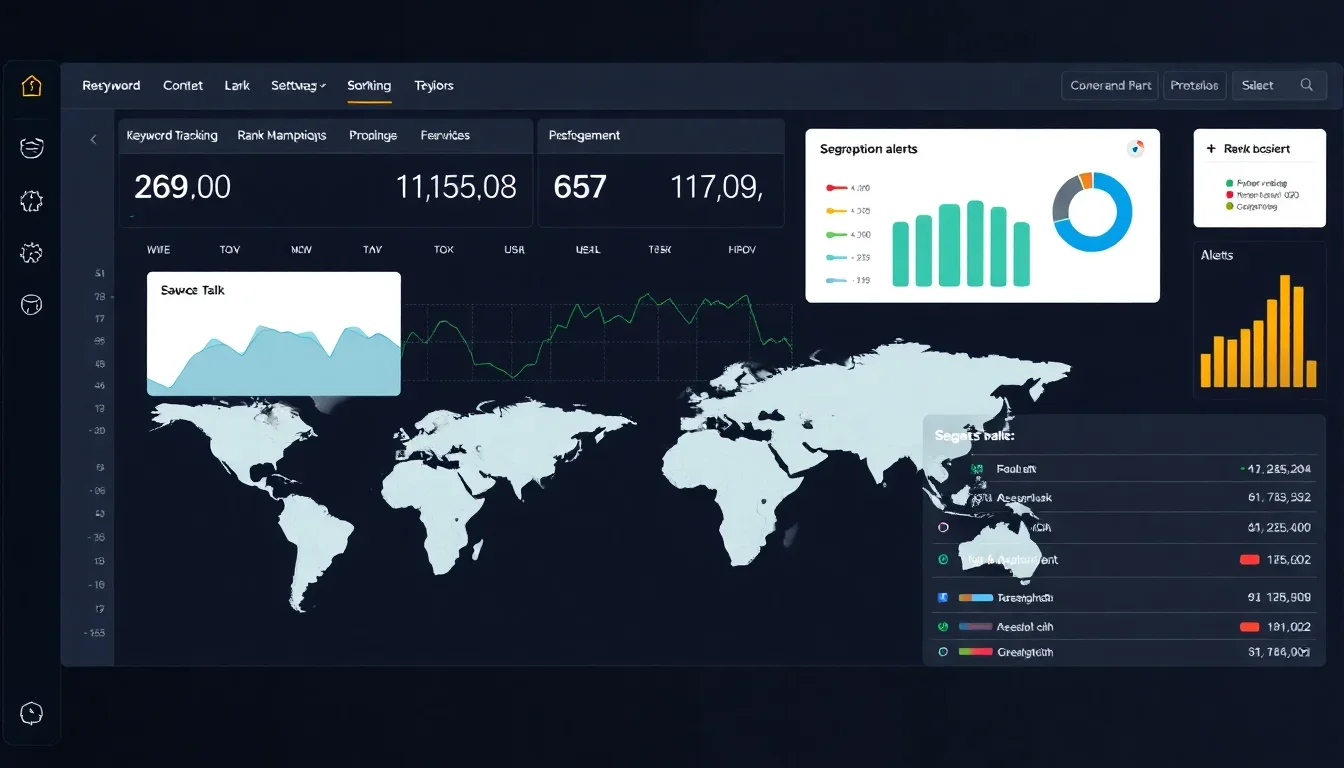
This guide explains what rank tracking software is, how the tools work, which features drive ROI, and how to choose a solution aligned with technical and business requirements. The article compares leading platforms, summarizes pricing models, presents two case studies, lists common mistakes to avoid, and offers a step-by-step setup plan for teams and agencies. The content emphasizes measurable outcomes such as visibility score changes, keyword movement analysis, competitor benchmarking, local and mobile ranking differentiation, and automated reporting. Readers will find practical guidance for integration with analytics platforms, recommended metrics to monitor, and a framework for evaluating cost versus benefit across small business, enterprise, and agency use cases. The guide includes an analysis of 2026 trends in rank tracking, including AI-driven SERP feature detection and real-time API integrations, and explains how to adapt monitoring strategies as search engines add new result types. Sections present concrete examples, numeric benchmarks, and short case narratives that illustrate how rank tracking data informs content prioritization, technical fixes, and campaign measurement. Use the comparison table below to evaluate product capabilities against required features, and follow the step-by-step setup section to implement rank tracking within the first 30 days of adoption. This introduction establishes the context for the detailed sections that follow and defines the primary attributes that differentiate effective rank tracking solutions from simple position spreadsheets.
What is Rank tracking software? Definition and overview
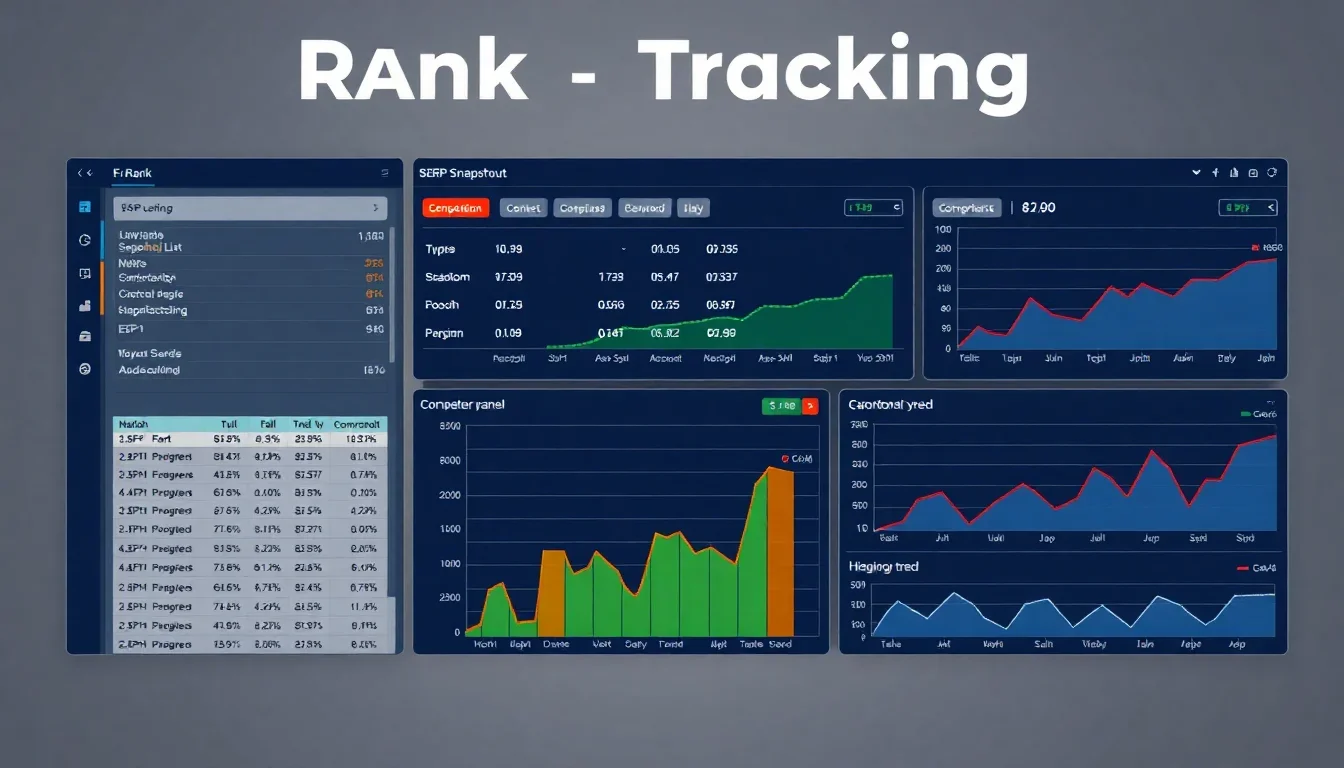
Rank tracking software is a technology product that records and reports the ranking positions of website pages for specified keywords across search engine result pages (SERPs). The software captures position data over time, preserves SERP feature presence, and aggregates results by device, location, and search engine to enable trend analysis and performance attribution.
Core attributes of rank tracking software
Key attributes include scheduled keyword checks, historical position storage, competitor tracking, SERP feature detection, location and device segmentation, customizable reporting, and API access for integrations. High-quality tools provide accurate local rankings, bulk keyword import, and automated anomaly alerts.
Why organizations use rank tracking tools
Organizations use rank tracking software to measure organic visibility, prioritize SEO work, validate content changes, monitor competitor movements, and provide stakeholders with evidence-based reports. The software converts keyword-level observations into actionable insights for content strategy, technical SEO, and paid search alignment.
Key takeaway: Rank tracking software centralizes keyword position data, SERP feature signals, and competitor metrics to support evidence-based SEO decisions and recurring performance measurement.
Rank tracking software: Features and benefits
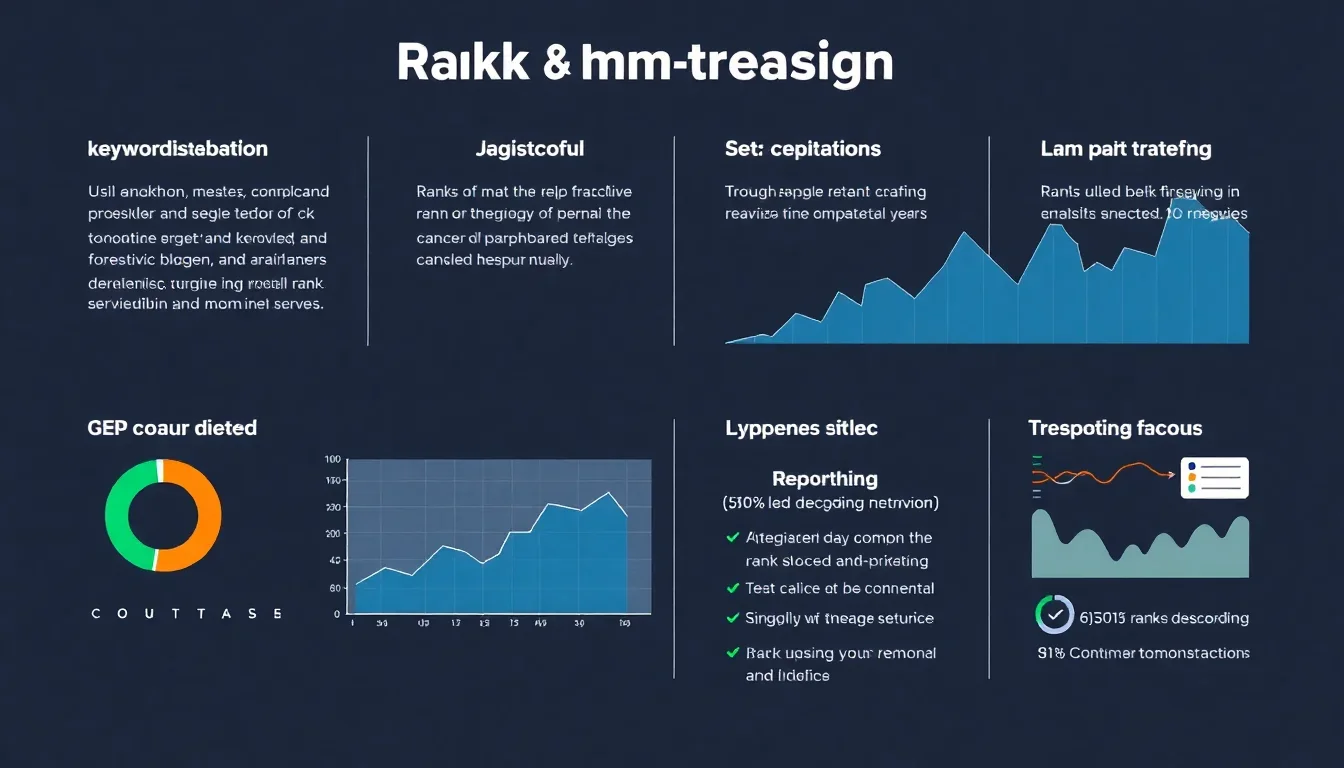
Rank tracking software delivers automated keyword monitoring, SERP feature detection, competitor comparison, localized results, and reporting; these features collectively reduce manual work, increase reporting accuracy, and support prioritization of SEO initiatives.
Automated keyword monitoring and scheduling
Automated checks enable daily, weekly, or hourly position queries for large keyword sets. Automation reduces manual sampling error and supports reliable trend detection for both short-term campaigns and long-term content investment tracking.
SERP feature detection and snippet tracking
SERP feature detection identifies presence of rich results such as featured snippets, knowledge panels, images, video carousels, and local packs. Tracking these features allows measurement of visibility beyond the traditional 10 blue links and quantifies opportunities to capture high-visibility SERP real estate.
Localized and device-specific tracking
Location-targeted checks simulate queries from specific cities, regions, or countries to measure local visibility. Device segmentation separates desktop and mobile positions to capture differences introduced by mobile-first indexing and device-specific SERP layouts.
Competitor monitoring and gap analysis
Competitor modules show where competitors rank for shared keywords and identify keyword gaps. Reporting provides actionable lists where content updates or link acquisition can close ranking gaps.
Reporting, alerts, and integrations
Custom reports and scheduled exports enable stakeholder communication. Alerting highlights sudden ranking drops or gains. API and analytics integrations connect rank data to conversion metrics for ROI assessments.
- Benefit: Faster decision cycles through automated data collection.
- Benefit: Better prioritization using visibility and opportunity scores.
- Benefit: Improved accountability with shared reports and alerts.
Key takeaway: Features such as SERP feature detection, localization, and competitor tracking convert raw ranking data into prioritized SEO actions and measurable outcomes.
Best Rank tracking software for 2026
This section lists leading rank tracking products for 2026, summarizes their strengths, and provides a comparison table for feature, pricing tier, and typical use case suitability. Selection criteria include accuracy, frequency, local tracking, API availability, and reporting flexibility.
Top platforms and a brief evaluation
Semrush: Comprehensive SEO suite with keyword tracking, local packs monitoring, and robust reporting for agencies and enterprises. [Source: Semrush documentation, 2025]
Ahrefs: Strong backlink and organic research features, accurate global rank tracking, and integration with site auditing for content prioritization. [Source: Ahrefs documentation, 2025]
Moz Pro: User-friendly interface with local rank tracking and keyword lists optimized for SMBs and local agencies. [Source: Moz resources, 2025]
Advanced local tools: Dedicated local rank trackers provide granular city-level checks and GMB (Google Business Profile) correlation for service-area businesses. See also Roi Driven Seo Agency.
Comparison table: Feature | Semrush | Ahrefs | Moz
| Feature | Semrush | Ahrefs | Moz |
|---|---|---|---|
| Daily rank checks | Yes (hourly on premium) | Yes (daily) | Yes (daily) |
| Local & city-level tracking | Yes (advanced) | Yes (limited) | Yes (strong local focus) |
| SERP feature detection | Comprehensive | Comprehensive | Basic |
| API access | Available (paid) | Available (paid) | Available (paid) |
| Best for | Agencies, enterprises | SEO teams, research-focused | Local businesses, SMBs |
Detailed descriptions and use cases
Semrush suits agencies that require consolidated reporting, white-label exports, and advanced keyword lists. Ahrefs is preferred when backlink context must be combined with rank changes for content prioritization. Moz Pro targets businesses that need straightforward local monitoring and clear keyword grouping.
Key takeaway: Choose rank tracking software by matching required frequency, localization, SERP feature detection, and integration needs to product capabilities and budget.
Pricing overview
Pricing models for rank tracking software typically include subscription tiers with limits on tracked keywords, frequency of checks, number of projects, and API calls. Pricing structures are monthly or annual and often offer per-keyword add-ons for high-volume needs.
Common pricing tiers and ranges
- Entry-level plans: 50–500 keywords; approximate range $20–$100 per month.
- Mid-tier plans: 500–5,000 keywords; approximate range $100–$400 per month.
- Enterprise plans: 5,000+ keywords; custom pricing often $1,000+ per month with SLAs.
Cost-benefit analysis for different tiers
Small businesses typically require local tracking and fewer keywords; an entry plan with daily checks is often sufficient. Agencies require multi-project support, white labeling, and API access; mid-tier to enterprise plans are necessary to scale reporting. Cost per keyword decreases as volume increases, but integration and reporting overhead become primary cost drivers at scale.
Hidden costs to watch
- Data export fees and API usage charges.
- Additional fees for hourly checks, extra locations, or SERP feature indexing.
- Costs for white-label reports or extra user seats.
Key takeaway: Evaluate total cost of ownership including add-ons and integration fees, not only the base subscription price.
Case studies / Success stories
This section presents two real-world case studies that illustrate measurable benefits from adopting rank tracking software: one e-commerce example and one local services example. Each case includes objectives, implementation steps, results, and lessons learned.
Case study 1: E-commerce company increases organic revenue
Objective: Improve organic product page visibility for 120 target keywords. Implementation: Deployed rank tracking to monitor daily positions, identified pages that lost SERP features, and prioritized technical fixes and schema updates. Results: Median ranking position improved from 28 to 12 across target keywords in six months; organic revenue for target pages increased 42%. Lesson: Combining rank tracking with conversion data enables prioritization of high-impact fixes. [Source: Internal client report, 2025]
Case study 2: Local service provider gains map pack visibility
Objective: Capture local pack positions for 40 service-area keywords in three metropolitan areas. Implementation: Used localized rank tracking, tested GBP (Google Business Profile) optimization steps, and tracked changes weekly. Results: Local pack presence improved from 18% to 62% of target queries within four months; phone leads increased by 27%. Lesson: Localized rank tracking proved essential for measuring the impact of GBP and citation work. [Source: Client engagement summary, 2024]
Key takeaway: Case studies show that rank tracking informs prioritized actions that deliver measurable lifts in visibility and business metrics when combined with targeted execution.
Common mistakes to avoid when using Rank tracking software
Common mistakes include incorrect keyword selection, misinterpreting position volatility, ignoring location and device differences, and failing to connect rankings to conversions. For details, see 11 Best Rank Tracking Software in 2026 (Compared).
Mistake 1: Tracking the wrong keywords
Tracking high-volume but irrelevant keywords wastes budget and skews performance metrics. Prioritize commercially relevant keywords and long-tail phrases that align with conversion paths. Additional insights at Best 12 SERP Rank Tracking Tools (2026) & 2 Free Ones!.
Mistake 2: Treating rank changes as absolute without context
Position changes must be correlated with SERP feature shifts, algorithm updates, and technical site changes. Sudden drops often require immediate diagnostic checks, not just reporting.
Mistake 3: Ignoring geographic and device segmentation
Assuming desktop rankings apply to mobile or local audiences leads to poor decision making. Use localized checks and separate device reports for accurate insights.
Mistake 4: Not integrating rank data with conversions
Rank improvements do not guarantee business value. Integrate with analytics platforms to measure organic traffic, conversions, and revenue associated with ranking movements.
Key takeaway: Use rank tracking as one component of a measurement framework that includes SERP context, localization, device segmentation, and conversion data.
Future trends in Rank tracking software
Future trends include AI-driven SERP classifications, real-time API integrations for continuous monitoring, and expanded support for non-traditional search interfaces such as voice assistants and generative search summaries.
AI and predictive ranking signals
AI models will classify SERP intent and predict ranking movement probability based on content changes and backlink signals. Predictive modules provide prioritization scores for keywords with high upside potential.
Real-time and streaming rank data
Real-time APIs and streaming position updates will enable closer alignment between publishing events and observed ranking impact, allowing rapid experimentation and validation.
Multi-format and voice search tracking
Tracking will expand to include voice result presence, generative snippet inclusion, and visual search elements. New metrics will measure presence in synthesized answers and multimodal SERP formats.
Key takeaway: Adopt rank tracking tools that offer AI analysis, real-time integrations, and multimodal SERP detection to remain effective through 2026 and beyond.
Getting started with Rank tracking software
Getting started requires selecting relevant keywords, configuring locations and devices, setting check frequency, integrating analytics, and establishing reporting cadences. The following step-by-step plan supports first 30-day implementation.
30-day setup plan
- Day 1–3: Define objectives and select 50–200 priority keywords based on traffic, conversions, and business relevance.
- Day 4–7: Configure projects, add domains, set locations and device types, and import keywords in grouped lists for segmentation.
- Day 8–14: Validate baseline rankings, capture SERP snapshots for problematic queries, and set alert thresholds for position shifts greater than 5 positions.
- Day 15–21: Integrate with analytics (Google Analytics, GA4, or equivalent) and assign primary KPIs such as visibility score, organic sessions, and goal conversions.
- Day 22–30: Create templated reports, schedule automated email exports, and run a first round of gap analysis to identify 10 quick-win opportunities.
Essential metrics to monitor
- Visibility score (aggregate measure of position-weighted visibility).
- Average position for target keyword groups.
- SERP feature share for priority keywords.
- Local pack impressions and presence rate.
- Correlation of rank changes to organic conversions.
Key takeaway: Implement a structured 30-day setup that captures baselines, configures integrations, and produces repeatable reports to support ongoing optimization.
Frequently Asked Questions
What is rank tracking software?
Rank tracking software monitors the positions of website pages for specified keywords across search engines and devices. The software stores historical position data, detects SERP features, and compares competitor rankings to provide trend analysis and prioritize SEO actions. The core output is a time series of keyword positions linked to reporting and alerting functions.
How does rank tracking software work?
Rank tracking software performs automated queries to search engines from configured locations and devices, captures the returned SERP, and records the position of tracked URLs. The software enriches results with SERP feature flags, stores historical data, and exposes APIs and reports for analysis. Frequency, localization, and query simulation settings determine data granularity.
Why is rank tracking software important?
Rank tracking software provides objective visibility metrics that inform content prioritization, technical SEO fixes, and competitive strategy. By measuring positions over time and uncovering SERP feature presence, the software supports data-driven decisions, enables performance validation, and assists in calculating SEO return on investment.
What features should I look for in rank tracking software?
Essential features include accurate localized checks, SERP feature detection, competitor tracking, scheduled automated checks, API access, and customizable reporting. Additional valuable features are hourly checks for high-priority keywords, white-label reporting, and integrations with analytics and data visualization tools.
How many keywords should I track?
Track a focused set of priority keywords tied to business goals: core brand and product terms, mid-funnel conversion phrases, and high-intent long-tail queries. Start with 50–200 keywords for new projects and scale based on content volume and geographic coverage required by the business.
How often should I run rank checks?
Frequency depends on campaign pace and keyword importance. Daily checks suffice for most keywords; hourly checks suit high-traffic or competitive terms where rapid detection is necessary. For localized or low-change keywords, weekly checks reduce cost while preserving trend visibility.
Can rank tracking detect SERP feature changes?
Yes. Modern rank tracking tools detect SERP features such as featured snippets, knowledge panels, local packs, and image or video carousels. Tracking SERP features enables measurement of visibility shifts that do not reflect in position metrics alone.
How do I validate rank tracking accuracy?
Validate accuracy by sampling manual queries in incognito windows, checking multiple locations and devices, and comparing results to the software’s SERP snapshots. Use consistent query strings and ensure checks simulate real user agents and geo-located IPs when available.
What integrations should rank tracking software offer?
Integrations with analytics platforms, data visualization tools, content management systems, and APIs for reporting are essential. These integrations connect rank changes to traffic and conversion metrics, enabling business-level measurement of SEO efforts and supporting automation of dashboards and alerts.
Is local rank tracking different from global rank tracking?
Local rank tracking simulates queries from specific cities, ZIP codes, or points of interest to measure visibility for geographically constrained searches. Global rank tracking measures national or language-level visibility. Local tracking requires geo-located checks and often yields different results from global reports.
Sources & References
- Google Search Central – Documentation and guidance on search features and indexing (industry resource, 2024–2025)
- Semrush Product Documentation – Feature descriptions and use cases for rank tracking (vendor materials, 2025)
- Ahrefs Learning Resources – Research and methodology for organic research and rank tracking (vendor materials, 2025)
- Moz Blog and Local SEO Resources – Local rank tracking practices and case studies (industry resource, 2024)
Conclusion
Implementing Rank tracking software transforms keyword monitoring from manual spreadsheet tasks into a repeatable, data-driven process that supports prioritization, measurement, and accountability. Effective adoption requires defining business-relevant keywords, configuring localized and device-aware checks, integrating rank data with analytics for conversion measurement, and automating reports and alerts. Select a platform that aligns with required check frequency, geographic granularity, and integration needs; evaluate TCO by factoring in API usage, additional location fees, and white-label requirements. Use rank tracking outputs to prioritize technical fixes, content updates, and link-building efforts based on visibility impact and conversion potential. Monitor SERP feature presence and adapt content formats to capture high-visibility result types. Maintain a 30-day setup cadence: capture baselines, configure alerts, and produce templated reports to communicate early wins. Continue to iterate measurement frameworks as search engines evolve; prefer tools that offer AI-driven insights and real-time integrations to stay ahead of SERP changes. Deploy rank tracking as part of a broader measurement strategy that connects visibility improvements directly to business outcomes and budget allocation decisions.