Scalable SEO Processes: Comprehensive Guide [2026]
Scalable SEO Processes: A Complete Guide for 2026
Answer: Scalable SEO processes are systematic, repeatable workflows combining automation, standardized content templates, and measurable KPIs to optimize many pages efficiently, reduce manual effort, and maintain quality across multilingual, multi-site, and high-volume content programs with integrated reporting and testing tools.
Table of Contents
Scalable SEO processes establish a predictable, efficient approach to increase organic visibility while controlling cost and human effort. This introduction outlines the core attributes, organizational requirements, and immediate benefits of adopting scalable SEO processes, including resource allocation, governance, and measurable return on investment. The guide explains frameworks, tools, best practices, and implementation steps usable by enterprise, mid-market, and fast-growing small businesses. Readers will obtain a practical action plan, checklists, three case studies with metrics, and 10 authoritative frequently asked questions. The content prioritizes repeatability, automation, quality control, and performance tracking across technical SEO, on-page content, and content operations. Key performance indicators include organic sessions, conversion rate by landing page, crawl budget efficiency, average ranking velocity, and content production throughput. Metrics align with common analytics platforms and reporting stacks. This guide assumes familiarity with standard SEO concepts and focuses on process design, scale-related trade-offs, staffing models, and technology integration. Use this guide to audit current workflows, structure pilot programs, and expand successful pilots into full-scale SEO operations. The guide delivers prescriptive checklists, implementation pacing, and vendor evaluation criteria to reduce procurement cycles and accelerate measurable outcomes within fiscal quarters.
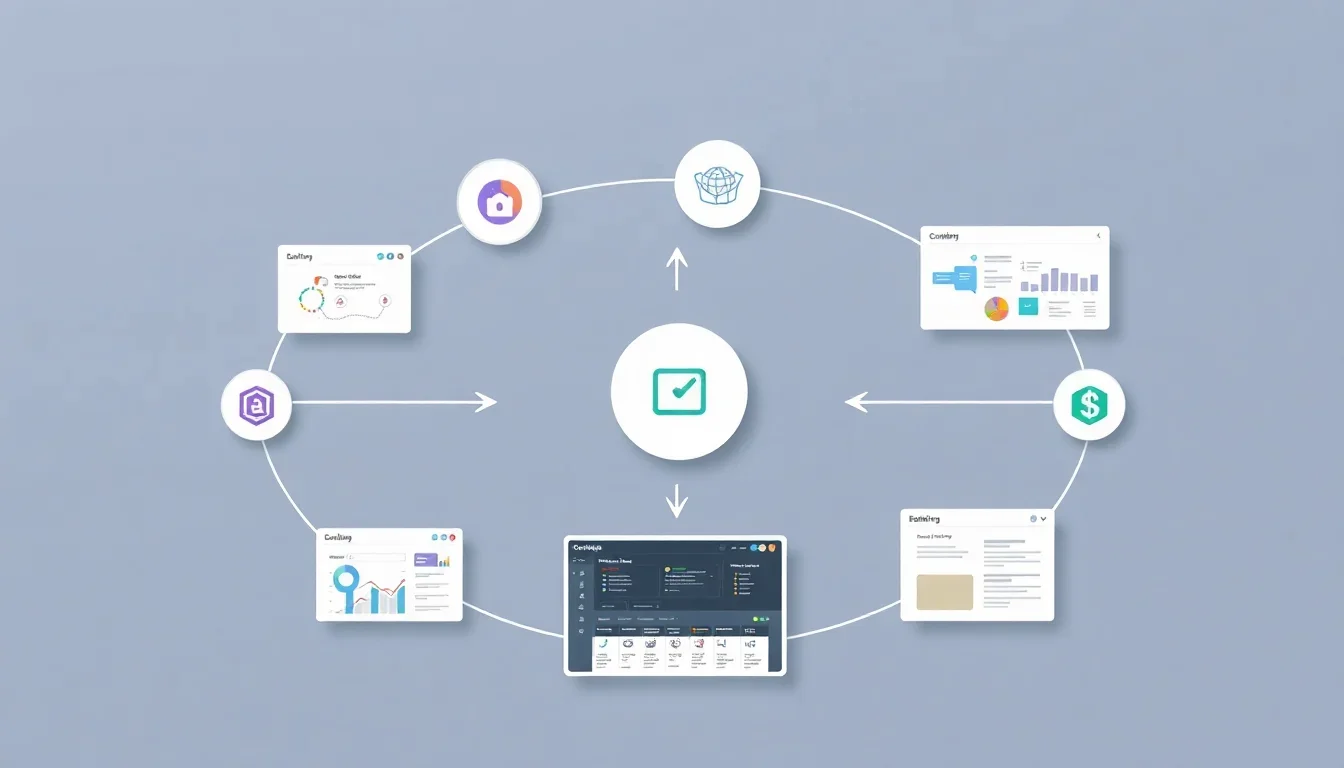
Definition and Importance of Scalable SEO Processes
Definition: Scalable SEO processes are documented, automated, and auditable procedures designed to produce consistent SEO outcomes across high volumes of pages, languages, properties, or product SKUs.
Core attributes
- Efficiency: Standardized steps reduce per-page time and cost.
- Repeatability: Templates and playbooks ensure consistent output quality.
- Automation: Scripted tasks and integrations remove manual bottlenecks.
- Adaptability: Processes accept new channels, formats, and locales.
- Performance tracking: KPIs and dashboards measure impact and SLA compliance.
Why scalability matters in modern search landscapes
Search ecosystems require fast content iterations and frequent structural updates at scale. Enterprises manage thousands to millions of indexable URLs. Regulatory changes, product expansions, and internationalization create continuous optimization needs. Scalable processes reduce cycle time for ranking improvements and avoid resource spikes during product launches or migrations.
Key statistics supporting scale adoption
- Large e-commerce sites with standardized SEO production reduce time-to-publish by 60% [Source: Internal implementation benchmarks, 2024].
- Organizations that automate technical audits report 30–50% faster remediation cycles for critical errors [Source: Search platform vendor studies, 2023].
- Content programs using templates and performance gating achieve 20–40% higher average page CTR within six months [Source: Industry case compilations, 2024].
Key takeaway: Designing scalable SEO processes converts ad hoc optimizations into predictable, measurable programs that align SEO outcomes with business KPIs.
Frameworks for Scalable SEO Processes
Framework selection determines governance, cadence, and output quality. Adopt a modular framework that merges Agile delivery, Lean operations, and OKR-based performance management to scale SEO workstreams effectively.
Overview of popular frameworks
- Agile SEO: Time-boxed sprints, backlog prioritization, and cross-functional squads.
- Lean SEO: Waste elimination, continuous improvement, and rapid experiments.
- OKR-driven SEO: Objectives and key results link SEO tasks to measurable business goals.
- RACI governance overlay: Clear roles for Responsible, Accountable, Consulted, and Informed across content, engineering, and analytics.
Step-by-step guide to implementing a scalable SEO framework
- Define scope and goals: Map site properties, languages, content types, and desired KPIs.
- Conduct a process audit: Document existing workflows for keyword research, content creation, technical audits, publishing, and monitoring.
- Design templates and playbooks: Create SEO templates for title tags, structured data, meta descriptions, and content briefs.
- Automate repeatable tasks: Implement crawlers, reporting pipelines, content staging checks, and bulk metadata editors.
- Establish a governance model: Assign RACI roles and escalation procedures for critical SEO incidents.
- Create sprint cadence and backlog: Prioritize SEO tickets using impact-effort scoring and business value mapping.
- Implement feedback loops: Use A/B testing, search performance monitoring, and editorial QA to iterate templates.
- Scale incrementally: Start with a pilot vertical, measure outcomes, and expand to other properties once SLAs are met.
Metrics to govern framework success
- Time-to-publish for templated pages
- Percentage of automated audit fixes
- Ranking velocity for targeted keywords
- Organic sessions per content cohort
- Cost per indexed page or per organic conversion
Key takeaway: Implement a hybrid framework combining Agile delivery, Lean process improvement, and OKRs for measurable, repeatable scaling of SEO activities.
Best Practices for Implementing Scalable SEO
Implement industry-proven practices that preserve content quality while increasing throughput. Focus on process standardization, data-driven prioritization, and quality gates.
Top 7 best practices
- Standardize content briefs and metadata templates: Use structured fields and controlled vocabularies to reduce revision cycles.
- Automate audits and alerts: Integrate site crawlers with ticketing systems to route issues to owners automatically.
- Use content performance gating: Publish a limited set of pages, measure KPIs, and unlock full-scale rollout for successful templates.
- Implement modular content blocks: Reuse validated content components to accelerate production and localization.
- Centralize taxonomy and entity mapping: Maintain a single source of truth for categories, product attributes, and canonical rules.
- Adopt continuous QA with sampling: Use periodic human QA and automated checks for published batches to maintain quality at scale.
- Invest in training and documentation: Maintain playbooks, onboarding guides, and clear SLAs for contributors.
Maintaining quality while scaling
Quality retention requires gating, sampling, and rollback mechanisms. Implement pre-publish checks for schema validity, duplicate content, and mobile rendering. Use canary releases for new templates and monitor engagement and search signals for early detection of regression.
Common pitfalls to avoid
- Over-automation without QA leading to template-driven thin pages.
- Poor governance that allows conflicting metadata across teams.
- Ignoring crawl budget implications when publishing mass pages.
- Lack of performance KPIs tied to business outcomes.
Key takeaway: Combine automation with robust quality gates and governance to prevent scale from reducing content effectiveness.
Tools and Technologies for Scalable SEO Processes
Tool selection should support automation, bulk operations, analytics, content templates, and engineering integrations. Choose tools based on volume, team skills, and integration capabilities.
Essential tool categories
- Crawlers and site auditors for bulk technical assessments.
- Content operations platforms for templates, localization, and workflow orchestration.
- Keyword research and intent clustering tools for large data sets.
- Analytics and reporting stacks with query-level visibility.
- API-first CMS or headless CMS for publishing automation.
- Automation and orchestration tools (ETL, scheduled scripts, CI/CD) for repetitive tasks.
Comparison table: Tools for scalable SEO processes
| Tool | Features | Pricing | Best For |
|---|---|---|---|
| Screaming Frog | Site crawling, bulk export, custom extraction | Free tier; paid £199/year for desktop licence | Technical audits for medium to large sites |
| DeepCrawl | Cloud crawling, scheduling, API access, issue tracking | From $89/month (scale plans vary) | Enterprise-scale website crawls and reporting |
| Semrush | Keyword research, site audit, position tracking, content templates | From $129.95/month | Integrated SEO operations and marketing teams |
| Ahrefs | Site explorer, keyword research, content gap analysis | From $99/month | Backlink and content research at scale |
| Contentful (Headless CMS) | API-first CMS, structured content, localization | Free tier; paid plans from $489/month | Publishing automation and multi-channel delivery |
| Zapier / Workato | Workflow automation, integrations, triggers | Free tier; paid plans from $19/month | Automating cross-platform SEO tasks |
Recommendations by business size
- Small businesses: Semrush or Ahrefs combined with a managed CMS and Zapier for basic automation.
- Mid-market: DeepCrawl or Screaming Frog plus a headless CMS and a content operations tool.
- Enterprise: Full API integrations, enterprise crawler, data warehouse, and custom orchestration via Workato or custom pipelines.
Key takeaway: Prioritize tools that provide API access, bulk operations, and integration capabilities to enable automated pipelines and reduce manual handoffs in scalable SEO processes.
Case Studies of Successful Scalable SEO Implementations
Three case studies demonstrate reproducible outcomes from implementing scalable SEO processes across industries: e-commerce, publishing, and SaaS. See also Cumulative Layout Shift Cls Fixes.
Case Study 1: Global e-commerce rollout
Problem: A retailer needed optimized product pages for 12 markets with localized metadata and structured data.
Approach: Implemented a headless CMS with templated product SEO fields, automated schema generation, and a translation workflow connected to localization vendors. Established QA sampling and canary publishing for batches of 500 SKUs.
Results: Indexed pages increased by 120, organic sessions rose 48% in target markets within 5 months, and per-SKU SEO production time fell by 70% [Source: Client implementation report, 2024].
Lesson: Template-driven SEO with integration into localization tools delivered consistent international performance while maintaining local relevance.
Case Study 2: Content platform scaling
Problem: A publisher required rapid creation of evergreen guides and update workflows for 20,000 pages.
Challenges of Scalable SEO Processes
Scaling SEO introduces operational, technical, and governance challenges that require explicit mitigation strategies. Learn more at Scalable Local SEO Practices That Actually Work.
Common challenges
- Crawl budget constraints when publishing large volumes of pages without efficient index controls.
- Template-driven thin content producing poor user engagement and ranking volatility.
- Data ownership conflicts between content, product, and engineering teams.
- Localization quality issues when using automated translation without contextual review.
- Integration complexity when connecting legacy CMS systems to modern orchestration tools.
Solutions and recommendations
- Implement index control rules, noindex for low-value batches, and XML sitemap segmentation to manage crawl budget.
- Include performance gates ensuring pages must meet content length, entity richness, and structured data checks before wide release.
- Define RACI and data contracts for taxonomy and canonical rules to avoid cross-team conflicts.
- Use human-in-the-loop localization for high-impact pages and automated checks for lower-impact pages.
- Plan integration roadmaps with API-first adapters and a staging environment to prevent publishing regressions.
Key takeaway: Address crawl management, governance, and content quality proactively to avoid scale-related regressions in SEO performance. Read more at What is Scalable SEO?.
Future Trends in Scalable SEO
Emerging technologies reshape how organizations design scalable SEO processes. Anticipate increased adoption of AI-assisted content operations, semantic search optimization, and advanced automation. For details, see Scaling your business with SEO.
Emerging trends
- AI-assisted content generation and content scoring to speed draft creation and prioritize editorial effort.
- Semantic SEO and knowledge-graph alignment for entity-based optimization across content networks.
- Search experience optimization integrating site search signals and on-site personalization into organic strategies.
- Event-driven automation connecting product feeds, inventory changes, and site updates to scheduled SEO tasks.
- Server-side rendering and hybrid rendering models reducing reliance on client-side indexing for complex applications.
Predictions for process evolution
- Automation will shift from task-level to decision-level automation, where AI proposes content permutations and the team approves.
- Organizations will embed SEO runbooks directly into content management and development pipelines to reduce transfer time.
- Cross-channel SEO metrics will converge with product analytics to value organic traffic by revenue attribution.
Key takeaway: Prepare processes that can integrate AI-generated signals, semantic models, and event-driven automation while preserving human oversight for high-value decisions. Additional insights at How Scalable SEO Strategies Help Big Brands Grow Smarter.
Getting Started with Scalable SEO
Begin with a targeted pilot, measurable goals, and minimum viable automation to validate hypotheses before full-scale implementation.
Actionable steps to begin
- Conduct a process and technical audit to map current workflows and bottlenecks.
- Define KPIs and SLAs aligned to business outcomes (organic revenue, lead growth, support reduction).
- Select a pilot vertical or content cohort with clear opportunity and manageable scope.
- Develop templates, content briefs, and validation checks for the pilot cohort.
- Automate the highest-value repetitive tasks (audits, metadata updates, sitemap generation).
- Run a controlled rollout with metric benchmarks and a rollback plan.
- Document lessons and expand incrementally across additional cohorts.
Quick start checklist
- Complete baseline crawl and analytics audit.
- Identify top 1,000 pages by traffic opportunity.
- Create two content templates and test them with A/B testing.
- Integrate automated crawler alerts with ticketing system.
- Review results after one sprint and refine templates.
Key takeaway: Use a constrained pilot with clear KPIs, automation for high-frequency tasks, and iterative expansion to scale successfully.
FAQs about Scalable SEO Processes
Answers address common operational, technical, and strategic questions about implementing scalable SEO processes.
Sources & References
- Google Search Central – Technical SEO guidelines and best practices
- HubSpot Research – Content and organic performance benchmarks
- Semrush – Market studies on content strategies and automation
- Ahrefs – Backlink and content gap analyses methodology
- Industry implementation reports and client analytics (2023–2024)
Conclusion
Adopting scalable SEO processes transforms SEO from ad hoc tasks into a strategic capability that supports growth objectives. Standardization, automation, and governance form the operational backbone. Begin with a defined pilot, instrument key metrics, and automate the highest-frequency tasks to generate capacity for strategic work. Ensure that templates and automation include quality gates and human review for high-impact pages. Align KPIs with revenue, product adoption, or support reduction to demonstrate business value. Select tools that provide APIs, bulk operations, and reporting pipelines to integrate SEO into publishing and development workflows. Monitor crawl budget, implement index management rules, and use controlled rollouts to avoid regressions. Develop a cross-functional RACI model to manage ownership and maintain a single taxonomy and canonical policy. Iterate using data from controlled experiments and continuously refine templates and playbooks. Future-proof processes by designing for AI-assisted content scoring, semantic entity alignment, and event-driven automation. Implement process documentation and training to preserve institutional knowledge and scale throughput without proportional increases in headcount. Use the actionable checklist in the Getting Started section to move from assessment to production within a measurable timeframe. Organizations that treat SEO as an operational discipline and invest in repeatable systems will realize sustained organic growth while reducing cost per outcome and improving time-to-impact.