Search Volume Analysis: Techniques and Tools [2026]
Answer: Search volume analysis is the structured examination of keyword search frequency, audience segments, seasonality, and trend changes to inform SEO strategy, prioritize content, forecast demand, and allocate resources for organic search performance at scale for measurable outcomes.
Search volume analysis: Definition & overview
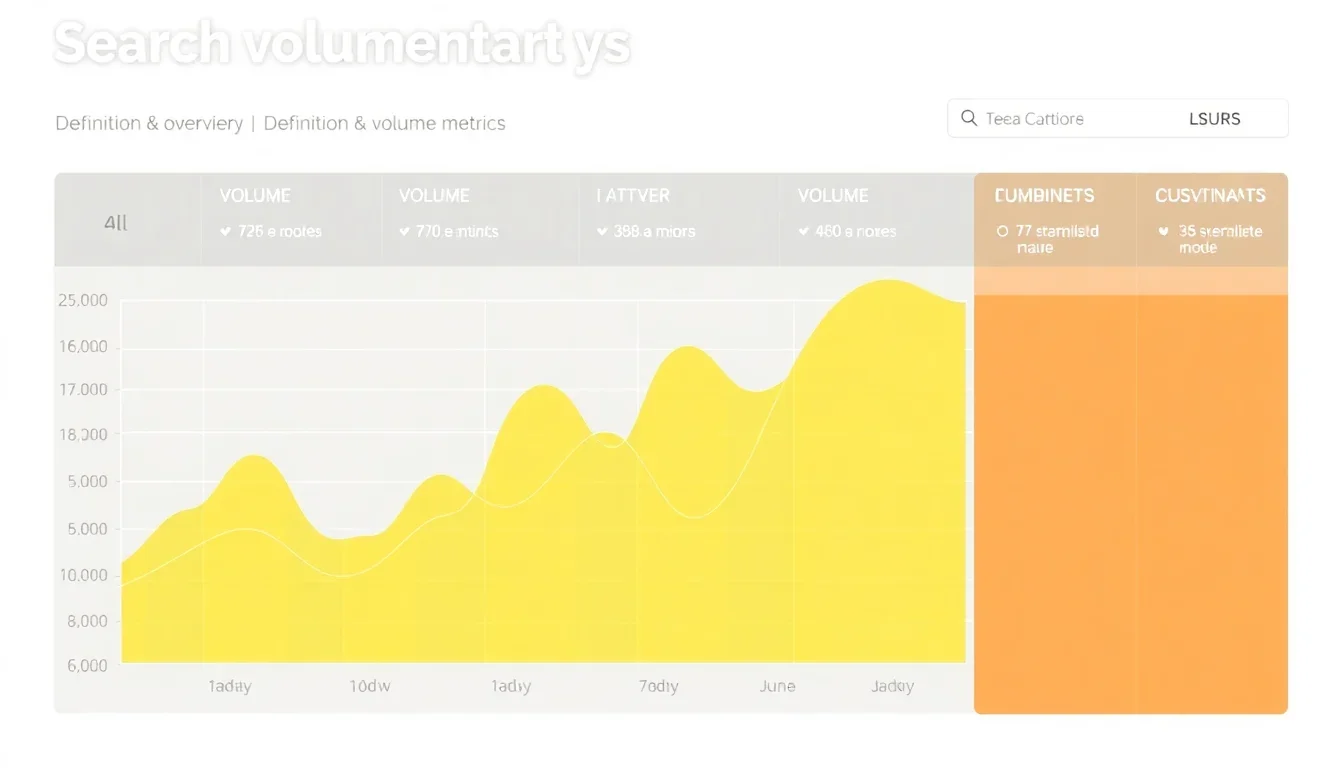
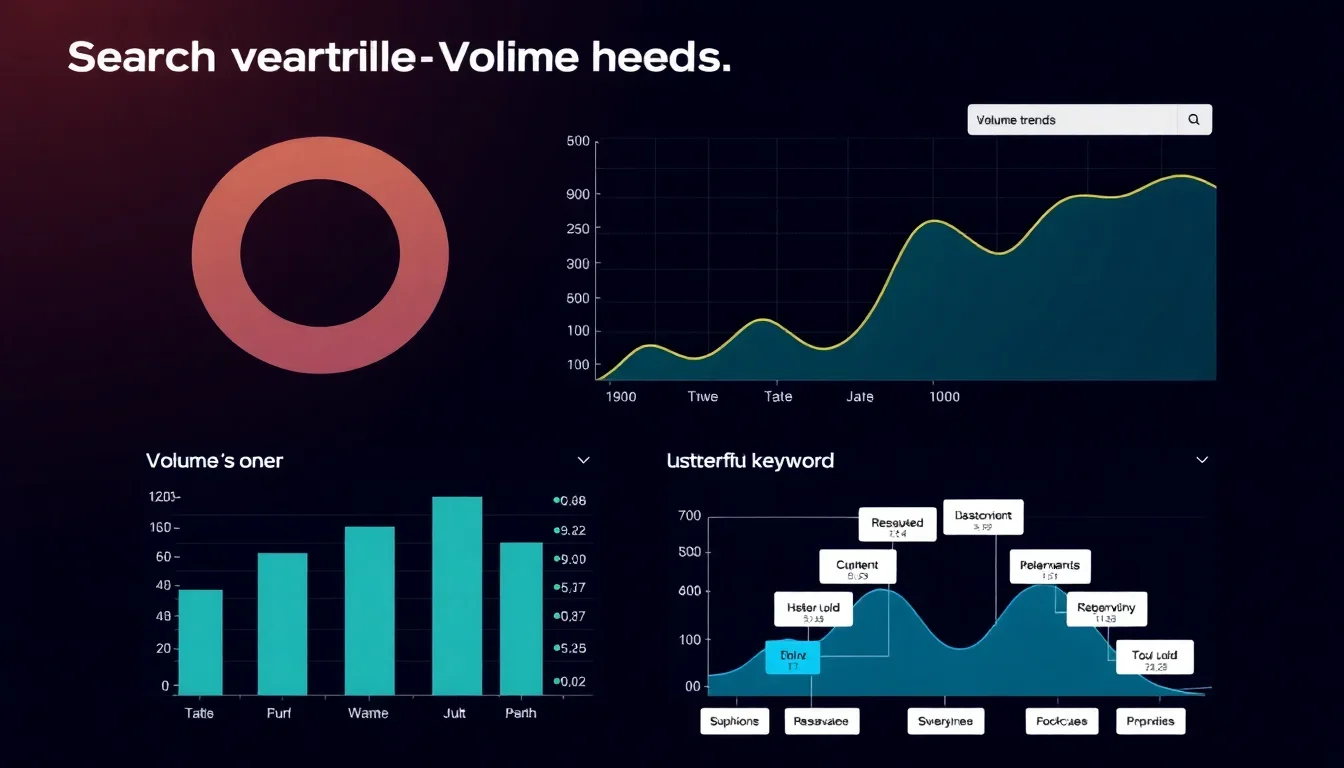
Search volume analysis is the process of measuring how often specific search queries are entered into search engines and interpreting that data to guide content, product, and marketing decisions. The process captures monthly or daily query counts, geographic breakdowns, device splits, and trend signals to determine real user demand.
The discipline evolved from manual keyword lists to integrated data pipelines that combine search engine data, clickstream panels, advertising platforms, and trend indices. Core components include search volume, seasonality, query intent, long-tail versus head-term segmentation, and confidence or accuracy estimates from data sources.
Key attributes of search volume analysis
- Search volume: quantified frequency of queries over a defined period.
- Seasonality: recurring peaks and troughs tied to calendar, events, or product cycles.
- Intent signals: commercial, informational, navigational, transactional categorizations.
- Granularity: global, regional, city-level, device, and language breakdowns.
- Data confidence: sampling methods, smoothing, and anonymization adjustments.
Key takeaway
Search volume analysis provides measurable demand signals that should be combined with intent and effort metrics to prioritize SEO and content investment.
How Search volume analysis works: process and workflow
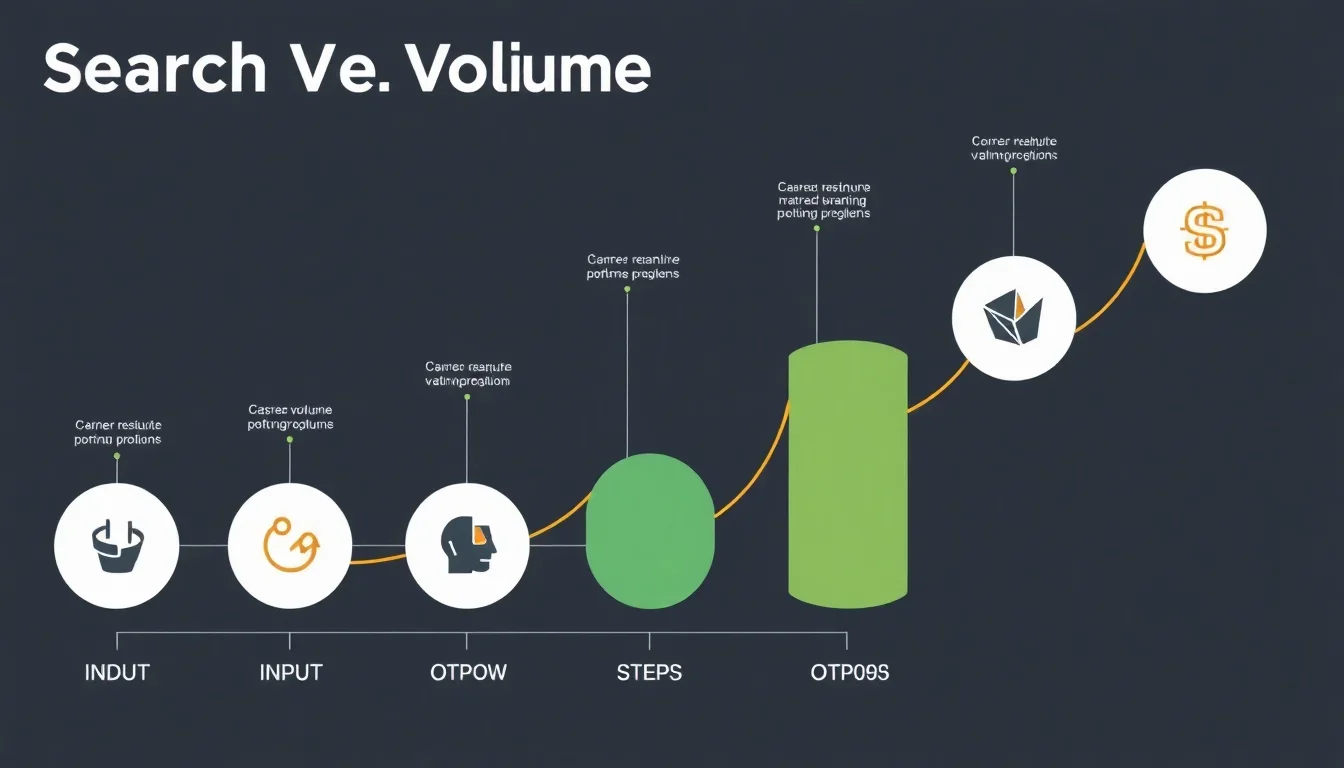
Search volume analysis collects raw query counts, normalizes the data, segments by attributes, and converts results into prioritized opportunities for SEO and content planning.
Step-by-step workflow
Time estimates
- Initial audit for a single market: 4–10 hours.
- Full multi-market dataset and normalization: 1–3 days depending on scale.
- Ongoing refresh cycle: weekly for campaign monitoring, monthly for planning.
Process image
Key takeaway
A repeatable workflow combines multiple data sources, intent tagging, and seasonality adjustments to turn raw volumes into prioritized, trackable SEO tasks.
Benefits & advantages of search volume analysis
Search volume analysis clarifies market demand, reduces speculation, and aligns content efforts with measurable user interest. Organizations use volume signals to focus resources where potential return on organic investment is highest.
Primary benefits
- Prioritization: concentrate content and development on queries with verified demand and high intent.
- Forecasting: anticipate seasonal demand and prepare campaigns and inventory accordingly.
- Risk reduction: avoid spending on low-demand topics that generate minimal organic traffic.
- Competitive intelligence: identify gaps competitors ignore or underserved intent segments.
Who benefits
Content strategists, SEO teams, product managers, PPC managers, and localization teams benefit from accurate search volume analysis. Agencies use the analysis to justify resource allocation to clients and quantify expected impact.
Key takeaway
Integrating search volume analysis into planning reduces guesswork and improves the ROI of content and product initiatives.
Best practices & tips for accurate search volume analysis
Accurate search volume analysis depends on data hygiene, multi-source validation, consistent normalization, and explicit intent tagging. Best practices improve reliability and actionability.
Beginner
- Use official tool exports (e.g., Keyword Planner) and preserve original CSVs.
- Group exact, phrase, and broad match variants when estimating total demand.
- Tag obvious intent signals for immediate prioritization.
Intermediate
- Combine search tool data with Google Trends to validate directionality of changes.
- Apply smoothing for low-volume queries to avoid overreacting to noise.
- Segment data by device and geography for tailored content plans.
Advanced
- Integrate clickstream panel data to convert query volume into estimated clicks and visits.
- Use probabilistic models to estimate true volume for anonymized or sampled datasets.
- Implement automated pipelines for monthly refresh and anomaly detection.
Common mistakes and fixes
- Relying on a single tool: cross-check with at least one other source.
- Ignoring intent: prioritize transactional and commercial queries differently from informational ones.
- Failing to account for seasonality: plan resource allocation around predictable peaks.
Key takeaway
Follow data hygiene, cross-validation, and explicit intent tagging to produce reliable, repeatable search volume analysis outputs.
Comparison & alternatives: tools and data sources for search volume analysis
Search volume analysis uses a mix of advertising platforms, specialized SEO tools, and trend indices. Each source provides different sampling, granularity, and access costs; combine sources to reduce bias.
Primary data sources
- Google Keyword Planner: advertiser-focused, provides ranges and trend context.
- Google Trends: relative trend index useful for seasonality and breakout detection.
- Third-party tools (Ahrefs, SEMrush, Moz): aggregated panels with estimated monthly volumes and keyword difficulty metrics.
- Clickstream panels: behavioral data that maps queries to clicks and pages for better traffic estimation.
Tool comparison table
| Tool / Source | Monthly Volume Detail | Accuracy Notes | Best use |
|---|---|---|---|
| Google Keyword Planner | Range buckets; tends to underreport low-volume queries | Direct ad data; lacks click estimates | Paid search planning and baseline volume |
| Google Trends | Relative index; no absolute counts | Excellent for seasonality and spikes | Trend validation and season planning |
| Ahrefs / SEMrush | Estimated monthly volumes; keyword difficulty scores | Aggregated panel estimates; vary by geography | Competitive research and keyword discovery |
| Clickstream panels | Click and visit estimates per query | High correlation with real traffic when panels are large | Traffic forecasting and conversion modeling |
Decision framework
- For campaign bidding use Keyword Planner and click estimates.
- For content planning combine third-party volume estimates with Google Trends validation.
- For forecasting integrate clickstream-derived click-through estimates to approximate visits and conversions.
Key takeaway
No single source is definitive; combine Google-provided data with third-party estimates and trend indices to create more accurate search volume analysis outputs. See also Webp Image Format Seo.
Pricing and cost guide for search volume analysis
Costs for search volume analysis range from zero for manual Google Trends checks to thousands per month for enterprise API access and clickstream datasets. Budgeting should reflect scope, frequency, and required granularity. See also High Authority Backlinks.
Typical price ranges
- Free: Google Trends, manual exports from Keyword Planner (limited sampling).
- Mid-tier: SEMrush, Ahrefs, Moz subscriptions ($100–$400 per month per seat).
- Enterprise: API access and clickstream panels ($1,000–$10,000+ per month depending on volume and customization).
ROI considerations
Estimate lift by mapping prioritized queries to expected traffic using CTR curves and historical conversion rates. A conservative ROI model multiplies expected incremental visits by conversion rate and average order value to justify tool spend.
Key takeaway
Match tool investment to the expected incremental revenue from improved targeting and avoid paying for enterprise data unless the forecasted ROI supports the cost.
Case studies: real-world search volume analysis examples
Case study 1 — E-commerce seasonal optimization
Background: A mid-size e-commerce retailer experienced inconsistent organic traffic for seasonal product categories. Challenge: The team lacked reliable monthly demand estimates and missed optimal inventory and promotion windows. Solution: Conducted search volume analysis combining Google Keyword Planner, Google Trends, and clickstream data to map monthly demand and high-intent queries. Results: Improved content calendar alignment and landing page updates produced a 28% year-over-year organic revenue increase during the peak season.
Case study 1 takeaway
Aligning content and inventory with validated search volume and seasonality reduces lost sales and improves promotional timing.
Case study 2 — SaaS product demand discovery
Background: A B2B SaaS company explored new feature pages but lacked demand data across regions. Challenge: Internal assumptions favored certain keyword clusters that produced low trial sign-ups. Solution: Performed regional search volume analysis with third-party volume estimates and intent tagging; prioritized pages with high commercial intent and low competition. Results: Targeted pages generated a 42% increase in qualified trials and lowered acquisition cost by 18% within six months.
Case study 2 takeaway
Regionalized search volume analysis reveals underserved commercial intent segments that deliver higher conversion rates for SaaS offerings.
Key takeaway
Case studies demonstrate measurable outcomes when search volume analysis informs content calendars, product pages, and localization strategies.
Regional and local considerations for search volume analysis
Search volume patterns differ by country, language, and city. Effective analysis requires regional normalization, language-specific queries, and localization of intent categories.
Regional adjustments
- Translate and localize queries rather than direct literal translations.
- Adjust volume normalization for markets with lower search engine penetration or different dominant engines.
- Segment by device where mobile-first markets show distinct query behavior.
Local SEO implications
For city-level targeting, combine search volume analysis with local search signals, such as map queries and “near me” modifiers, to prioritize pages and Google Business Profile optimizations. Additional insights at Free Keyword Tool.
Key takeaway
Regionalized search volume analysis requires localized query sets and normalization to ensure accurate opportunity prioritization across markets.
Future trends in search volume analysis for 2026
Search volume analysis will increasingly incorporate privacy-safe sampling, on-device signals, and AI-driven demand prediction. Analysts should prepare for changes in data availability and new demand signals from voice and visual search.
Emerging trends
- Privacy-first datasets that reduce per-query granularity but introduce modeled estimates.
- Increased use of machine learning to predict near-term demand from sparse signals.
- Growth of voice and conversational queries requiring different intent parsing and volume normalization.
How to prepare
Invest in data pipelines that accept multiple inputs, validate trend direction rather than absolute counts, and model traffic using CTR curves and conversion data to compensate for decreasing raw-count availability.
Key takeaway
Prepare for modeled data and shifted signals by investing in flexible analysis workflows and predictive modeling capabilities.
Getting started: a practical 30/90-day action plan
Start with a lean project that establishes baseline data, quick wins, and measurement. The 30/90-day plan below provides a practical sequence to implement search volume analysis and begin seeing results.
First 30 days
- Scope target markets and collect baseline exports from Keyword Planner and one third-party tool.
- Compile a master keyword list and tag by high-level intent.
- Identify 5–10 high-priority pages or topics for immediate optimization.
Next 60 days (to 90 days)
- Normalize and deduplicate the dataset; validate trends with Google Trends and initial traffic data.
- Create content briefs and update on-page elements for prioritized topics.
- Establish monthly refresh cadence and dashboard tracking for top keywords.
Beginner checklist
- Collect data from at least two sources.
- Tag intent and seasonal patterns.
- Prioritize by business relevance and effort-to-impact ratio.
Key takeaway
Begin with a scoped pilot, validate with multiple data sources, and scale the workflow into a monthly planning cycle tied to measurable KPIs.
Sources & References
- Google Keyword Planner — Official advertising tool providing search volume ranges and trend context.
- Google Trends — Relative search interest index for seasonality and breakout detection.
- Ahrefs / SEMrush / Moz — Third-party keyword databases offering estimated monthly volumes and competitive metrics.
- Clickstream data providers — Panels that map queries to clicks and page-level traffic estimates.
- Industry studies and benchmarks — For CTR curves, conversion rates, and seasonality norms as published by SEO industry reports.
Frequently Asked Questions
What is search volume analysis?
Search volume analysis quantifies how often specific queries are searched within a defined time period and geography. The process aggregates monthly and historical counts, segments by intent and device, and uses trend indices to convert raw counts into actionable prioritization for SEO and content strategies.
How does search volume analysis work?
Search volume analysis works by extracting volume estimates from multiple sources, normalizing data, tagging queries for intent and seasonality, and scoring opportunities by demand and competition. Analysts then prioritize high-value keywords for content creation, optimization, or paid campaigns based on the combined score.
Why is search volume analysis important?
Search volume analysis informs where user demand exists and how that demand changes over time, enabling teams to focus resources on topics that drive organic traffic and conversions. The analysis reduces speculative content production and supports forecasting for seasonal campaigns and inventory planning.
How often should I refresh keyword volume data?
Refresh keyword volume data monthly for planning cycles and weekly for active campaign monitoring. Increase frequency to weekly during fast-moving events, product launches, or seasonal peaks. Establish automated exports or API feeds to maintain up-to-date trend detection and anomaly alerts.
What is the difference between search volume and keyword difficulty?
Search volume measures query frequency; keyword difficulty estimates the competitive effort required to rank for that query. Combine both metrics: prioritize queries with meaningful volume and manageable difficulty relative to available resources and domain authority for optimal ROI.
Which tools provide reliable search volume data?
Reliable search volume data comes from a combination of Google Keyword Planner, Google Trends, and reputable third-party tools like Ahrefs, SEMrush, or Moz. For traffic forecasting, augment these sources with clickstream panel data to convert volumes into expected clicks and visits.
How does seasonality affect search volume analysis?
Seasonality creates predictable fluctuations in query volumes that impact content timing and resource allocation. Identify recurring peaks and troughs using two or more years of historical data, and adjust editorial calendars, inventory, and PPC spend to align with confirmed seasonal demand.
Can search volume analysis be used for long-tail keywords?
Search volume analysis can include long-tail keywords, though many long-tail queries have low individual volumes. Aggregate semantically-related long-tail queries into clusters to estimate collective demand and prioritize clusters that match user intent and offer conversion potential.
Conclusion
Search volume analysis is a foundational discipline for evidence-driven SEO and content strategy. Combining multiple data sources, consistent normalization, intent tagging, and seasonality analysis produces reliable prioritization and forecasting. Begin with a scoped pilot that collects exports from Google Keyword Planner and at least one third-party tool, normalize and cluster keywords by intent, and validate trends with Google Trends before scaling into a monthly planning cadence. Use prioritized results to create focused content briefs, optimize existing pages, and align paid and organic efforts around confirmed demand. Track progress with dashboards that map prioritized keywords to traffic, conversions, and revenue to justify continued investment. The immediate next step is to compile a master keyword list for your primary market, tag intent, and identify three quick-win pages to optimize within 30 days to demonstrate measurable impact from search volume analysis.