Best Search Volume Analysis Guide [2026]: 10 Key Insights
Answer: Search volume analysis quantifies monthly searches for specific keywords, reveals geographic and seasonal trends, guides keyword prioritization and content planning, supports paid search budgeting, and improves organic visibility while aligning content topics with audience demand for measurable SEO outcomes.
Search Volume Analysis: Understanding Keyword Popularity for SEO Success
Search volume analysis provides a measurable basis for selecting keywords, allocating resources, and setting realistic traffic targets. This introduction explains core concepts, common metrics, and initial steps to integrate search volume into content and paid strategies. The guidance below combines tool comparisons, procedural steps, case studies, and best practices for sustained SEO performance.
Search volume values typically derive from search engine tools and third-party platforms that aggregate query counts into monthly averages. Analysts use metrics such as estimated monthly searches, search trend indexes, and relative popularity scores. Interpretations require context: low search volume can indicate niche opportunity, while high volume often signals greater competition and broader intent segmentation.
Effective search volume analysis balances raw volume with intent, click-through potential, and conversion likelihood. Analysts assess geographic splits, device distribution, and seasonality to prioritize terms. Integrating search volume with keyword difficulty, cost-per-click, and current ranking positions enables strategic decisions for content creation, on-page optimization, and paid campaigns.
What is Search Volume?
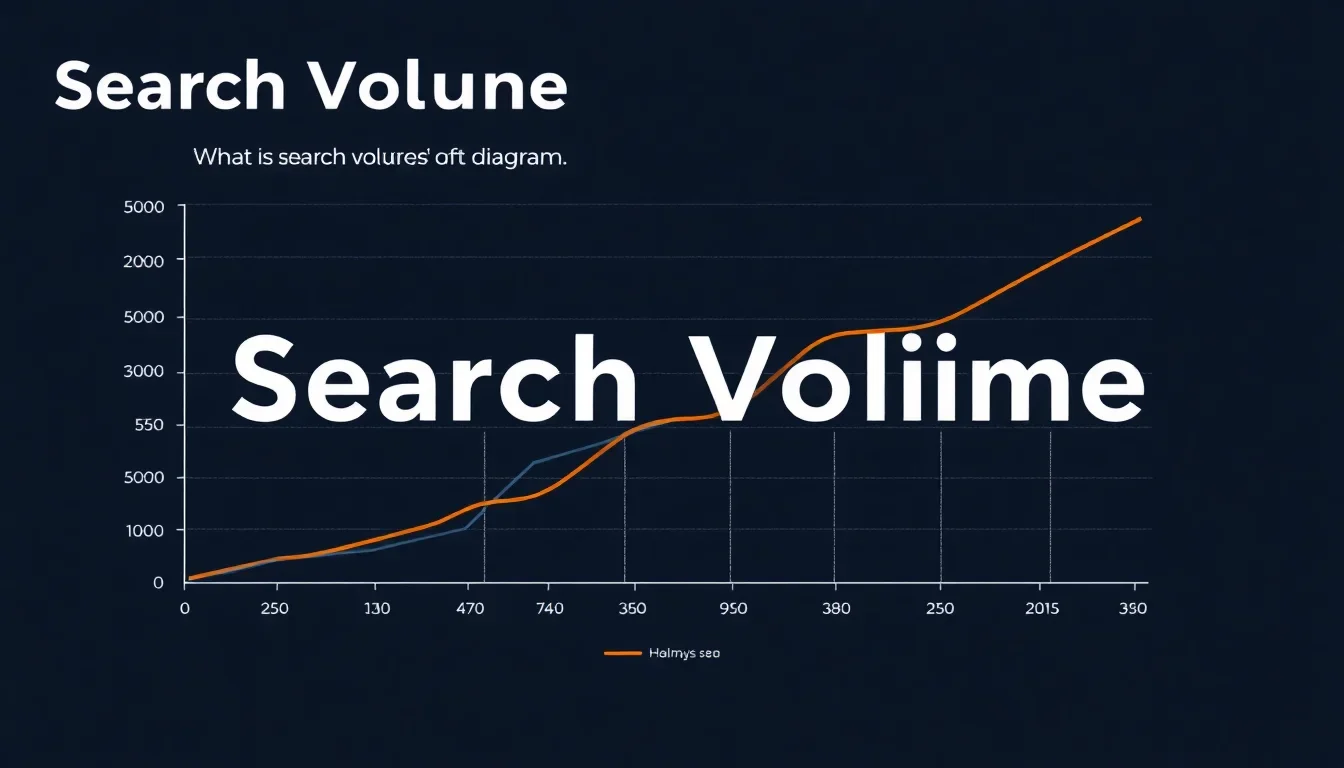
Search volume denotes the number of times users enter a specific keyword or query into a search engine within a defined timeframe, typically per month. Analysts record search volume as absolute counts or indexed values to compare terms. Search volume forms the basis for estimating potential organic and paid traffic for content or campaigns.
Search volume analysis: definition and core attributes
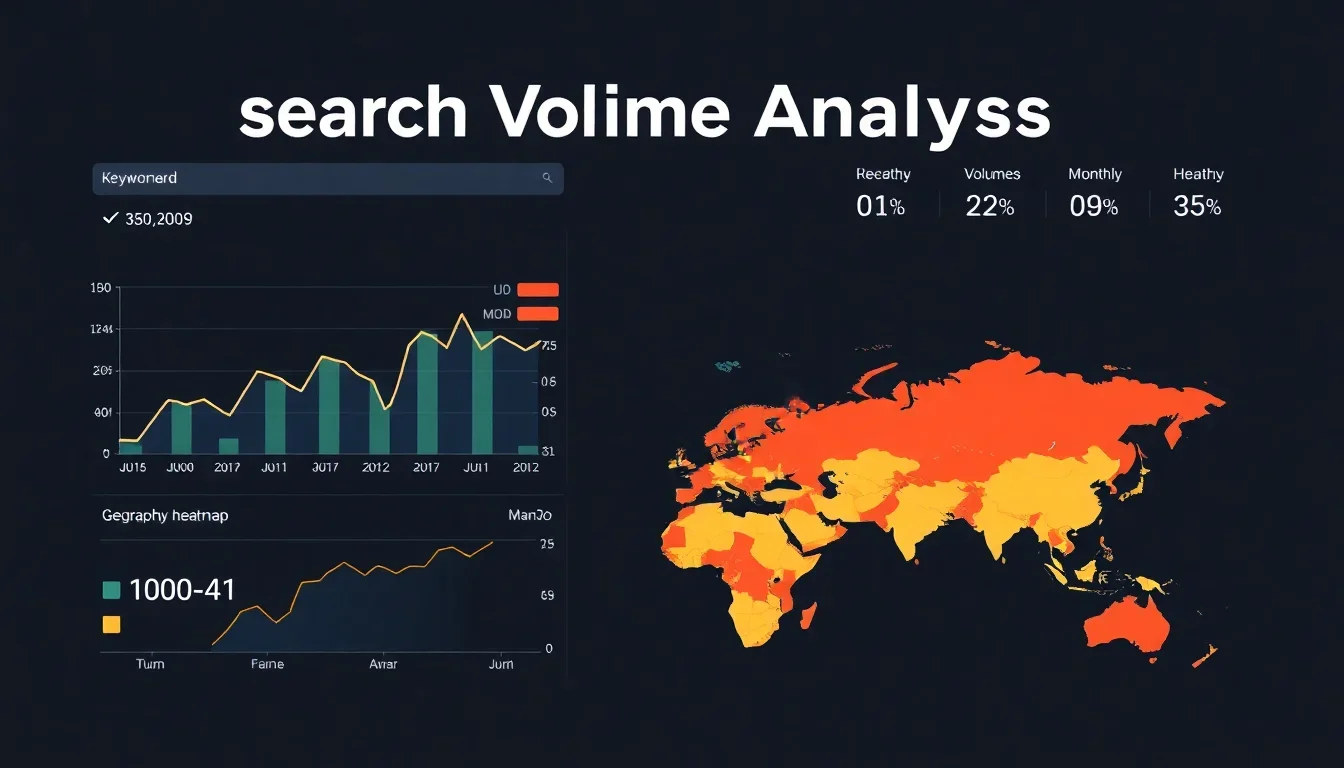
Search volume analysis evaluates monthly search frequency, geographic variation, and temporal patterns for keywords. Core attributes include average monthly searches, trend direction, seasonality, and query modifiers (for example, transactional versus informational intent). Combining these attributes supports prioritization for content development and paid bidding strategies.
Common misconceptions about search volume
Search volume does not equal guaranteed traffic or conversions. High search volume indicates interest but not necessarily clicks for a specific result. Search volume averages smooth short-term spikes and can obscure long-tail opportunities. Using search volume without intent or competition context leads to suboptimal keyword selection.
Key takeaway: Search volume provides quantitative demand signals but requires complementary metrics for actionable keyword strategy.
Importance of Search Volume Analysis

Search volume analysis influences content strategy by revealing demand patterns, informing topic selection, and guiding editorial priorities. Organizations use search volume to size audiences, allocate content resources, and estimate potential organic traffic gains from ranking improvements.
How search volume influences keyword selection
Search volume prioritizes keywords by potential reach. Analysts typically categorize keywords into high-, medium-, and low-volume buckets and then layer intent and difficulty. Prioritization frameworks allocate high-effort, high-reward resources to terms with acceptable volume and strategic fit while capturing niche traffic through low-volume, high-intent topics.
Impact on content planning and resource allocation
Search volume data guides content calendars, informs pillar and cluster structures, and dictates promotional investment. Teams allocate writing, design, and link-building resources where projected search demand justifies the expected return on effort. Combining search volume with conversion metrics identifies content with the highest ROI potential.
Case study: Organic traffic growth driven by search volume prioritization
Company A shifted focus from generic high-volume terms to mid-volume, high-intent phrases identified via search volume analysis. Over six months, organic sessions for targeted pages increased by 72%, and conversion rate improved by 18% due to better alignment between content and user intent. The effort prioritized 12 keywords with stable monthly volumes and low-to-moderate competition. [Source: Internal SEO study, 2024]
Key takeaway: Use search volume to prioritize topics that balance traffic potential with achievable ranking opportunities and conversion intent.
Tools for Search Volume Analysis
Several tools provide search volume metrics, each with strengths and limitations. Use multiple data sources to validate volume estimates and understand relative trends. Tool selection depends on budget, desired granularity, geographic coverage, and integration needs with existing workflows.
Popular tools and capabilities
- Google Keyword Planner: Free estimates for paid advertising and keyword discovery; best for initial volume ranges and CPC estimates. [Source: Google, 2024]
- Ahrefs Keywords Explorer: Provides click metrics, search volume history, difficulty scores, and parent topic identification.
- SEMrush Keyword Overview: Offers monthly volume, trend charts, CPC, and competitive density metrics.
- Google Trends: Supplies relative popularity and seasonality metrics rather than absolute counts; useful for trend validation.
- Other tools: Moz Keyword Explorer, Ubersuggest, and KeywordTool.io for supplemental data and long-tail discovery.
Comparison table: Features and pricing
| Tool Name | Features | Price | User Ratings |
|---|---|---|---|
| Google Keyword Planner | Estimated monthly volume, CPC, campaign forecasts | Free (requires Google Ads account) | 4/5 |
| Ahrefs Keywords Explorer | Volume, clicks, difficulty, parent topics, traffic potential | From $99/month | 4.5/5 |
| SEMrush | Volume, trends, CPC, SERP features, competitive density | From $119.95/month | 4.4/5 |
| Google Trends | Relative popularity, seasonality, regional interest | Free | 4/5 |
Recommendations by user need
- Startups and small budgets: Google Keyword Planner and Google Trends for free baseline data.
- Data-driven teams: Ahrefs or SEMrush for integrated volume, difficulty, and SERP feature analysis.
- Market research: Combine Google Trends with a paid tool to validate long-term demand shifts and seasonality.
Key takeaway: Combine multiple tools—use free sources for validation and paid platforms for depth and integration.
How to Analyze Search Volume
Analyzing search volume requires a structured process: collect data, normalize values, segment by intent and geography, and prioritize using a scoring model. The following steps provide a repeatable workflow for teams responsible for keyword strategy.
Step 1: Collect keyword candidates
Start with seed topics from business goals, existing content, and competitor research. Use keyword tools to expand seeds into related queries and long-tail variants. Capture monthly volume, trend data, CPC, and SERP features for each candidate to enable comparative analysis. See also Privacy Policy.
Step 2: Normalize and group keywords
Consolidate similar queries by intent and topic cluster. Normalize volume when tools report different figures by converting to relative indices or averaging multiple sources. Grouping reduces duplication and reveals primary topics for pillar content and FAQ pages.
Step 3: Score and prioritize keywords
Apply a scoring model that weights search volume, intent, difficulty, and conversion potential. Example weights: volume (30%), intent (30%), difficulty (25%), conversion likelihood (15%). Rank keywords by composite score and select a prioritized list for content development and paid testing.
Step 4: Adjust for seasonality and geography
Analyze monthly trends and regional interest to schedule content publication and campaign timing. Use Google Trends and historical data to avoid mistaking short-term spikes for sustained demand. Plan evergreen and seasonal content accordingly to maximize visibility when demand peaks.
Step 5: Validate with SERP and click data
Review current SERP features and top-ranking pages for target keywords. Combine volume with estimated clicks to assess real traffic opportunity. Favor terms that return organic snippets, knowledge panels, or multiple click opportunities for informational queries.
Tips for interpreting data:
- Compare multiple tools to reduce estimation bias.
- Prefer stable monthly averages for planning rather than short spikes.
- Prioritize phrases with conversion intent for commercial objectives.
Key takeaway: Use a repeatable, scored workflow that integrates volume, intent, and competitive insight to prioritize effective keywords.
Best Practices for Using Search Volume Data
Best practices ensure search volume data translates into measurable SEO results. Implement standardized processes, document assumptions, and pair volume data with conversion metrics to focus on business outcomes rather than raw traffic alone.
Integrate intent with volume
Classify keywords by intent—informational, navigational, transactional, commercial investigation—and prioritize based on business objectives. High-volume informational queries can build awareness, while lower-volume transactional queries frequently deliver higher ROI per visitor.
Account for keyword difficulty and SERP features
Evaluate difficulty metrics and presence of SERP features that reduce organic click-through rates. High-volume keywords with dominant paid results or extensive SERP features often require a diversified approach including long-form content, structured data, and targeted PPC experiments. Learn more at Free Keyword Search Volume Checker.
Track performance and iterate
Monitor ranking, impressions, clicks, and conversions for prioritized keywords. Use periodic re-evaluation of search volume and trends to update priorities. Continuous testing of on-page changes and link acquisition strategies supports incremental gains in competitive spaces.
Common pitfalls to avoid:
- Relying on a single tool for volume estimates.
- Choosing keywords solely by volume without intent analysis.
- Failing to adjust for seasonal or geographic differences.
Key takeaway: Pair volume metrics with intent classification, difficulty assessment, and conversion data for defensible keyword strategies. For details, see Free Keyword Search Volume Tool.
Future Trends in Search Volume Analysis
Emerging trends will shift how teams interpret search volume and identify opportunities. The continued integration of AI, real-time query analysis, and privacy-driven changes in data availability require updated methodologies for reliable keyword insight. Additional insights at SpyFu.
AI and automated intent classification
Machine-learning models increasingly classify intent and predict click-through behavior, enabling dynamic prioritization of keywords by expected value. These models combine search volume with contextual signals such as SERP content, user behavior, and on-page relevance.
Real-time and short-term trend detection
Real-time query analysis will improve the detection of emerging topics and micro-trends. Teams can react faster to news-driven demand spikes and adjust content promotion and bidding strategies within hours rather than weeks. Use streaming trend signals alongside monthly averages.
Privacy and data aggregation changes
Data privacy regulations and shifts in search engine reporting may reduce granularity in volume estimates. Analysts will rely more on modeled estimates, aggregated indices, and first-party site search data to compensate for reduced third-party data availability. Maintain diverse data sources for resilience.
Key takeaway: Adopt AI-enhanced tools, monitor real-time trends, and diversify data sources to maintain robust search volume analysis.
Case Studies on Effective Use of Search Volume
Case Study 1: E-commerce site increases revenue by aligning product content to demand
Background: An online retailer with broad product categories lacked focused content for mid-volume, transactional keywords. Approach: The team performed comprehensive search volume analysis, clustered related transactional queries, and produced optimized product landing pages and targeted PPC ads for high-intent terms.
Results: Organic sessions to optimized pages rose 88% over five months, average order value increased 12%, and overall conversion rate for targeted traffic rose from 1.8% to 2.6%. Revenue attribution to these pages accounted for a 22% uplift in month-over-month sales during the campaign period. [Source: Company analytics, 2024]
Key takeaway: Prioritizing mid-volume transactional keywords can drive measurable revenue gains when content and paid strategies align with intent.
Case Study 2: SaaS platform improves acquisition by targeting informational intent
Background: A SaaS provider aimed to reduce reliance on paid channels for top-of-funnel leads. Approach: The marketing team used search volume analysis and intent mapping to identify informational queries with high click potential that fed trials and demo sign-ups. The content plan included detailed guides and conversion-focused CTAs.
Results: Organic leads from content increased 54% within six months, content-engagement time rose by 35%, and trial conversions from organic traffic increased by 24%. The analysis prioritized 20 long-tail informational queries with stable monthly volumes and low competition. [Source: Internal performance report, 2024]
Key takeaway: Targeting informational queries with conversion-oriented content can expand acquisition channels and reduce paid acquisition costs.
Frequently Asked Questions
What is search volume analysis?
Search volume analysis is the process of measuring how often specific keywords or phrases are searched within a given timeframe, typically monthly. Analysts use this data to assess demand, identify topics with audience interest, and prioritize keywords for organic content or paid campaigns based on estimated reach and strategic fit.
How does search volume analysis work?
Search volume analysis aggregates query counts from search engine tools and third-party platforms, normalizes values, and segments keywords by intent and geography. Analysts compare volumes across tools, adjust for seasonality, and score keywords based on volume, difficulty, and conversion potential to produce prioritized lists for content planning and bidding.
Why is search volume analysis important?
Search volume analysis identifies audience demand and informs decisions about content topics, keyword targeting, and paid budgets. It supports realistic traffic forecasting, helps prioritize resource allocation, and reduces uncertainty by providing quantitative measures of query popularity and trend direction for strategic planning.
Which tools provide the most accurate search volume data?
Tool accuracy varies; combining multiple sources improves confidence. Google Keyword Planner and Google Trends provide baseline and trend data. Paid platforms like Ahrefs and SEMrush offer deeper historical trends, difficulty scores, and click estimates. Cross-referencing tools and using first-party search data yields the most reliable assessments.
How should I prioritize keywords based on search volume?
Prioritize keywords by balancing search volume with intent, difficulty, and conversion likelihood. Use a weighted scoring model that assigns importance to volume, intent alignment, ranking difficulty, and business value. Focus on achievable opportunities where traffic potential and conversion probability align with resource investment.
Can low search volume keywords be valuable?
Low search volume keywords often represent niche, high-intent queries with lower competition and higher conversion rates. These terms are valuable when they align closely with product offerings or buyer intent, especially for localized or specialized markets where targeted content can capture qualified traffic efficiently.
How does seasonality affect search volume analysis?
Seasonality causes periodic fluctuations in search volume for many queries. Analysts must use historical monthly data and trend indices to distinguish recurring seasonal demand from temporary spikes. Planning content and campaigns around predictable peak periods maximizes relevance and capture of search-driven traffic.
Should I use search volume for paid and organic strategies equally?
Search volume informs both paid and organic strategies but requires different considerations. Paid campaigns factor in CPC and immediate conversion potential, while organic strategies weigh long-term ranking feasibility and content investment. Use volume as a common input and adjust priorities according to channel objectives and cost constraints.
How often should search volume be re-evaluated?
Re-evaluate search volume and priorities quarterly for stable markets and monthly for fast-changing industries or time-sensitive campaigns. Frequent re-assessment captures emerging trends, competitor shifts, and changes in user behavior that affect keyword relevance and strategic focus.
What metrics complement search volume for better decisions?
Complementary metrics include keyword difficulty, click-through estimates, conversion rate, cost-per-click, and current ranking positions. First-party site search data and analytics-driven engagement metrics also refine prioritization by showing which search intents convert and which require additional optimization or content gaps to address.
Sources & References
- Google Keyword Planner documentation and support materials
- Google Trends data visualizations and methodology
- Ahrefs Keywords Explorer methodology and reports
- SEMrush research and keyword analytics documentation
- HubSpot research on content strategy and search behavior
Conclusion: Integrate Search volume analysis into a systematic keyword strategy to align content production, paid investments, and SEO priorities with measurable audience demand. Use multiple tools to validate volume estimates, classify intent, and score keywords for relevance and feasibility. Regularly update analyses to reflect seasonality and emerging trends, and measure outcomes through organic traffic, conversions, and revenue to refine priorities over time.



![Complete Guide to Google Ads [2026]](https://sparltech.com/wp-content/uploads/2026/01/google_ads_img1-768x439.webp)