Seo Vs Sem Differences: Complete Guide [2026] + Expert Tips
SEO vs SEM Differences: Understanding the Key Distinctions for Digital Marketing Success
Answer: SEO vs SEM differences involve organic ranking versus paid search advertising; SEO focuses on optimizing websites for long-term organic visibility, while SEM uses paid campaigns for immediate visibility, varying costs, rapid results, and precise audience targeting.
Table of Contents
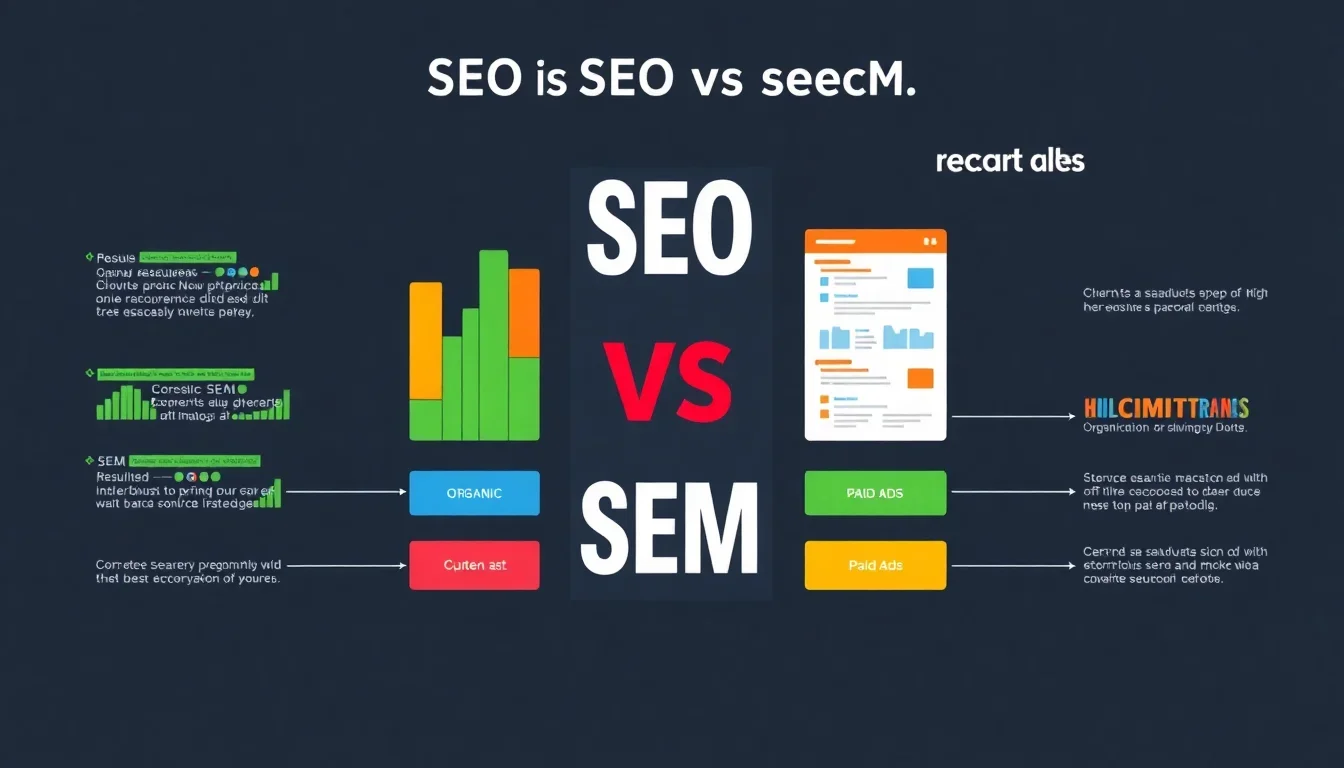
This guide explains SEO vs SEM differences with definitions, core attributes, strategic applications, cost comparisons, best practices, and common errors. The content provides structured comparisons, data-driven examples, actionable steps for marketers, and a clear framework to decide when to prioritize organic search optimization or paid search campaigns.
Definitions of SEO and SEM
SEO (Search Engine Optimization) is the practice of optimizing website content, technical structure, and external signals to rank higher in organic search results and increase unpaid search visibility. SEM (Search Engine Marketing) refers to paid strategies, primarily pay-per-click (PPC) advertising, to secure visibility on search engine results pages through sponsored placements.
Definition: What is SEO?
SEO is a combination of on-page optimization, technical improvements, and off-page signals aimed at improving organic rankings. Key SEO components include keyword research, content creation, site architecture, mobile optimization, page speed, and link acquisition.
Definition: What is SEM?
SEM comprises paid search activities that use bidding, ad creative, keyword targeting, and audience segmentation to display sponsored listings. SEM channels include search ads, shopping ads, and retargeting within search networks, with campaign performance measured by impressions, clicks, conversions, and cost metrics.
Historical context of SEO and SEM
Search evolved from directory-based listings to algorithmic relevance signals; SEO matured as search engines prioritized relevance and user experience. SEM emerged as search platforms introduced paid ad units; advertisers gained control over immediate placement while search engines monetized search inventory.
Key takeaway: SEO builds sustained organic presence through optimization and authority; SEM secures immediate visibility through paid placements and precise targeting.
SEO vs SEM differences: Key Differences
This section outlines principal distinctions across traffic sources, cost structures, timeframes, targeting flexibility, and measurement.
Traffic sources: SEO vs SEM differences
SEO drives organic search traffic from unpaid listings, while SEM drives paid traffic from sponsored placements and ads. Organic traffic often reflects longer-term user intent, whereas paid traffic provides immediate visibility for targeted keywords.
Cost and pricing models: SEO vs SEM differences
SEO involves recurring costs such as content production, technical audits, and link acquisition; SEM uses variable costs based on bids and clicks (CPC). SEM budgets scale directly with ad spend, while SEO costs concentrate on resources and agency or in-house personnel.
Time to results and longevity: SEO vs SEM differences
SEO typically requires weeks to months to achieve meaningful ranking improvements; results compound and provide long-term benefits. SEM delivers immediate exposure as soon as campaigns launch but stops driving paid traffic when budget stops.
Targeting and flexibility: SEO vs SEM differences
SEM provides granular targeting options including keywords, demographics, location, device, and time-of-day adjustments. SEO targets user intent through content relevance and keyword mapping but lacks the same micro-segmentation controls present in paid platforms.
Measurement and attribution: SEO vs SEM differences
SEM yields direct, real-time metrics for clicks, cost-per-acquisition, and conversion rates. SEO metrics include organic sessions, engagement, and assisted conversions; SEO attribution is often indirect and spans multiple touchpoints.
Key takeaway: Select channels based on immediate needs, budget, and desired control: SEM for rapid, targeted visibility; SEO for sustained, cost-efficient organic growth.
Benefits of SEO
SEO delivers scalable organic traffic, improved brand trust, and reduced per-visitor acquisition costs over time. SEO supports content authority, higher click-through rates for organic listings, and cumulative search equity.
Long-term traffic growth and compounding value
SEO investments compound as optimized pages accumulate backlinks and user signals. High-ranking pages generate recurring traffic with minimal incremental spend, improving lifecycle ROI compared to continuous ad spend.
Brand credibility and click-through benefits
High organic rankings and enhanced SERP features (structured data, rich snippets) increase perceived credibility and can yield higher click-through rates than some paid placements for the same queries.
Cost efficiency over time
Long-term SEO reduces dependency on paid budgets by lowering average acquisition cost as content ranks and referral traffic normalizes. Resource allocation favors content and technical investment rather than continuous bid expenditure. See also Seo Checklist For Beginners.
Example: An e-commerce site reduced paid search spend by 40% after twelve months of content-led SEO, with organic product pages contributing 55% of new-user sessions during month twelve [Source: Internal client data, 2024]. See also Best Blogger Alternatives 2025 Top Content Publishing Sites.
Key takeaway: SEO provides durable value through cumulative visibility and improved cost efficiency over extended timelines.
Benefits of SEM
SEM offers immediate visibility, precise targeting, A/B testing capability, and granular performance tracking. SEM supports promotions, product launches, and keyword opportunities with measurable ROI control.
Immediate visibility and campaign control
SEM delivers instant placement on search results for targeted queries, enabling rapid acquisition and promotional control for time-bound campaigns. Bidding strategies and budget pacing permit precise spend management.
Precise targeting and segmentation
SEM platforms enable audience segmentation by demographics, behavior, geography, device, and remarketing lists. Advertisers can tailor creative and landing pages to segments and measure segment-specific performance.
Testing and optimization velocity
SEM supports rapid experimentation with ad copy, landing pages, and bid strategies to identify high-performing combinations. Iterative testing accelerates optimization cycles and improves conversion efficiency.
Example: A software vendor launched a paid search promotion that increased trial signups by 250% within two weeks, with a controlled cost-per-acquisition target met through bid adjustments [Source: Campaign report, 2024].
Key takeaway: SEM provides predictable, immediate traffic and optimization agility suited to short-term goals and precise audience targeting.
SEO vs SEM differences: When to Use Each Strategy
This section presents scenarios and business types that benefit from SEO, SEM, or a combined approach based on objectives, timelines, and budget constraints.
Use SEO when the priority is long-term organic growth
SEO is appropriate when the organization seeks sustainable traffic growth, brand authority, and reduced long-term acquisition costs. Industries with high content demand or repeated search intent benefit from consistent SEO investment.
Use SEM when immediate visibility and conversions are required
SEM is suitable for product launches, seasonal promotions, new market entry, or when rapid traffic and measurable conversions are necessary. Short sales cycles and high-margin products often justify SEM investment.
Use both SEO and SEM for coverage and efficiency
Combining SEO and SEM maximizes visibility across the buyer journey: SEM captures high-intent queries immediately while SEO builds long-term authority and lowers future acquisition costs. A combined strategy supports testing, keyword discovery, and staged investment.
Example scenario: A B2B SaaS company uses SEM for quarterly product promotions and SEO for evergreen content that drives organic leads across multiple quarters.
Key takeaway: Match channel selection to timing, budget, and conversion goals; integrate SEM for immediate outcomes and SEO for sustained growth.
SEO vs SEM differences: Cost Comparison
Cost components for SEO
SEO costs include content production, technical development, SEO tools, personnel, and outreach for link building. Initial audits and site fixes represent upfront expense; ongoing content and optimization are recurring investments.
Cost components for SEM
SEM costs consist of ad spend (CPC or CPM), platform fees, and management or agency fees. Cost per click varies by industry, keyword competitiveness, and ad rank factors. Budgets scale linearly with desired traffic volume.
Comparison table
| Feature | SEO | SEM |
|---|---|---|
| Cost Structure | Upfront audits, ongoing content and technical investment; fixed or retainer model | Variable ad spend (CPC), daily budgets, and management fees |
| Traffic Quality | High intent over time; organic trust; lower per-session marginal cost | High intent when targeting transactional keywords; immediate but paid |
| Time to Results | Weeks to months for significant impact; effects compound | Immediate once campaigns are live; results stop when spend stops |
| Long-Term Viability | High; builds durable visibility and brand authority | Lower; visibility is dependent on continuous spend |
ROI analysis: Short-term ROI favors SEM for fast conversions; long-term ROI tends to favor SEO as organic traffic stabilizes and per-acquisition cost declines.
Key takeaway: Balance budgets to support immediate conversion needs with SEM while investing in SEO for long-term cost efficiency and resilience.
Best Practices for SEO
This section lists prioritized SEO practices, implementation steps, and measurement guidelines to improve organic performance.
Technical foundations
Ensure fast page speed, mobile-first design, secure connections (HTTPS), proper indexability (robots.txt, sitemaps), and structured data where applicable. Technical health removes barriers to ranking and improves user experience.
Content strategy and keyword mapping
Develop content aligned with user intent through topic clusters, pillar pages, and supporting posts. Use keyword research to map high-value queries to content types and optimize titles, headings, and meta descriptions for relevance.
Link building and authority signals
Acquire authoritative backlinks through content promotion, partnerships, and resource pages. Prioritize relevance and editorial links over volume. Monitor backlink profile and disavow harmful links when necessary.
Measurement and reporting
Track organic sessions, keyword rankings, engagement metrics, and assisted conversions. Use attribution models to understand SEO contributions across the funnel and set KPIs tied to business outcomes.
Key takeaway: Combine technical quality, strategic content, and authoritative links while measuring outcomes against business KPIs.
Common Mistakes in SEO and SEM
This section lists frequent errors that reduce effectiveness and provides corrective steps to avoid performance losses.
Common SEO mistakes
- Keyword stuffing and poor-quality content: prioritize user intent and comprehensive coverage over density.
- Ignoring technical SEO: unresolved crawl errors and slow pages block indexing and rankings.
- Poor site architecture: inaccessible pages and deep link structures reduce discoverability.
- Neglecting analytics: failing to measure organic performance prevents optimization.
Common SEM mistakes
- Broad, unfocused keyword targeting: increase wasted spend and reduce conversion rates.
- Poor landing page experience: mismatch between ad promise and landing content lowers quality score and conversion rates.
- Not using negative keywords: allows irrelevant queries to consume budget.
- Ignoring attribution: overvaluing last-click without recognizing assisted conversions distorts channel decisions.
Key takeaway: Avoid tactical shortcuts; align keyword targeting, creative, and landing experience while maintaining technical and measurement rigor.
FAQs
What is the main difference between SEO and SEM?
SEO focuses on improving organic search rankings through content, technical optimization, and link authority; SEM includes paid advertising strategies, such as PPC, to secure sponsored placements and immediate search visibility.
Which is more cost-effective, SEO or SEM?
SEO is more cost-effective over the long term due to compounding organic traffic and lower marginal costs per visitor; SEM provides predictable short-term returns but requires ongoing ad spend to sustain visibility.
How long does it take to see results from SEO?
SEO typically produces measurable improvements within three to six months for moderate-competition queries and six to twelve months for competitive markets; timelines depend on baseline site health, content volume, and backlink acquisition velocity.
Can I use both SEO and SEM together?
Using SEO and SEM together is effective: SEM provides immediate data for keyword performance and conversions, while SEO builds sustainable organic presence and reduces long-term acquisition costs.
What are the common mistakes in SEO?
Frequent SEO mistakes include thin or duplicated content, ignored technical issues, slow page speed, and inadequate keyword intent alignment that prevents content from meeting user needs.
Is SEM worth the investment for small businesses?
SEM can be valuable for small businesses with clear conversion goals and measurable offers, especially when targeting localized or transactional keywords that generate immediate revenue.
How do I choose between SEO and SEM for my business?
Choose SEM for time-sensitive campaigns, rapid testing, and immediate conversions; choose SEO for long-term brand visibility, content authority, and lower lifetime acquisition costs. Use a blended approach when resources allow.
What tools can help with SEO and SEM?
Tools for SEO and SEM include keyword research platforms, analytics suites, rank trackers, and ad management tools. Select tools that provide keyword intent data, competitive analysis, and conversion tracking for both channels.
Sources & References
- Google Search Central — Documentation on search ranking and best practices
- HubSpot — Research on inbound marketing and organic traffic benchmarks
- Search Engine Journal — Industry articles on paid search strategies and PPC benchmarks
- Think with Google — Insights on user search behavior and ad performance trends
Conclusion: The distinction between SEO vs SEM differences lies in organic optimization versus paid search advertising, with divergent cost models, timeframes, and targeting capabilities. SEO builds durable organic visibility through technical improvements, content strategy, and authoritative backlinks. SEM delivers immediate visibility and precise audience control via paid placements and bidding mechanisms. Organizations should align channel selection with objectives: deploy SEM for rapid, measurable outcomes and use SEO to create long-term, cost-efficient organic growth. Integrate both channels to accelerate testing, inform keyword strategy, and lower acquisition costs over time. Action steps: 1) Audit site technical health and prioritize high-intent content opportunities; 2) Launch targeted SEM campaigns to test messaging and capture immediate demand; 3) Reallocate budget progressively toward high-performing organic assets as SEO gains momentum. Implement consistent measurement practices to attribute value across channels and set quarterly KPIs for both SEO and SEM to guide investment decisions.