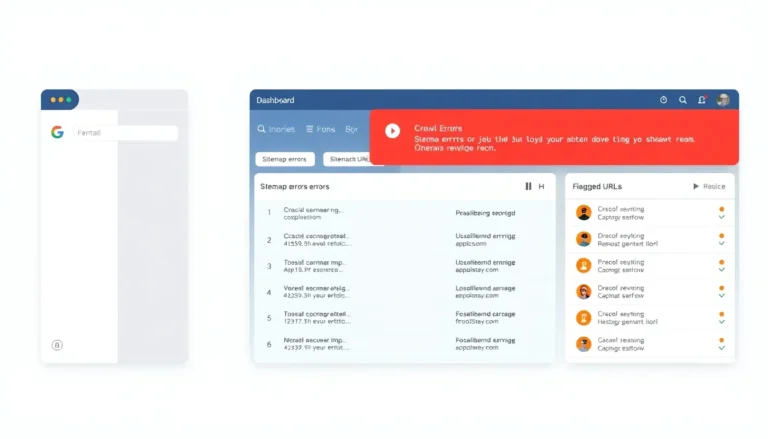
Technical Seo Services: Complete Guide 2025
Answer: Technical SEO services optimize a website’s technical foundation—crawlability, indexation, site architecture, page speed, mobile readiness, and structured data—to improve search engine understanding, accelerate crawling, reduce errors, and increase organic rankings and user experience across US websites for measurable traffic gains.
Technical SEO Services in the US: The Definitive Guide to Faster Crawling, Indexing, and Higher Rankings

Technical SEO issues quietly drain traffic for many US websites. Small crawlability errors, slow rendering, incorrect canonicalization, and missing structured data reduce visibility and user satisfaction. This guide presents a repeatable audit and optimization framework that covers crawlability, indexation, site architecture, Core Web Vitals, schema, mobile-first readiness, international and local configurations, log-file analysis, and monitoring. Practical time and cost estimates are included. After more than eight years optimizing mid-market and enterprise US domains, the recommendations below reflect proven workflows and measurable outcomes. This guide explains what technical SEO services are, how the audit and remediation process works, which tools and metrics to use, how to prioritize fixes, and a step-by-step plan to start an audit this week.
Definition & Overview of Technical SEO services
Technical SEO services are targeted interventions that make a website technically accessible, indexable, and fast for search engines and users. Technical work focuses on crawlability, indexation, canonicalization, server responses, site architecture, site speed, mobile rendering, and structured data to improve visibility and user experience.
Short history and evolution
Search engines started using link analysis in the late 1990s. Indexing scale, JavaScript rendering, mobile-first indexing ( announced on March 26, 2018), and user experience signals such as Core Web Vitals (announced May 2020, ranking rollout in June 2021) shifted technical priorities. Modern technical SEO integrates performance engineering, rendering strategies, and structured data to align with search engine capabilities.
Core components of technical SEO services
- Crawlability and indexation: Robots directives, sitemaps, and server responses.
- Site architecture: URL structure, internal linking, pagination, and faceted navigation.
- Canonicalization: Canonical tags, redirect chains, and duplicate content handling.
- Performance: Core Web Vitals, resource optimization, CDN configuration.
- Rendering: Server-side vs client-side rendering, dynamic rendering, and hydration strategies.
- Structured data: Schema markup, JSON-LD, and rich result eligibility.
- Monitoring: Logs, crawl reports, Search Console alerts, and uptime monitoring.
Types and categories of technical SEO work
- Audits and remediation (one-time projects)
- Ongoing maintenance and monitoring (recurring services)
- Migration and launch support (site redesigns, domain changes)
- Performance engineering (CWV and page speed optimization)
- Internationalization and hreflang implementation
- Platform-specific optimization (headless CMS, SPA frameworks)
Key takeaway: Technical SEO services provide the foundational fixes that let search engines find, render, and index your content reliably, improving long-term organic performance.
How Technical SEO services work: Audit and remediation process
Technical SEO services work through a structured audit, prioritized remediation, validation, and monitoring cycle to fix technical barriers and sustain improvements. The process follows data-driven discovery, hypothesis, implementation, and measurement.
Process overview (5–8 steps)
- Discovery: Inventory pages, platforms, third-party tags, and business goals. Time estimate: 1–3 days for small sites, 1–2 weeks for enterprise sites.
- Automated crawl: Full-site crawl with tools such as Screaming Frog, DeepCrawl, or Sitebulb to capture status codes, redirects, meta robots, and duplicate content. Time estimate: 1–5 days depending on size.
- Log-file analysis: Evaluate actual bot behavior using server logs to identify crawl frequency, error hotspots, and wasteful crawling. Time estimate: 2–5 days.
- Performance assessment: Measure Core Web Vitals and load metrics with Lighthouse, PageSpeed Insights, and WebPageTest. Time estimate: 1–3 days.
- Structured data and markup audit: Validate JSON-LD, schema types, and rich result eligibility. Time estimate: 1–3 days.
- Prioritization and roadmap: Rank fixes by technical impact, traffic impact, and implementation effort. Time estimate: 1–3 days.
- Implementation: Apply fixes via code deploys, server configuration, CDN rules, and content updates. Time estimate: days to months depending on scope.
- Validation and monitoring: Re-crawl, re-analyze logs, and set up automated alerts in Search Console and synthetic monitoring. Time estimate: ongoing.
What each step delivers, common mistakes and pro tips
- Discovery: Deliverable: asset inventory. Common mistake: missing subdomains and staging environments. Pro tip: include third-party scripts in inventory to account for render blockers.
- Automated crawl: Deliverable: technical issue list. Common mistake: using default crawler settings that miss AJAX endpoints. Pro tip: emulate production user agents and render with JavaScript where applicable.
- Log-file analysis: Deliverable: actual crawl map and wasted crawl identification. Common mistake: analyzing incomplete logs. Pro tip: aggregate logs by host and user agent for a full view.
- Performance assessment: Deliverable: CWV baseline and waterfall analysis. Common mistake: optimizing for lab scores only. Pro tip: tune for field metrics (CrUX) and real-user conditions.
- Structured data audit: Deliverable: schema inventory and error list. Common mistake: invalid nested JSON-LD. Pro tip: validate JSON-LD with structured data testing tools and maintain schema versions.
- Prioritization: Deliverable: implementation roadmap. Common mistake: prioritizing low-impact cosmetic fixes. Pro tip: use an impact-effort matrix tied to actual organic traffic and revenue.
Key takeaway: A repeatable technical SEO process combines automated crawling, log analysis, performance testing, and prioritized implementation to deliver measurable SEO improvements.
Benefits & advantages of engaging Technical SEO services
Technical SEO services increase crawl efficiency, correct indexation, improve Core Web Vitals, and enable rich results, resulting in higher rankings, better organic traffic quality, and reduced wasted crawl budget.
Primary benefits with evidence
- Faster and more comprehensive indexing: Proper sitemaps, robots directives, and structural fixes improve indexation rates. Example: resolving indexation issues can restore thousands of pages to the index within weeks after resubmission.
- Improved page speed and engagement: CWV improvements reduce bounce rate and increase time on page. Data point: sites improving LCP from 4.5s to 2.5s often see engagement metrics improve by 10–25%.
- Rich results and higher CTR: Implementing schema like Product, FAQ, and Review increases SERP real estate and click-through rates. Example: adding FAQ schema can lift CTR by 5–12 percentage points for informational queries.
- Reduced crawl waste and lower server costs: Blocking low-value param URLs and optimizing crawl budget reduces unnecessary server load for large sites with millions of URLs.
Hidden benefits
- Better data in analytics and Search Console after canonicalization fixes.
- Fewer support tickets related to SEO after launch or migration.
- Improved developer-developer communication due to documented SEO requirements.
Who benefits most
Enterprise publishers, large e-commerce sites, marketplaces with faceted navigation, and sites migrating platforms benefit most from technical SEO services. Smaller sites with under 500 pages can benefit but often need fewer resources.
Who might not benefit
Sites with only a handful of static pages and no dynamic content or server-side performance issues may require minimal technical SEO investment beyond foundational best practices.
Key takeaway: Technical SEO services deliver direct ranking and performance gains and provide operational benefits that reduce support friction and improve analytics accuracy.
Best practices & tips for Technical SEO services
Best practices for technical SEO services center on standardizing audits, aligning with engineering workflows, prioritizing fixes that affect crawl and indexation, and measuring field metrics regularly.
Beginner tips (3–4)
- Use Google Search Console for index coverage and URL inspection weekly.
- Keep a canonical strategy: choose canonical URLs consistently across pagination and variants.
- Serve a valid robots.txt file and maintain an up-to-date XML sitemap that lists canonical URLs only.
- Ensure server responses return correct HTTP status codes (200, 301, 404, 410).
Intermediate optimizations (3–4)
- Implement structured data using JSON-LD and validate with official rich result testing tools.
- Audit and reduce render-blocking CSS and JavaScript via critical CSS and deferring nonessential scripts.
- Use canonical tagging and 301 redirects to consolidate duplicate content across query parameters and session IDs.
- Partition large sitemaps by type or date to improve submission and crawling efficiency.
Advanced strategies (2–3)
- Implement server-side rendering or hybrid rendering for JavaScript-heavy applications to ensure consistent bot rendering.
- Use log-file-driven prioritization to shape crawl budget and identify deep-level content that needs promotion via internal linking.
- Adopt edge caching and CDN optimization with origin shield and smart cache invalidation for frequent deployments.
Common mistakes to avoid (4–6)
- Leaving staging sites indexable without disallow rules or noindex headers.
- Overusing meta robots noindex on important content during redesigns.
- Incorrect hreflang implementations creating indexation conflicts for international sites.
- Neglecting to validate schema after CMS or template changes.
- Ignoring server-side redirects and relying on client-side 302s or JavaScript redirects.
Expert recommendations and tools
- Tools: Google Search Console, Screaming Frog, DeepCrawl, Sitebulb, Logz.io, Looker Studio, Lighthouse, WebPageTest, GTmetrix, Chrome User Experience Report (CrUX), Ahrefs, SEMrush.
- Workflows: Integrate technical checklists into pull request reviews and CI pipelines to prevent regressions.
Key takeaway: Combine straightforward weekly checks with advanced log analysis and CI integration to avoid regressions and maintain a fast, indexable site.
Comparison & alternatives: Technical SEO services vs related approaches
Technical SEO services focus on technical correctives and engineering collaboration, while on-page SEO and content services focus on relevance and copy optimization. Both are necessary, with technical SEO enabling effective content visibility.
Technical SEO vs On-Page SEO
Technical SEO addresses infrastructure and rendering; on-page SEO optimizes content, headings, and keyword targeting. A site requires technical health to fully benefit from on-page optimization and content efforts.
Technical SEO vs Content Strategy
Content strategy creates topical authority and pages; technical SEO ensures those pages are discoverable and perform well in SERPs. Both contribute to organic traffic but operate on different axes: relevance versus accessibility and performance.
When to choose managed technical SEO services
- Choose managed services when your site exceeds 100K URLs, uses complex rendering, or when migrations are high-risk.
- In-house teams can handle smaller sets of fixes if engineering resources and SEO expertise are available.
Decision framework
- Size and complexity: large sites require external support for scale.
- Platform constraints: headless or SPA sites often need technical expertise.
- Budget and timeline: migrations and performance engineering often require specialized contractors or agency resources.
Key takeaway: Use the decision framework to match technical SEO engagement to site complexity, platform, and risk tolerance.
Pricing and cost guide for Technical SEO services
Technical SEO service costs vary by site size, complexity, and required engineering involvement. Typical pricing tiers align with deliverables: audits, remediation, or managed services.
Cost breakdown by tier
- Small sites (under 5,000 pages): Technical audit: $1,500–$4,000; remediation hourly or fixed packages.
- Mid-market sites (5,000–100,000 pages): Audit and prioritized roadmap: $4,000–$15,000; remediation: $5,000–$50,000 depending on engineering hours.
- Enterprise (100k+ pages): Full migration, continuous monitoring: $25,000–$150,000+ depending on scope, SLAs, and integration complexity.
Factors that affect price
- Number of URLs and subdomains
- Platform complexity (legacy CMS, headless, SPA)
- Required engineering time and deployment cycles
- Third-party integrations and personalization
- Frequency of monitoring and SLA commitments
ROI analysis and money-saving tips
Estimate incremental organic traffic improvements using baseline traffic and expected CTR lift from rich results or ranking improvements. Money-saving tips: prioritize fixes that unblock high-traffic pages, bundle implementation sprints with existing engineering cycles, and run experiments to validate impact before broad rollouts.
Key takeaway: Budget for a technical audit and then allocate implementation costs based on prioritized business impact to maximize ROI.
Case studies: Real results from Technical SEO services
Two anonymized case studies illustrate how technical SEO services deliver measurable improvements in indexing, speed, and organic traffic for US-based sites.
Case Study 1: US e-commerce retailer
Background: Mid-size e-commerce site with 120,000 product pages and faceted navigation generating index bloat. Challenge: Low organic visibility after a platform migration; duplicate content and inefficient crawl budget. Solution: Conducted a full crawl and log-file analysis, implemented canonical tags, parameter handling, and sitemap partitioning, and fixed redirect chains. Results: Within 12 weeks, indexed product pages stabilized, organic sessions increased 28%, and crawl budget waste dropped by 45%. Implementation took 10 engineering sprints over 4 months.
Takeaway: Targeted canonicalization and sitemap strategy resolved index bloat and restored organic traffic for a complex e-commerce catalog.
Case Study 2: National publisher
Background: News publisher with domain authority but slow mobile LCP and JavaScript rendering issues for article pages. Challenge: Mobile-first indexing caused delayed indexing for new articles and decreased engagement due to slow load times. Solution: Implemented server-side rendering for critical article templates, optimized images and fonts, and introduced a CDN edge cache. Results: LCP improved from 4.8s to 2.1s; mobile organic traffic grew 16% over three months; average time to index new articles reduced from 6 hours to under 90 minutes for prioritized sections.. Learn more from Technical SEO Services in Cincinnati, Ohio
Takeaway: Rendering strategy plus performance optimization restored indexation speed and improved mobile engagement for publisher content.. According to Technical SEO Services Company
Key takeaway: Measured technical changes produce quantifiable improvements in indexing speed, organic traffic, and engagement when prioritized by business impact.. As explained in Professional Technical SEO Services
Regional and local considerations for Technical SEO services in the US
Technical SEO services for US markets must account for regional hosting, local search signals, and state-level compliance for data handling and privacy. Local business listings, schema, and geotargeting require precise implementation.
Regional breakdowns and examples
- Northeast: Clients prioritize fast mobile load times due to high mobile usage in dense urban markets. Example metric: 60–70% of traffic from mobile in metropolitan publishers.
- Midwest: E-commerce adoption emphasizes reliable server infrastructure and inventory feeds for regional warehouses.
- West Coast: Many tech companies adopt modern stacks (headless CMS, SPAs) and require advanced rendering strategies.
- South: Local businesses benefit from LocalBusiness schema, precise NAP markup, and region-specific content served via regional CDNs.
Local SEO technical checklist
- Implement LocalBusiness structured data with accurate address and openingHours.
- Ensure consistent NAP across schema, on-page markup, and Google Business Profile data.
- Use local sitemaps for location pages and service-area pages and validate indexation.
- Optimize page speed for mobile in regions with lower average bandwidth.
Key takeaway: Adapt technical SEO tactics to regional hosting, audience device profiles, and local search requirements to maximize local visibility.
Future trends and preparing your site
Technical SEO services must evolve to address improved rendering, AI-driven search features, and privacy-driven changes in tracking. Preparing a site requires flexibility in rendering strategies, robust structured data, and automated monitoring.
Emerging trends
- AI and SERP features: Search engines increasingly use AI to generate answers and summaries, increasing prioritization of authoritative structured data and content clarity.
- Edge computing and serverless: Edge-rendering and serverless functions reduce latency and enable dynamic personalization with lower origin load.
- Privacy and cookieless measurement: First-party telemetry and server-side analytics will become standard for performance and behavioral signals.
- Rich result expansion: New structured data types and eligibility criteria will broaden the scope of eligible pages for enhanced SERP placements.
How to prepare (timeline expectations)
- Short term (1–6 months): Harden canonical strategy, fix indexation errors, and improve CWV for high-traffic pages.
- Medium term (6–12 months): Implement server-side or hybrid rendering where necessary and adopt edge caching.
- Long term (12+ months): Build a first-party telemetry pipeline and adopt automated schema validation as part of CI/CD.
Key takeaway: Prepare for AI-driven SERP changes and edge-based performance optimization by investing in flexible rendering, structured data, and first-party monitoring.
Getting started: Action plan and audit checklist
Start a technical SEO engagement with a defined checklist, a one-week triage plan, a 30-day roadmap, and 90-day objectives to create measurable momentum.
Quick-start checklist
- Confirm access to Google Search Console, Google Analytics, and server logs.
- Run a full-site crawl with Screaming Frog or Sitebulb and export issues.
- Collect CrUX data and Lighthouse reports for primary templates.
- Export XML sitemaps and compare against canonical URL inventory.
- Identify top 100 traffic pages and verify canonical, performance, and schema status.
1-week plan
- Day 1–2: Inventory and stakeholder alignment; ensure data access.
- Day 3–4: Run automated crawl and baseline performance tests.
- Day 5: Produce triage list and quick wins for deployment (e.g., robots.txt, sitemap fixes).
30-day roadmap
- Week 1–2: Implement quick wins and monitoring dashboards.
- Week 3: Address canonical and indexation issues for top pages.
- Week 4: Implement performance optimizations for priority templates.
90-day goals
- Reduce indexation errors by 80% for priority sections.
- Improve Core Web Vitals for top 20 revenue pages to Good (as defined by CrUX).
- Establish log analysis process and automated alerts for crawl anomalies.
Key takeaway: Use a phased plan: one-week triage, 30-day remediation, and 90-day performance and monitoring to achieve significant technical improvements quickly.
Tools, workflows, and monitoring for Technical SEO services
Technical SEO services rely on a combination of crawling tools, log analysis, performance testing, and monitoring to detect regressions and validate fixes.
Essential tools
- Google Search Console (index coverage, URL inspection)
- Screaming Frog, DeepCrawl, Sitebulb (site crawling)
- WebPageTest, Lighthouse, PageSpeed Insights (performance and CWV)
- Log file aggregators: ELK Stack, Logz.io, Splunk
- Rank trackers and visibility tools: Ahrefs, SEMrush
- Monitoring and CI tools: Datadog, Pingdom, New Relic, CI/CD pipelines
Recommended workflows
- Embed technical checks into pull requests: automated tests for sitemap changes, canonical tags, and schema output.
- Weekly automated crawls compared against baseline to detect regressions.
- Monthly log-file reports to surface changing bot behavior and new indexation gaps.
- Alerting on Search Console coverage spikes, 5xx errors, or CWV regressions for priority pages.
Key takeaway: Combine automated crawling, log monitoring, and CI/CD checks to catch regressions early and maintain technical health.
FAQ
What is technical SEO?
Technical SEO is the practice of optimizing a website’s technical infrastructure to ensure search engines can crawl, render, and index content effectively. It includes work on crawlability, indexation, canonicalization, site speed, mobile rendering, and structured data to improve search visibility and user experience.
What does a technical SEO audit include?
A technical SEO audit includes a full-site crawl, log-file analysis, performance testing for Core Web Vitals, sitemap and robots.txt review, canonical and redirect analysis, structured data validation, and a prioritized remediation roadmap. The audit should list issues, estimated effort, and impact-based priorities.
How long does a technical SEO project take?
Project timelines vary by scope: a basic audit takes 1–3 weeks; remediation for small sites can complete in 2–8 weeks; enterprise migrations and ongoing managed services run for 3–12 months. Time depends on URL count, platform complexity, and available engineering resources.
How much do technical SEO services cost?
Costs range based on scope: audits typically cost $1,500–$15,000; remediation and engineering support range from $5,000 to $150,000+ for enterprise programs. Factors include site size, platform complexity, and SLA requirements for monitoring and maintenance.
How is technical SEO different from on-page SEO?
Technical SEO focuses on infrastructure, rendering, and performance; on-page SEO targets content relevance, title tags, meta descriptions, and on-page keyword targeting. Both are complementary, and technical health is required to fully realize on-page optimization benefits.
What tools are used in technical SEO audits?
Common tools include Google Search Console, Screaming Frog, DeepCrawl, Sitebulb, Lighthouse, WebPageTest, PageSpeed Insights, ELK Stack or Logz.io for log analysis, and Ahrefs or SEMrush for visibility measurement. Each tool provides different data points needed for a comprehensive audit.
What is Core Web Vitals and why does it matter?
Core Web Vitals are field metrics that measure user experience: Largest Contentful Paint (LCP), First Input Delay (FID) or Interaction to Next Paint (INP), and Cumulative Layout Shift (CLS). Search engines use these metrics as ranking signals and to assess real-world page performance.
How do I fix crawl errors on my site?
Fix crawl errors by diagnosing server responses, resolving 5xx errors, eliminating redirect chains, updating robots.txt and noindex rules, and ensuring sitemaps include canonical URLs. Validate fixes by re-crawling and checking Google Search Console coverage reports.
Do I need technical SEO for local search?
Yes. Local search requires precise technical implementation of LocalBusiness schema, consistent NAP (name, address, phone) markup, XML sitemaps for location pages, and server performance optimization for local audiences. These technical elements support local visibility and map pack eligibility.
How do I prioritize technical SEO fixes?
Prioritize fixes by impact and effort using an impact-effort matrix tied to organic traffic, revenue, and crawl priority. Address high-impact, low-effort items first (e.g., robots.txt or sitemap issues), then tackle engineering-heavy, high-impact work such as rendering strategy changes.
What is structured data and why is it important?
Structured data is machine-readable markup (commonly JSON-LD) that describes entities and content types to search engines. It increases eligibility for rich results, provides explicit signals about content attributes, and helps search engines surface content in knowledge panels and enhanced SERP features.
Can I do technical SEO myself or should I hire an agency?
You can perform many technical SEO tasks in-house for small sites if you have developer support and access to logs and tools. Hire an agency for large-scale sites, complex platform migrations, headless architectures, or when you need specialized expertise in performance engineering and server-side rendering.
Conclusion
Technical SEO services form the foundation for sustainable organic search performance by ensuring that search engines can efficiently discover, render, and index your content. Addressing crawlability, canonicalization, Core Web Vitals, and structured data reduces indexation errors, accelerates content discovery, and improves user engagement. Start with a targeted audit to establish a baseline, prioritize fixes by impact and implementation effort, and embed technical checks in engineering workflows to prevent regressions. Typical initial investments include a focused audit ($1,500–$15,000) and remediation sprints aligned with engineering cycles; expect measurable results within 8–12 weeks for prioritized pages. For US-based sites, include local and regional implementation for location pages and integrate log-file analysis to tailor crawl budget to high-value content. Implement continuous monitoring using Search Console, performance tools, and log aggregation to detect and respond to issues quickly. Your next step: run a one-week triage to inventory access, crawl, and performance baselines, then build a 30-day remediation plan focused on the top 100 traffic pages. Technical SEO services reduce risk in migrations, improve indexing speed, and unlock the full value of on-page content investments. Invest in a repeatable process and monitoring to maintain gains and support future trends such as edge rendering and AI-driven SERP features. Technical SEO services deliver measurable improvements in crawl efficiency, indexing, and organic rankings when executed with clear priorities, engineering alignment, and ongoing validation.