Best URL Structure SEO Practices for Success [2026]
The Ultimate Guide to URL Structure SEO: Best Practices for 2026
Answer: URL structure SEO defines how website URLs are organized and formatted to improve search indexing, user navigation, crawl efficiency, click-through rates, readability, keyword relevance, site architecture clarity, and consistent routing for search engines across pages and domains for indexing.
Table of Contents
Definition & Importance of URL Structure SEO
Definition: URL structure SEO refers to the systematic design and formatting of Uniform Resource Locators to reflect site hierarchy, content semantics, and routing rules that search engines and users can parse efficiently.
URL components include protocol, subdomain, domain, path segments, query strings, and fragments. Each component communicates different signals: protocol and domain signal security and ownership; path segments convey topical hierarchy; query strings provide session or filter parameters. Clean path segments improve both user comprehension and crawler interpretation.
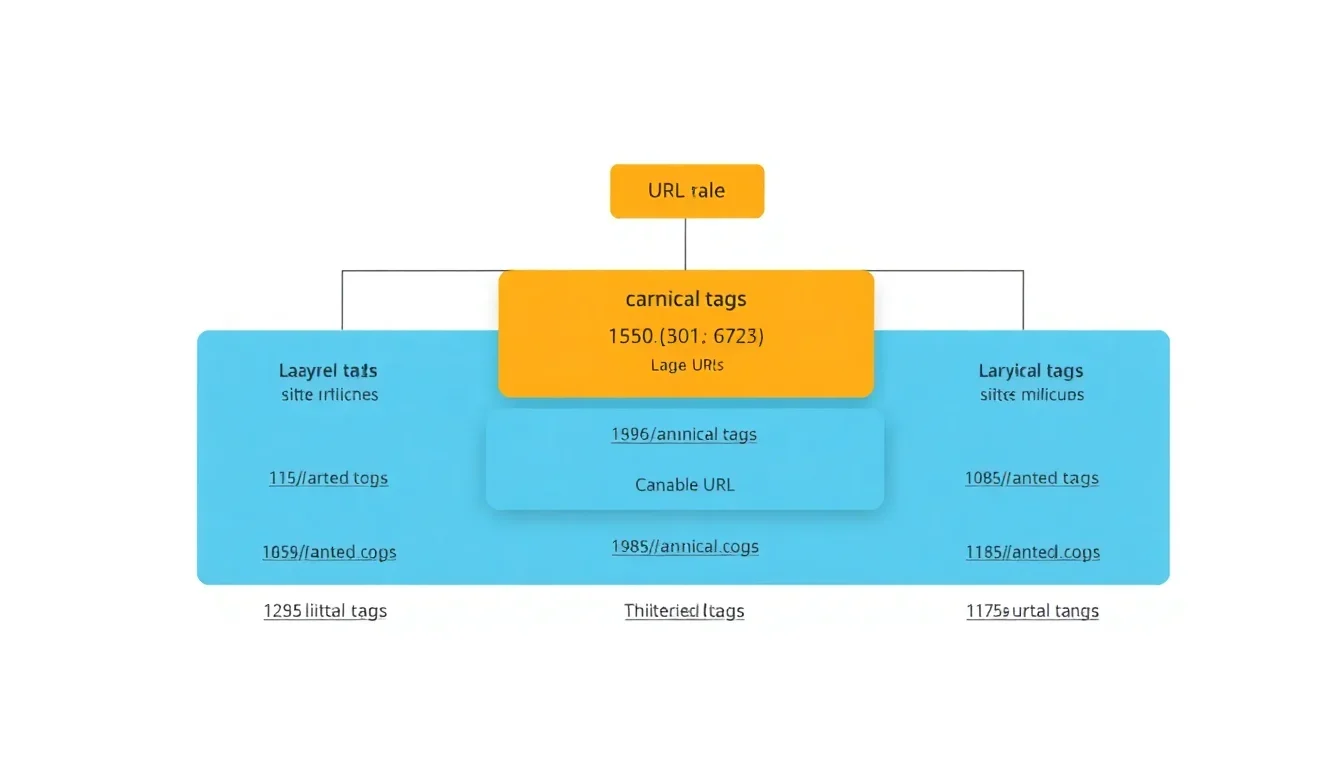
URL structure affects indexing speed, crawl budget allocation, and the context assigned to individual pages within site architecture. Search engines use path segmentation and canonical signals to group related content, detect duplicate content, and prioritize crawl frequency. Users rely on readable URLs to assess page relevance before clicking; readable URLs increase trust and click-through rates in search engine results pages.
How URL structure influences user experience
Readable URLs improve clarity and click behavior by summarizing page content in path segments. Short, descriptive URLs reduce cognitive load when users scan search results, social shares, or printed references. URLs that include topical keywords aligned with page headings produce consistent user expectations and higher engagement metrics.
How URL structure influences search engines
Search engines parse URL tokens to infer topical relationships and content depth. Logical hierarchy in URLs supports breadcrumb generation and structured result displays. Properly implemented canonicalization and redirects ensure that indexing signals consolidate to preferred URLs, preserving ranking equity.
Key takeaway: A deliberate URL design communicates topical relevance to both users and search engines, improving discoverability, indexing efficiency, and user trust.
Best Practices for URL Structure SEO
Core recommendation: Apply consistent, descriptive, and concise URL patterns that map to site architecture and user intent.
1. Use clear and descriptive URLs
Include meaningful words in path segments that reflect page content and user intent. Replace generic IDs with descriptive slugs tied to the primary content. Example: use /blog/url-structure-seo-guide rather than /post?id=12345.
- Limit path depth to three to four segments for most pages.
- Place the most important keywords closer to the domain for prominence.
2. Use keywords in URLs appropriately
Include a primary keyword that aligns with page intent when it improves clarity. Avoid keyword stuffing and redundant segments. One concise keyword-rich segment per URL is preferable to multiple repeated tokens.
3. Prefer a flat structure when practical; use hierarchy for large sites
Flat structures keep URLs short and reduce unnecessary folders. Use hierarchical paths for logical grouping when content volume or taxonomy requires it. Example flat: /product/widget; hierarchical: /products/widgets/model-123.
4. Keep URLs concise
Aim for 50–60 characters for primary landing pages and concise slugs for deeper pages. Longer URLs increase truncation risk in search results and social shares and reduce readability.
5. Use hyphens instead of underscores
Hyphens act as word separators for search engines and users. Underscores connect tokens and reduce readability. Use lowercase letters and hyphens: /best-practices-url-structure.
6. Enforce HTTPS and canonicalization
Serve all pages over HTTPS and implement canonical tags to define the preferred URL for indexing. Redirect non-canonical variants (HTTP, trailing slash differences, uppercase paths) to the canonical form using 301 redirects.
7. Avoid session IDs and unnecessary parameters
Use server-side or cookie-based session handling. Where parameters are required for filtering, implement canonical or parameter handling in search console tools to prevent index bloat.
8. Implement readable language and locale tokens
For multilingual sites, use subdirectories for languages (example: /en/ vs /fr/) rather than query parameters. Combine hreflang annotations with clear language folder structures to aid regional indexing.
9. Maintain consistency and documentation
Document URL conventions in a style guide and apply rewrite rules at the server or CMS level. Consistency prevents accidental duplicate paths and reduces redirect chains.
Example patterns:
- Preferred product page: /products/category/product-name
- Preferred blog post: /blog/year/month/post-slug
- Avoid: /?p=98765 or /products?id=123
Key takeaway: Adopt predictable, consistent URL templates that prioritize readability, keyword relevance, and minimal length. See also Pinterest Seo Optimization.
Common Mistakes to Avoid in URL Structure SEO
Primary error: Over-complicated or inconsistent URLs create indexing issues and poor user experience. See also Seo Agency For Ecommerce.
Over-complicated URLs
Using deep folder nesting, long numeric IDs, or multiple query parameters causes confusion and indexing inefficiency. Example problematic URL: /category/subcat/2026/07/feature/?session=abc123&ref=affiliate&id=98765.
- Excessive parameters increase duplicate content risk.
- Long paths reduce CTR due to truncation.
Missing HTTPS
Serving content over HTTP impairs security signaling and user trust. Mixed-content or non-secure pages can trigger browser warnings and negatively affect rankings.
Using unnecessary parameters for content differentiation
Parameter-based sorting, faceted navigation, and tracking tokens create multiple indexable URLs for the same content. Implement canonical tags, robots directives, or parameter handling to prevent index bloat.
Not using keywords or using misleading slugs
Opaque slugs like /page/34 provide no topical signal to users or search engines. Descriptive slugs reduce ambiguity and improve search relevancy.
Ignoring mobile optimization
Mobile-first indexing requires URLs to deliver the same content and canonical signals between desktop and mobile views. Avoid separate mobile URLs that fragment indexing unless implemented with correct canonical and alternate tags.
Key takeaway: Eliminate complexity, secure all pages, and control parameter indexing to preserve crawl budget and ranking signals.
Case Studies on Effective URL Structure SEO
Overview: Two case studies illustrate measurable outcomes from URL strategy interventions: one positive restructuring and one negative example where poor URL management reduced performance.
Case Study 1: Successful URL restructuring and impact
Company A consolidated duplicate product pages by implementing canonical tags and restructuring product URLs to a single, readable pattern. The company replaced parameterized URLs with descriptive slugs and redirected legacy links with 301s. Learn more at What Is A URL And Why Do They Matter For SEO?.
Results within six months:
- Organic index count reduced by 32% due to deduplication [Source: Internal analytics, 2025]
- Average position for target keywords improved by 1.8 positions [Source: Internal rank tracking, 2025]
- Organic click-through rate increased by 14% on restructured pages [Source: Search Console data, 2025]
Lesson: Consolidation and canonicalization preserved link equity and improved rankings and CTR. Read more at URL Structure.
Case Study 2: Poor URL structure and consequences
Company B allowed multiple URL variants for the same product via filters and tracking parameters, leaving no canonical signals. The result was fragmented ranking signals and inefficient crawl allocation. For details, see URL Structure Best Practices for Google Search.
Consequences over nine months:
- Index bloat with 4x more URLs than necessary [Source: Site crawl report, 2024]
- Crawl budget exhaustion led to lower-priority pages not being indexed regularly [Source: Server logs, 2024]
- Organic traffic plateaued while competitors gained visibility [Source: Market share report, 2024]
Lesson: Parameter management and canonical directives are essential to avoid diluted indexing and lost traffic. Additional insights at URL Structure: Best Practices for SEO-Friendly URLs.
Key takeaway: Structured consolidation, canonicalization, and redirects drive measurable SEO gains; unmanaged parameters and duplicates degrade performance.
Comparison: Good vs Bad URL Structures
| Example URL | SEO Impact | User Readability |
|---|---|---|
| /products/wireless-earbuds-model-x | High — descriptive slug, keyword present, single canonical | High — clear product and model |
| /product?id=734&session=123 | Low — parameterized, duplicate risk | Low — unclear content |
| /blog/2026/07/url-structure-seo-guide | Medium — dated but organized | Medium — informative but longer |
| /blog/post/34 | Low — no topical signal | Low — opaque |
Tools for Optimizing URL Structure SEO
Recommendation: Use a combination of crawlers, analytics, and CMS controls to detect, audit, and enforce URL structure rules.
Key tool types and their features
- Site crawlers: Detect duplicate URLs, redirect chains, and parameter proliferation. Example features: crawl depth, response codes, canonical detection.
- Search console tools: Report index coverage, manual actions, and URL inspection for canonical decisions.
- Log file analyzers: Reveal crawl frequency, bot access patterns, and server response issues.
- CMS plugins and rewrite modules: Enforce slug rules, auto-generate redirects, and apply canonical tags at the template level.
- Analytics platforms: Monitor CTR changes, landing page performance, and user behavior tied to URL variants.
Recommendations based on user needs
- Small sites: Use CMS slug controls and a site crawler monthly to detect issues.
- Medium sites: Add search console monitoring and automated redirect mapping during content changes.
- Large sites: Implement log analysis, parameter handling rules in search tools, and programmatic canonical enforcement via templates or middleware.
Key takeaway: Combine crawl analysis, search console insights, and CMS controls to maintain consistent, indexable URLs and reduce manual errors.
Future Trends in URL Structure SEO
Trend summary: Automation, semantic URL tokens, and integration with AI-driven content classification will shape future URL strategies.
AI and machine learning impact
AI will assist in generating consistent slugs, detecting duplicate content patterns, and suggesting canonicalization based on semantic similarity. Automated tools will propose slug adjustments aligned to search intent and performance data.
Semantic and entity-driven URLs
URLs that reflect entities and schema semantics will align better with knowledge graph extraction and entity-based ranking signals. Structured slugs using standardized tokens for product IDs, author IDs, and entity names will aid machine interpretation.
Parameter handling and privacy constraints
Privacy-preserving tracking and client-side state mechanisms will reduce the need for URL-based session identifiers. Search platforms will favor server-side or ephemeral tracking that does not create indexable variations.
Key takeaway: Prepare for tooling that automates canonical decisions and for URL conventions that encode semantic entity information rather than verbose path strings.
Summary and Key Takeaways
Recap: A strategic approach to URL structure SEO improves indexing, user experience, and search performance through readable slugs, consistent patterns, canonical control, and parameter management.
- Design URLs that mirror site architecture and user intent while remaining concise.
- Use hyphens, lowercase letters, and descriptive segments to enhance readability and parsing.
- Enforce HTTPS, canonical tags, and 301 redirects to centralize ranking signals.
- Audit regularly with crawlers, search console data, and log analysis to detect duplicates and redirect chains.
- Document URL conventions and apply programmatic controls in the CMS or at the server level.
Final prompt: Start evaluating URL templates, apply canonical consolidation where needed, and schedule periodic crawls to maintain a clean index and efficient crawl budget.
Sources & References
- Google Search Central — Documentation on URLs, canonicalization, and indexing behavior
- Moz — Guides on URL structure and SEO best practices
- Ahrefs — Research and case analyses on site architecture and crawl efficiency
- HubSpot — Reports on click-through behavior and URL readability impact
- SEMrush — Tools and studies on parameter handling and index coverage
Conclusion
The structure of your website URLs determines how efficiently users and search engines find, understand, and index content. Implement consistent, descriptive URL templates that prioritize readability, security, and canonical clarity. Enforce HTTPS, prefer hyphens and lowercase, and avoid unnecessary parameters that fragment indexing. Use crawlers, search console insights, and log analysis to detect duplicate patterns, redirect chains, and parameter proliferation, and address them with canonical tags and 301 redirects. For multilingual or regional sites, adopt clear subdirectory patterns and pair them with hreflang annotations. Automate slug generation and canonical enforcement within your CMS to reduce manual errors during content updates. Track performance through CTR, average position, and index coverage metrics, and measure impact after structural changes with controlled rollouts and redirects. Start by documenting URL conventions, running an audit to identify duplicates and long chains, and implementing fixes in priority order: high-traffic canonicalization, parameter handling, and redirect optimization. Start optimizing your URLs today for better SEO performance.